

Moscow Drone Strikes Fuel Disquiet: Is Putin’s Support Faltering?
POLICY WIRE — New York, United States — A series of recent Ukrainian drone offensives, notably those striking deep into the Russian capital, Moscow, along with ...

POLICY WIRE — New York, United States — A series of recent Ukrainian drone offensives, notably those striking deep into the Russian capital, Moscow, along with coordinated attacks on energy infrastructure, appear to have touched a raw nerve within Russia. This uptick in domestic aerial incursions has prompted observable shifts in public sentiment, with confidence in President Vladimir Putin’s leadership reportedly beginning to waver among segments of the civilian populace and even among prominent nationalist figures.
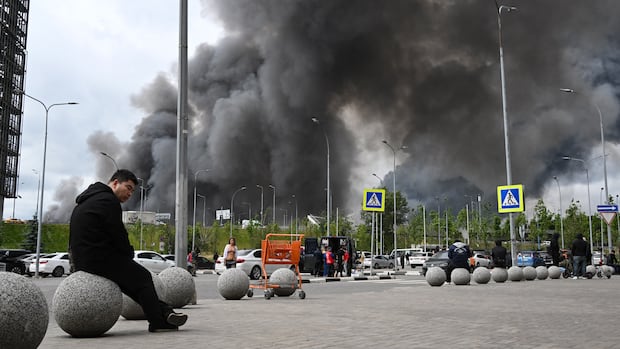
For months, the conflict in Ukraine has largely been presented to the Russian public through a carefully curated state narrative, emphasizing military success and portraying the war as a defensive measure against external aggression. However, the direct targeting of Moscow, a city long considered sacrosanct from the conflict, represents a significant breach in this protective illusion. The sound of air raid sirens, albeit briefly, and the sight of damage in the capital’s vicinity—even if comparatively minor—has inevitably forced a reconsideration among some regarding the perceived security and efficacy of the nation’s defense apparatus. (Reporting based on wire reports)
The perceived shift in confidence isn’t confined solely to ordinary citizens; it extends to influential nationalist voices, groups often considered a bedrock of Putin’s support. These ultra-patriots, who have historically been among the most vocal proponents of the war, are now beginning to voice criticism. Their grievances often stem not from opposition to the war itself, but from a frustration over what they perceive as an inadequate, overly cautious, or even ineffective prosecution of the military campaign. They demand stronger action — and question why the Russian state seems unable to protect its own heartland.
Historically, President Putin’s enduring popularity has been significantly tied to his image as a strong leader who restored stability and national pride after the tumultuous 1990s. His perceived ability to defend Russia against external threats, maintain internal order, and deliver economic growth formed the cornerstone of his decades-long tenure. Drone strikes piercing the capital’s defenses directly challenge this carefully cultivated image of invincibility and competence, making it difficult for the state-controlled media to entirely dismiss the psychological impact.
Yet, the long-term ramifications remain a subject of considerable debate among geopolitical analysts. Many express skepticism that these incidents, or the attendant dip in confidence, will fundamentally alter the course of the conflict or significantly destabilize Putin’s grip on power. Russia’s political system is designed to absorb and contain dissent, and while grumbling might grow louder, the mechanisms for organized opposition remain severely curtailed.
The government’s response has typically been to intensify patriotic rhetoric, emphasize resilience, and blame external actors for provocations. This narrative has proven effective in the past, mobilizing support by framing any internal disquiet as aiding external enemies. while nationalists may express frustration with the military’s execution, their underlying support for the war’s objectives typically aligns with the Kremlin’s stated goals, preventing a unified front of opposition.
📄 POLICY WIRE WHITEPAPER PUBLISHED: PAKISTAN'S NATIONAL SECURITY POLICY PRIORITIES
👉 READ BY CLICKING HEREThe recent events highlight a tactical dilemma for the Kremlin: how to reassure a public increasingly exposed to the realities of war without acknowledging the strategic failures that allow such attacks to occur. For civilians, the constant drumbeat of official reassurance increasingly competes with the direct evidence of vulnerabilities, fostering a disconnect that could, over time, erode trust in state institutions.
What This Means
The psychological impact of drone strikes hitting Moscow is not insignificant, marking a notable departure from the sanitized war narrative previously fed to the Russian populace. While public disquiet and even nationalist criticism suggest a chink in the armor of presidential approval, it’s premature to conclude that this constitutes a fundamental threat to Vladimir Putin’s authority or his long-term control over Russia. History suggests that authoritarian regimes possess robust internal security and propaganda machines capable of weathering periods of discontent, particularly when the alternatives are perceived as weak or chaotic.
The key question revolves around the ability of Ukrainian forces to sustain such strikes — and their cumulative effect. Isolated incidents of domestic vulnerability, while alarming, are often manageable through state messaging and increased internal repression. However, a prolonged campaign that continually highlights the state’s inability to protect its own citizens and infrastructure could, over an extended period, chip away at the critical components of a leader’s legitimacy. This process is typically slow, non-linear, — and difficult to predict. Ultimately, whether these instances lead to a sustained erosion of power or merely a temporary fluctuation remains contingent on both the war’s progression and the Kremlin’s evolving capacity to manage both the physical and informational battlespace.