


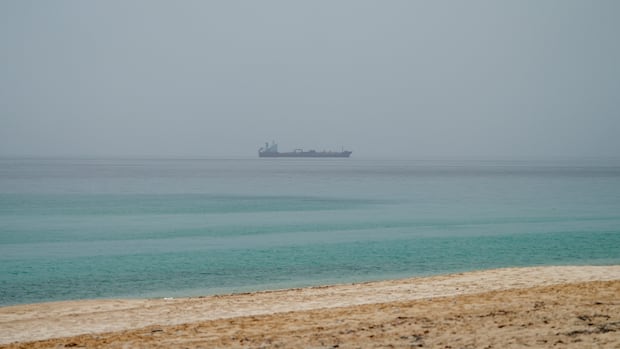
Strait of Hormuz Shipping Program Halted After Cargo Ship ‘Suspected Attack,’ Igniting Iran War Fears
POLICY WIRE — The vital, strategic waters of the Strait of Hormuz, through which a significant portion of the world's seaborne oil passes, became the focal poin...

POLICY WIRE — The vital, strategic waters of the Strait of Hormuz, through which a significant portion of the world’s seaborne oil passes, became the focal point of renewed anxiety this past Thursday. The UN International Maritime Organization (IMO) made the unexpected decision to pause its dedicated program designed to escort ships and protect seafarers traversing the treacherous channel. This halt was a direct response to a cargo ship’s report of a suspected attack, an incident that, according to wire reports, has reignited fears over a preliminary deal to end the Iran war.
The IMO’s program, aimed at bolstering confidence and safety in one of the world’s most critical maritime chokepoints, now finds itself on hold amidst heightened regional tensions. The reported attack on the cargo vessel underscores the fragility of navigation through the narrow passage that connects the Persian Gulf to the open Arabian Sea. For centuries, this strait has been a conduit for trade; today, it’s overwhelmingly synonymous with global energy flows and persistent geopolitical friction.
While details surrounding the alleged assault remain sparse, its immediate impact is clear: a key international initiative to safeguard maritime activity in the region has been suspended. The implications extend far beyond immediate shipping schedules, resonating with a broader unease regarding stability in the Gulf and the prospect of a fragile diplomatic breakthrough regarding Iran. Such incidents routinely complicate, if not directly threaten, the delicate balance of power and ongoing peace efforts in an already volatile Middle East.
The Strait of Hormuz is more than just a waterway; it’s an economic artery. Approximately one-fifth of the world’s total petroleum consumption, including nearly all of Saudi Arabia’s and Iran’s crude oil exports, must pass through it. Any disruption, whether from geopolitical standoffs or direct assaults on commercial vessels, has immediate global ramifications. Oil prices can spike, insurance premiums for cargo and hulls can skyrocket, and the logistics of international trade face significant recalculation.
The decision by the IMO, the specialized United Nations agency responsible for regulating shipping, to pause its escort program isn’t taken lightly. Its primary role is to ensure safer shipping — and prevent marine pollution. The suspension signals a serious evaluation of the threat landscape, indicating that the risks for ships and their crews have escalated beyond acceptable levels for standard operations, even under specialized protection. It’s a pragmatic response to an unpredictable, — and potentially dangerous, development.
Regional powers — and global stakeholders alike have long grappled with the security of the Strait. Historically, incidents involving naval vessels, mining, and seizures have punctuated periods of political tension, particularly between Iran and its regional adversaries, and Western powers. Each such event adds layers of complexity to ongoing diplomatic initiatives and fuels a cycle of suspicion and military posturing.
For South Asian nations, including Pakistan and India, which rely heavily on oil and gas imports from the Gulf, any instability in the Strait of Hormuz translates directly into economic vulnerability. Supply chain disruptions, elevated energy costs, and increased import bills pose significant challenges to their domestic economies and development plans. Therefore, developments in this crucial chokepoint are watched with keen interest across the subcontinent.
The reference to fears over a preliminary deal to end the Iran war suggests a fragile diplomatic landscape where any security breach can swiftly unravel painstaking negotiations. While there isn’t a formally declared ‘Iran war’ in the conventional sense, the region has been mired in various proxy conflicts, maritime confrontations, and sanctions regimes that have created an environment of protracted tension, often referred to colloquially as a state of ‘cold war’ or ongoing conflict. A preliminary deal likely refers to broader efforts towards de-escalation, a renewed nuclear agreement, or a more comprehensive regional security framework.
What This Means
The suspension of the UN IMO’s escort program in the Strait of Hormuz is more than a logistical footnote; it’s a stark indicator of persistent instability at a vital global crossroads. When international bodies deem a region too dangerous for protected maritime passage, it signals a significant escalation of risk. The immediate consequence will be increased insurance rates for shipping, potential rerouting of vessels – incurring delays and higher fuel costs – and a general chilling effect on maritime commerce in the Gulf. This, in turn, can ripple through global energy markets, potentially leading to price volatility.
the incident places additional pressure on already fraught diplomatic endeavors to de-escalate regional tensions and establish lasting peace in the Persian Gulf. Any preliminary deal aimed at stabilizing the Iran-involved conflicts now faces a tougher path to fruition. It raises critical questions about who was responsible for the alleged attack, their motives, and how the international community will respond to prevent further incidents. Without clear accountability and a concerted effort to restore security, the Strait of Hormuz risks becoming an even more dangerous flashpoint, threatening both the lives of seafarers and the foundational elements of global trade and energy supply.