


Italy’s Youth Soccer Crucible: U15 Final Echoes Broader Policy Ambitions
POLICY WIRE — Cervia, Italy — Another season, another crescendo for Italy’s youth football circuit, though this one comes with a whisper of something more profound. Forget, for a moment, the...

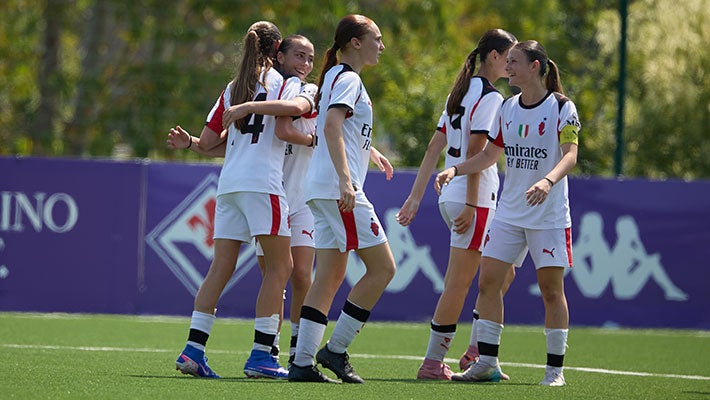
POLICY WIRE — Cervia, Italy — Another season, another crescendo for Italy’s youth football circuit, though this one comes with a whisper of something more profound. Forget, for a moment, the specific clubs, the fierce rivalry—those are just the varnish. What we’re witnessing with the impending U15 Women’s national final between Roberto Bottiglieri’s squad and Roma, set for Monday at the Stadio dei Pini “Germano Todoli”, is less about junior-level athletic triumph and more about the quiet but persistent grind of policy playing out on freshly cut grass. It’s not merely a game; it’s a statement.
For decades, women’s football, particularly at the youth level, lingered in the shadows of its male counterpart, a delightful extracurricular activity rather than a serious developmental track. But things, they’re changing. Slowly, yes, agonizingly at times, but demonstrably. This U15 final isn’t just about two teams; it’s a reflection of deeper infrastructural investments, talent pathways, and the nascent economic awakening of female sports in Europe. The sheer consistency and grit these young women—some barely in their teens—have shown, well, it speaks volumes. They’ve wrestled with formidable opponents, showing a kind of maturity you don’t typically associate with middle schoolers. They beat Juventus. Then Fiorentina. That’s no small feat. Roma, likewise, dispatched Inter.
And so, on Monday, we’ll see another championship decided. Coach Roberto Bottiglieri captured the sentiment quite well, albeit understatedly. “Reaching the Under-15 Scudetto Final,” he said, “is when a shared dream really starts to take shape. It’s not just about the season’s results, but it’s the product of all our hard work, the challenges we’ve faced, and the daily steps we take to build a strong and distinct identity.” A distinct identity—that’s key, isn’t it? Because they’re forging one, for themselves — and for the sport.
The institutional backing for these burgeoning talents often flies under the radar, especially in conversations that lean toward geopolitics or macroeconomic indicators. But ignoring it would be a mistake. “The continued success of youth programs like these, particularly for our female athletes, isn’t just good for sport; it’s fundamental for national well-being and gender equity,” noted Francesca Conti, a spokesperson for the Italian National Olympic Committee’s youth development wing. “We’re seeing tangible returns on investment in character building, health, — and leadership. And we must continue pushing. Because the talent is clearly there.” Indeed, data from UEFA’s recent reports confirm a substantial surge, with women’s football participation seeing an estimated 38% increase across member associations over the last four years. That’s a significant leap.
This success, however, isn’t uniformly replicated across the global south. Consider Pakistan, for instance. Despite having a fervent football fan base, particularly along its western and northern borders—areas often steeped in historical sporting traditions—the formal structures and societal acceptance for women’s football lag considerably behind. While individual talent surely exists, the kind of well-oiled, national-level youth development pipelines seen in Italy are a distant dream. Funding, cultural barriers, and political instability consistently hamstring organized efforts to elevate women’s sports. The contrast between Cervia’s grand stage for teens and the struggles faced by counterparts in cities like Lahore or Karachi couldn’t be starker, even as isolated groups there fight for a similar future. Policy choices, or the lack thereof, etch these stark differences onto the global sporting landscape. It’s why initiatives that address these disparities are so essential.
But back in Italy, it’s about glory. For these particular Rossonere, their odyssey started in an Interregional Phase, where they qualified for the Nationals despite finishing second. Then the playoffs. A tense quarter-final against Juventus, securing progression with Marinari’s clutch goal. Then Fiorentina. They dispatched them with a 3-1 away win after a dominant 5-2 earlier outing. It’s been a gauntlet. But they’ve endured. You don’t get to a national final in a country that lives and breathes football by sheer luck; you get there by putting in the hours. And these players—some born in 2011, 2012, even 2013—have truly blossomed, taking on more experienced opponents with astonishing poise.
What now remains is just that one last hurdle. Roma. And while one team will ultimately lift the trophy, the real story here is already written: the future of Italian women’s football isn’t just bright; it’s tangible, right here on this U15 pitch. Organizations are increasingly taking note of the economic muscle building behind such leagues, similar to the foundational investment seen in new ventures like the PWHL’s expansion strategy in North America. The model is proven; it’s just taking time to percolate fully.
What This Means
This U15 final, far from being a trivial youth sports event, stands as a telling barometer for Italy’s evolving sports policy and its broader socio-economic landscape. On one hand, it represents a direct return on strategic investments into youth development, particularly for female athletes, reflecting a subtle but profound governmental shift toward gender inclusivity in high-performance sports. It’s an affirmation of the pathway from grassroots initiatives to national-level competition, showcasing that robust, organized youth structures are imperative for cultivating talent and maintaining a pipeline for professional leagues. Economically, this burgeoning sector holds untapped potential: sponsorship deals, increased viewership, merchandise sales, and even international transfer markets for future stars—these all represent revenue streams that governments and federations are only beginning to fully appreciate and monetize. More importantly, it solidifies a generation of young women with leadership skills, teamwork acumen, and physical health, traits that resonate far beyond the sporting arena. The societal impact? Inestimable. It challenges old gender norms, providing powerful role models and fostering a culture where athletic ambition knows no gender limits. But the success isn’t organic; it’s engineered. The infrastructure must be sustained, continually funded, and replicated to ensure Italy remains a formidable force not just in men’s football, but increasingly, in women’s as well.