
Green Dream: Ireland’s Audacious T20 World Cup Bet and the Shadow of Giants
POLICY WIRE — Dublin, Ireland — Let’s be honest. Nobody, — and I mean absolutely nobody, is picking Ireland to hoist the T20 World Cup trophy in 2030. They’re a small nation—plucky, sure,...

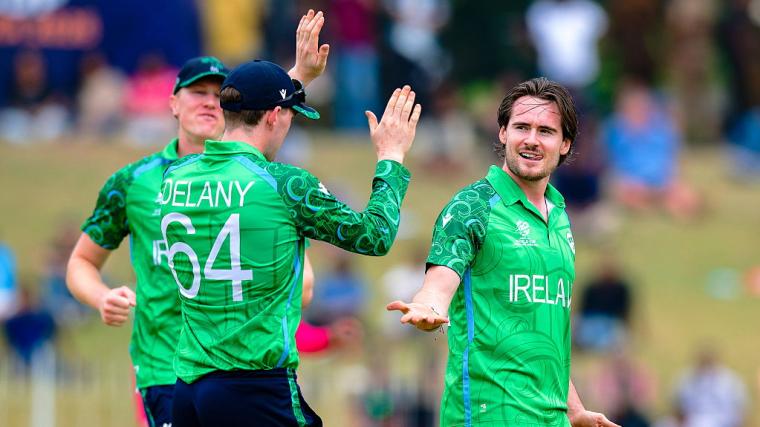
POLICY WIRE — Dublin, Ireland — Let’s be honest. Nobody, — and I mean absolutely nobody, is picking Ireland to hoist the T20 World Cup trophy in 2030. They’re a small nation—plucky, sure, but dwarfed by cricket’s superpowers. Still, sometimes it’s the quiet murmurs from unexpected corners that deserve the most attention, especially when they come laced with a peculiar brand of conviction. You’ve got to respect a squad that’s not just participating but genuinely talking semi-finals on their home turf, albeit shared.
It’s a peculiar thing, this aspiration, bordering on the quixotic. Assistant coach Gary Wilson, the architect of this grand design, isn’t just whistling Dixie; he’s invoking the ghost of Kenya’s 2003 ODI World Cup shocker, an achievement that still rattles the establishment. Wilson, never one to mince words, says, “Why can’t we do a Kenya from 2003 and reach a semi-final or go as far as possible? That should be everyone’s goal.” A perfectly sensible objective, some might argue, given Ireland’s upcoming co-hosting duties for the 2030 T20 World Cup alongside cricket’s traditional titans, England and Scotland.
But how, exactly, do you bridge the chasm between cricketing minnow — and global contender? Wilson seems to think the 2026 T20I series against India—that undeniable powerhouse, a commercial juggernaut—is the launchpad. Playing against the reigning T20 world champions (India won the 2026 title, remember) isn’t just about bat-meets-ball; it’s about psychology, exposure, and, critically, engagement. Folks, this is an opportunity. A chance for local fans to witness something extraordinary, and for the Irish squad to get a taste of what high-stakes cricket really feels like. You know, before the actual World Cup in 2030.
“Our desire should be for 2030 and a home World Cup where we will look to get everyone engaged and we’ll make a play like that,” Wilson reiterated, his vision unwavering. The journey isn’t just about 2030; it involves the 2028 tournament in Australia first. And because Ireland’s already locked in their spots for both through ICC rankings, they’re not scrambling through nerve-wracking qualifiers. That certainty? It lets them fix their gaze firmly on a long game, unburdened by immediate existential threats. Smart, you could say. Real smart.
However, the stark reality looms large. Ireland’s recent T20 World Cup 2026 campaign wasn’t exactly a roaring success; they scraped together a measly single win from their four completed matches. Still, it’s progress. Sort of. They’ve found a new T20I captain in Lorcan Tucker, a young man Wilson describes as “incredibly well planned, he’s diligent and one of our best players.” He’s got the chops, he’s got the respect. But can he lead a country on an improbable quest? That’s the multi-million dollar question.
The upcoming series against India isn’t just a warm-up; it’s a statement. And it’s about far more than just what happens on the pitch. Think about the broader implications: when a cricketing titan like India, representing a population of over 1.4 billion people and a subcontinent where the sport is practically a religion, rolls into town, it shifts something. The economic ripple effect, the increased viewership – especially from the massive South Asian diaspora that follows their team with zealous devotion – it’s all part of the equation. According to recent industry estimates, international T20 matches involving top teams like India can generate upwards of $50 million in local economic activity for host cities, often spurred by tourism and merchandise sales alone. That kind of impact isn’t small potatoes for any nation, least of all for one looking to cement its place on the global sporting stage.
From an outsider’s perspective, this isn’t just cricket anymore; it’s nation-building by other means. A well-placed Irish Cricket Union spokesperson, who requested anonymity to speak candidly about long-term strategy, put it simply, “We’re not just building a team; we’re building a legacy. The youth of Ireland need heroes, they need dreams that aren’t imported. This is about national pride — and showcasing what we can achieve, together. It’s an investment, both emotionally and financially.” You don’t hear that kind of talk every day, certainly not without a wink or a nod toward the monumental challenges ahead. But Ireland? They’re dreaming very, very big.
What This Means
Ireland’s bold ambition to reach the 2030 T20 World Cup semi-finals, however audacious, signals a calculated long-term strategic play in Irish sports policy. Economically, securing co-hosting rights and attracting global cricketing powers like India isn’t merely about sport; it’s a mechanism for boosting tourism, international profile, and even soft power. Major sporting events often trigger infrastructure development — and create jobs, leaving behind tangible benefits. Politically, a successful international campaign, especially on home soil, could provide a significant surge in national pride and foster a greater sense of identity, potentially uniting various segments of the populace under a common goal. For a nation historically overshadowed in various arenas, asserting itself on the global cricketing stage carries symbolic weight far beyond the boundaries. The economic dividends from drawing an engaged global audience, particularly from the cricket-mad nations of South Asia, can’t be overstated. This isn’t just about runs — and wickets; it’s about making a statement, both to itself and to the world.