
Brevity on the Mall: Trump’s 250th Celebration Cuts Short, Campaign Style Persists
POLICY WIRE — WASHINGTON — Amidst the pomp of military flyovers and a live performance of God Bless the USA, it wasn’t the fanfare that truly grabbed attention on the National Mall. Nope, it...

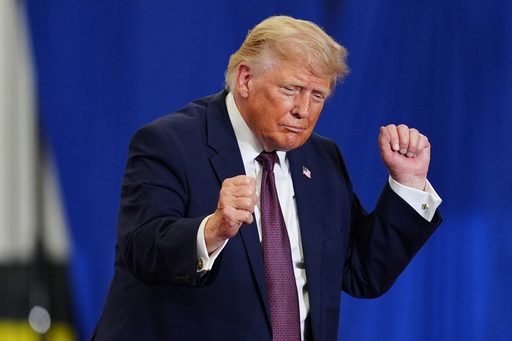
POLICY WIRE — WASHINGTON — Amidst the pomp of military flyovers and a live performance of God Bless the USA, it wasn’t the fanfare that truly grabbed attention on the National Mall. Nope, it was the peculiar brevity of the evening’s main act. Against a backdrop featuring a giant Ferris wheel, shimmering under neon, the former President—and current presidential hopeful—Donald Trump concluded his address in less than half an hour. That’s a speed rare for a politician known for meandering oratory, particularly one who, just days before, spoke for well over an hour at a truck factory gathering in Pennsylvania.
It was billed as the kick-off to America’s 250th anniversary celebrations, a grand ode to nationhood. But Trump’s quick-fire appearance felt more like a truncated campaign stop, peppered with familiar declarations. And it left many observers — including, perhaps, some of the folks who’d driven hundreds of miles — pondering whether the nation’s legacy had just become a convenient stage prop. Even with the compressed timeline, he couldn’t resist laying claim to an accomplishment. He proclaimed, I’ve restored the country to greatness, announcing, Nobody’s laughing at us anymore. Then there’s the standard rhetoric you’d expect: crackdowns on the U.S.-Mexico border, opposition to transgender rights. [QUOTE_PLACEHOLDER]
Organizers had handed out cardboard American flags, which a surprising number of attendees repurposed as makeshift sun shields before twilight. The menu? Burgers, sausages, turkey legs. The atmosphere wasn’t exactly high politics; it leaned more towards a summer concert, though the pervasive flag-themed outfits, from overalls to hats, reminded you where you were. It’s a snapshot, isn’t it, of a political moment that’s become as much about spectacle as substance, where national anniversaries blur seamlessly into rally territory.
But the road to this patriotic barbecue wasn’t entirely smooth. Musicians such as Young MC, Martina McBride, and the Commodores had backed out, citing concerns the event had become politicized. Can’t say you blame ’em. Transportation Secretary Sean Duffy, undeterred, took the stage to castigate the absent artists. He didn’t just show up, he delivered a hefty endorsement, declaring Trump the greatest president that’s ever existed in this country since George Washington.
The president himself had plenty of good things to say about, well, himself. This is the beginning of the golden age of America, he asserted. He even took a moment to congratulate himself for ousting Venezuelan President Nicolás Maduro. But then, as can often happen at these things, inconvenient realities vanished. No mention of the earthquakes that had just rocked that particular South American nation earlier that day.
These festivities — or perhaps, a demonstration of political muscle — come with critical November midterm elections looming. The administration wants to persuade folks that it’s put the unpopular Iran war in the rearview mirror. With an interim deal in the offing to end that conflict and oil prices easing as the Strait of Hormuz has started to reopen, it’s a narrative they’re pushing hard. Such geopolitical maneuvering, of course, has vast implications far beyond American shores. Nations across South Asia, including Pakistan, a critical strategic partner, constantly monitor such developments, given their proximity to regional instabilities and their reliance on stable energy markets.
However, public perception is a stubborn beast. Donald Trump’s overall approval rating has been stuck at a low 37%, according to recent Associated Press-NORC Center for Public Affairs Research polling. This isn’t just a number; it’s a political headache. On economic leadership, only 33% of U.S. adults approve. Then there’s the inflation — still higher than what Trump inherited, still outpacing wage growth. But for dedicated supporters like Jacob Wankasky, a 42-year-old antique mall owner from Buffalo, New York, who brought his family down from Hershey, Pennsylvania, it was a pilgrimage. It’s a once in a lifetime chance, he explained, calling Trump’s potential return a relief in a time of insanity.
What This Means
This National Mall event wasn’t just a bicentennial warm-up; it was a brazen, early-stage campaign rally wrapped in the flag, a dry run for the main event on July Fourth. The short speech itself might signify an effort to maintain an air of unpredictability, a way to keep opponents guessing. Or maybe, it reflects a pragmatic understanding that long-winded addresses sometimes fray the attention span of a public already awash in information. Regardless, its messaging remains sharply focused on Trump as an individual, rather than on the broader ideals of American democracy.
Politically, the former president is clearly leveraging national holidays for personal gain, turning historical milestones into partisan platforms. This tactic risks further polarizing an already fractured electorate. But it’s also about solidifying his base, proving he can still command a crowd, still project strength, even if that strength is questioned by his dismal approval numbers. Economically, while he points to an easing of oil prices due to a de-escalation with Iran, the lingering issues of inflation and the rising budget deficit pose substantial challenges. It isn’t just about what he says; it’s about what remains unsaid—the deeper economic currents that worry the average American. And for America’s allies and adversaries alike, particularly in the Middle East and South Asia, this kind of politicized spectacle sends its own peculiar message about the stability and coherence of U.S. foreign policy.