


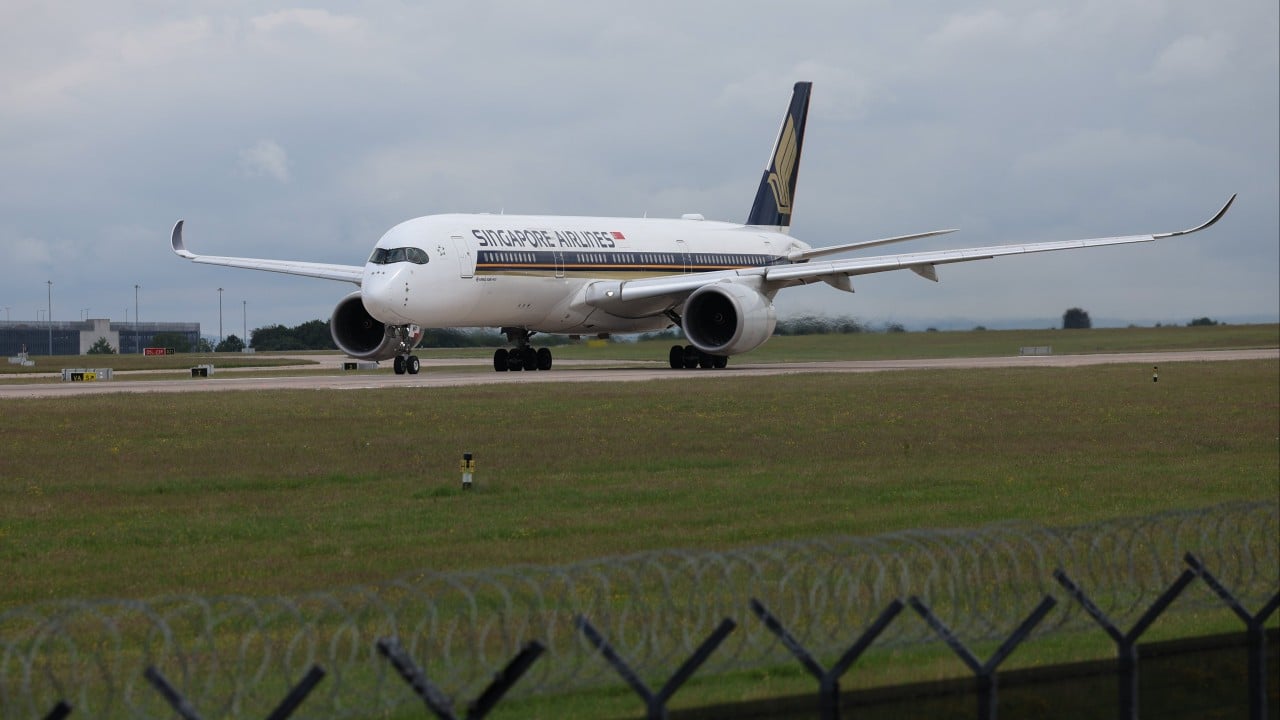
Singapore Sky-High Standoff: Indian Passenger Jailed for Airborne Assault
POLICY WIRE — Singapore — The hushed cabin of a commercial flight often lulls passengers into a peculiar sense of detachment—a fleeting world unto itself, suspended between origins and destinations....

POLICY WIRE — Singapore — The hushed cabin of a commercial flight often lulls passengers into a peculiar sense of detachment—a fleeting world unto itself, suspended between origins and destinations. But for one Singapore Airlines crew member, that fleeting reality morphed into a very stark, very uncomfortable confrontation thousands of feet up. It wasn’t the turbulence that rattled her, or an unexpected mechanical hiccup; it was the audacious behavior of a passenger, whose subsequent actions and the legal repercussions have sparked broader questions about accountability and respect, both in the air and on the ground.
It began not with a grand gesture, but with a petty, unsettling incident. A passenger on a Singapore Airlines flight molested an air stewardess. And in a bewildering twist, his companions thought it hilarious. They were, according to reports, friends laughing in response—a collective indifference that somehow felt more chilling than the initial offense. But the story, as these tales often do, doesn’t end with a snicker. It just escalates. This wasn’t some harmless prank; it was a deeply invasive act, carried out in an environment where staff are meant to be providing service, not fending off unwanted advances. [QUOTE_PLACEHOLDER]
The attendant, maintaining professionalism in a difficult spot, did what she was trained to do: she went to report the incident to her supervisor. A sensible step, wouldn’t you think? But here’s where the audacity ratcheted up a notch. The culprit wasn’t deterred by the implicit threat of official intervention. He followed her into the galley, stood extremely close to her — and cornered her. Imagine that confined space—no escape, no immediate recourse, just the enclosed walls of the plane’s service area becoming an unwilling stage for continued harassment. It takes a particular kind of brazenness to pursue your target into the very act of reporting your transgression.
When the plane finally touched down at Changi Airport, the wheels of justice, often slow on terra firma, moved with commendable dispatch in Singapore. The flight captain reported the incident, naturally, — and a police report was lodged. It all culminated swiftly in the man’s arrest when he arrived at Changi Airport. No waiting games. No long investigations before initial action. It’s a testament to the city-state’s notoriously efficient—some might say stringent—legal framework that the process moved from airborne transgression to arrest without significant delay.
The individual at the heart of this airborne imbroglio, Akash Tiwari, a 35-year-old Indian national, faced the full brunt of Singaporean law. He was sentenced to six months’ jail on Monday. Six months. A stark, non-negotiable term for behavior that, in some other jurisdictions, might draw a lighter penalty or a simple fine, depending on the severity and specific local laws. This isn’t just about Singapore Airlines, either. It’s about the broader aviation industry grappling with passenger misconduct, which, according to the International Air Transport Association, saw a 38% increase in unruly passenger incidents between 2021 and 2022.
And for us observers on the subcontinent, specifically looking at South Asia and the wider Muslim world, such incidents invariably spark introspective glances. It’s easy to dismiss these as isolated acts by individuals, but they do reflect—or at least touch upon—a broader societal challenge concerning the treatment of women in public and professional spheres. While India has its own laws against sexual harassment and has made strides in legal reforms, the cultural conversations around consent, public decency, and respect for working women are ongoing, often fraught debates. It makes you wonder what prompts such a casual disregard for boundaries, especially from those who consider themselves well-traveled and ostensibly educated. Is it a lack of perceived immediate consequence, a distorted sense of privilege, or just sheer male entitlement? Whatever its root, it clearly doesn’t play well when exported beyond national borders, where different rules, and far less tolerant legal systems, are waiting. Sometimes, perceived societal liberties back home don’t travel well. Just as relations between nations like India and its global partners can be complex (see this report on US-India rapport), so too can the perceived cultural norms clash sharply.
What This Means
This incident, seemingly contained within the confines of an aircraft, reverberates far beyond its flight path. Economically, such events can quietly, but firmly, impact the reputation of an airline — and even a nation. Airlines invest heavily in passenger safety and comfort, and when that social contract is breached so flagrantly, it’s a cost—not just in legal fees and administrative burden, but in public trust. It forces airlines to reinforce training, update protocols, and sometimes, regrettably, increase vigilance in ways that can inconvenience everyone.
Politically, while no heads of state will formally address one individual’s egregious behavior, these incidents do contribute to the tapestry of international perception. When a national from one country commits an offense in another, particularly one as sensitive as sexual harassment, it becomes a data point in how a country’s citizens are perceived abroad. It fuels narratives—positive or negative—about social order, gender equality, and personal conduct. For India, a nation aspiring to global leadership, every incident involving its citizens abroad is, for better or worse, magnified. This particular case serves as a blunt reminder that universal standards of decency and accountability are non-negotiable, irrespective of where you started your journey.