


The Invisible Front: Civilian Casualty Shadows IDF’s Gaza Campaign
POLICY WIRE — Washington, D.C. — Another name, yet to be widely recognized beyond a terse official acknowledgment, has quietly joined the ever-lengthening list of fatalities in Gaza. But this...

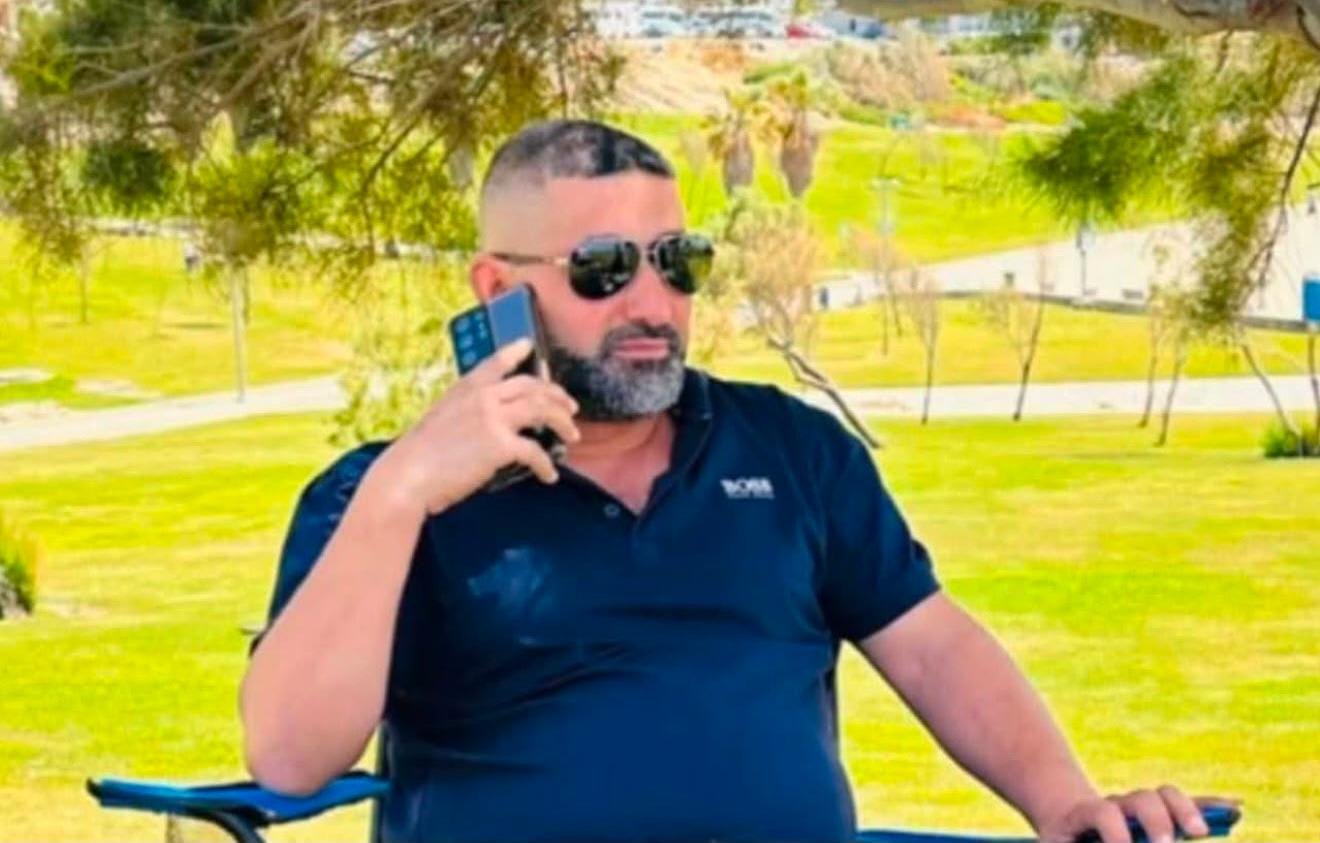
POLICY WIRE — Washington, D.C. — Another name, yet to be widely recognized beyond a terse official acknowledgment, has quietly joined the ever-lengthening list of fatalities in Gaza. But this isn’t just another combatant or a civilian caught in the crossfire—it’s different. This casualty, reportedly a civilian contractor working alongside an Israeli Defense Force unit, brings into sharp relief the shadowy economics and opaque logistics of contemporary warfare, often fought by an unseen army of auxiliaries.
For most observers, the battlefield narrative focuses on uniformed personnel. It’s clean, digestible. Yet, underneath that visible surface, a complex network of private citizens—engineers, mechanics, logistical experts, even security personnel—operate in high-stakes environments, their risks largely unquantified. The news that one such individual, attached to an IDF unit, died in a building collapse within Gaza has slipped past much of the world’s attention, overshadowed by the incessant drumbeat of overt military actions and mounting humanitarian crises.
It’s a stark reminder that modern conflicts aren’t solely waged by nation-states — and their formal armies. Indeed, the increasing reliance on private military and security companies (PMSCs), along with individual contractors, has become a defining—if under-examined—feature of post-9/11 military engagements. These aren’t your grandfather’s war efforts. They’re more diffused, more complex, — and often, less accountable. When things go wrong, as they tragically did here with a structure giving way—we’re not told how, or why—the lines blur even further. Whose responsibility was it? Who mourns in silence?
And so, we’re left to infer a grim conclusion from an event that’s practically a footnote. A civilian, far from a combat zone in their traditional understanding, found themselves caught in an operational collapse. Because contractors often fill roles that free up uniformed soldiers for direct combat, their presence inherently shifts the operational calculus. It also means the total human cost of conflict, when we talk about death tolls, almost invariably excludes a whole cohort of people doing incredibly dangerous work.
The announcement from the Israeli military regarding this loss was, as expected, succinct: [QUOTE_PLACEHOLDER]. No details about the contractor’s nationality, their specific role, or the circumstances beyond a generalized [QUOTE_PLACEHOLDER]. Such omissions aren’t unusual; operational security often mandates a degree of discretion. But it’s also a stark illustration of how easily certain types of casualties—those not wearing official military dog tags—can recede from public scrutiny. They don’t feature in official body counts, nor do they often garner the same public outcry.
The broader implications of such events reverberate far beyond the immediate tactical sphere. They impact the international understanding of a conflict’s human toll — and the legitimacy of its prosecution. In a region as sensitive as the Levant, where perceptions are deeply entrenched, the revelation of non-uniformed personnel’s involvement can be interpreted through various lenses. For many in Pakistan and across the wider Muslim world, for instance, the presence of external actors—whether they be overt military advisors or unseen contractors—is frequently viewed with skepticism. It complicates already fraught narratives surrounding external interference — and perceived foreign interests.
Estimates suggest over 60,000 contractors are currently employed in various roles across active conflict zones globally, a figure cited by the Stockholm International Peace Research Institute (SIPRI) in its 2023 report. That’s a lot of people operating in dangerous spaces without the same public profile as their military counterparts. This civilian’s death, though officially acknowledged, serves as a harsh echo of this broader trend, a testament to the fact that modern war is more expansive and more commercially intricate than ever before.
But how do these non-uniformed individuals find themselves on the front lines? Usually, it’s through contracts awarded by defense ministries, providing everything from logistics and maintenance to highly specialized technical support. Their involvement underscores the increasing privatization of support functions in war, an often-unstated facet of modern military doctrine. And when a building gives way, it highlights the inherent precarity, regardless of one’s uniform—or lack thereof.
What This Means
The death of a civilian contractor in Gaza, while perhaps minor in its immediate geopolitical ramifications, holds significant symbolic weight for the wider public and strategic communities alike. Economically, it exposes a persistent trend towards the outsourcing of critical, and often hazardous, military support functions. This model, while theoretically cost-effective or expedient for uniformed forces, also creates a complex web of legal, ethical, and moral considerations. The lack of detailed public information around such deaths—the how, the why, the who—perpetuates an accountability gap, one that external bodies and advocacy groups frequently decry.
Politically, the presence of civilian contractors in a contested zone like Gaza muddies the waters of culpability and perception. For governments involved, it allows for operations to continue with a potentially lower official troop presence, thus reducing the political optics of military commitment. However, when these contractors become casualties, it forces a reckoning: who’s truly at war, and what are the true costs of conflict? In the broader context of the Muslim world, such incidents can fuel narratives of Western (or Israeli, in this case) military adventurism, employing proxies and non-state actors in operations. It plays into a skepticism about the purity of military intentions and can be a rallying cry for opposition groups or critical media outlets. Ultimately, this isolated incident quietly underlines a persistent shift in modern warfare: from state-versus-state engagements to intricate, multi-actor conflicts where civilian lives—both local and contracted—are frequently intertwined in unforeseen, and often unacknowledged, ways. It’s a sobering indicator of how deeply commercial interests have become embedded in global security dilemmas.