


Brazil Bets Small to Go Big: Micro-Business Push Eyes Economic Ripple
POLICY WIRE — Brasília, Brazil — For many Brazilians, the morning grind starts not in an office, but on a street corner, in a small stall, or with a mobile cart. They’re the backbone of the...

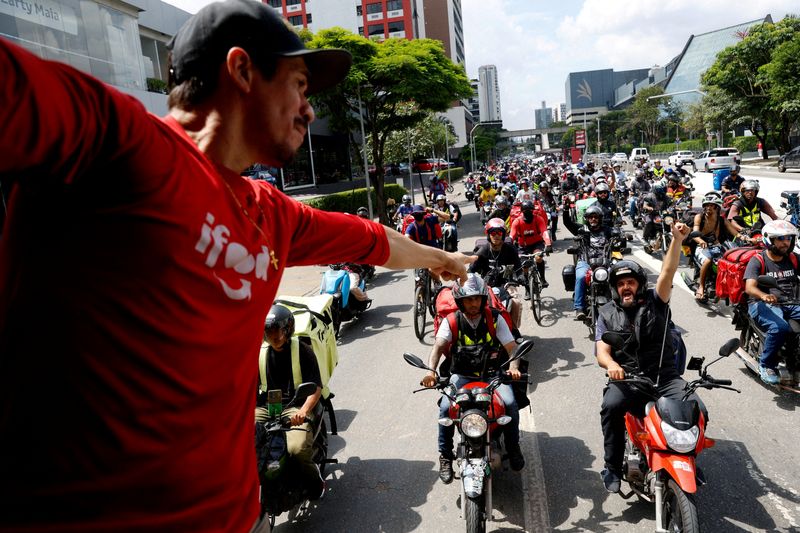
POLICY WIRE — Brasília, Brazil — For many Brazilians, the morning grind starts not in an office, but on a street corner, in a small stall, or with a mobile cart. They’re the backbone of the country’s colossal informal economy, a teeming world of tireless hustlers making their own way. And now, Brasília’s political machinery has set its sights on them, with an expansive push to formalize and uplift micro-entrepreneurs, promising to inject new life — and much-needed tax revenue — into the national ledger.
It’s less about a new, groundbreaking program and more about a calculated scaling-up, a significant widening of the funnel for micro-businesses seeking legitimate footholds. We’re talking about simplified bureaucracy, easier access to credit, and more robust training—tools that often remain just out of reach for folks running operations on pocket change. The current administration isn’t just tweaking the gears; it’s attempting to re-engineer a significant slice of the nation’s economic engine, hoping that a stronger base can absorb some of the larger economic shocks that seem to come around with disheartening regularity. And, frankly, it’s a policy move with an election cycle already in the rearview mirror, but future ones very much on the horizon, too.
Fernando da Silva, Undersecretary for Economic Development at the Finance Ministry, doesn’t hide the government’s ambition. “We’re not just offering loans; we’re offering dignity, an on-ramp to the formal economy where entrepreneurs can thrive with proper legal protections and genuine growth opportunities,” da Silva told Policy Wire yesterday. “It’s about unlocking untapped potential in every neighborhood. We simply can’t afford not to.” His words ring with the conviction of a plan that promises more than just economic benefits, touching on social uplift and citizen empowerment.
But not everyone’s buying the full narrative. Isabella Mendes, a prominent opposition economist known for her fiscal conservatism, views the expansion with a wary eye. “On paper, it looks good. Who wouldn’t want to support small business? But the devil, as always, is in the implementation,” Mendes countered. “Will this new bureaucratic push genuinely reach the truly marginalized, or will it create just another layer of red tape, perhaps even inadvertently fostering avenues for corruption? We’ve seen grand plans falter before.” Her skepticism cuts straight to the perennial challenge of turning policy aspirations into tangible street-level impact.
This initiative follows similar trajectories seen across other emerging economies, particularly those wrestling with massive informal sectors. Consider Bangladesh, for instance, a nation that has arguably become a global laboratory for microfinance initiatives, successfully integrating millions into formal economic activity. It’s a similar spirit—this idea that empowering the smallest economic units can lead to exponential, nationwide growth—that seems to be guiding Brasília’s thinking. Brazil isn’t alone in recognizing that the hustle on the streets isn’t just about survival; it’s also a significant economic force waiting to be properly harnessed.
And the numbers back up the need: Approximately 98% of Brazilian businesses are classified as micro or small enterprises, accounting for nearly 30% of the country’s GDP last year, according to Brazil’s National Statistics Institute (IBGE). Yet, a significant portion of these operate without full legal standing, limiting their access to credit, benefits, and market expansion. Formalizing even a fraction of this informal economy could add billions to tax coffers and, crucially, stabilize countless households.
However, the journey from aspiration to implementation is usually bumpy, fraught with hurdles like geographical disparities, technological access gaps, and entrenched skepticism from entrepreneurs burned by past, less successful government schemes. It’s a complex endeavor, really. This is hardly a simple flick of a switch; it requires sustained commitment, transparent governance, and, honestly, a lot of on-the-ground legwork that can test the patience of any administration.
What This Means
Brazil’s ramped-up support for micro-entrepreneurs is a political tightrope walk as much as an economic strategy. On one side, you’ve got the very real prospect of democratizing wealth and formalizing a large, active, albeit shadowy, economic layer. This could bolster social safety nets, broaden the tax base, and create a stronger middle class – which any politician worth their salt would want credit for. Because it really means more votes, more stability.
On the flip side, missteps here could mean squandered public funds and deeper cynicism among the very population they’re trying to win over. Economically, while increasing formalization seems like an unalloyed good, an overzealous or poorly managed bureaucratic burden could actually stifle the dynamism that makes micro-enterprises so resilient in the first place. Imagine a small vendor, doing perfectly well for themselves, suddenly hit with forms they can’t understand or fees they can’t afford. There’s a sweet spot they need to find—not too much intervention, not too little. But striking that balance? That’s the billion-dollar question, isn’t it? It’s a pragmatic nod to realities faced across the developing world, from Islamabad’s bustling bazaars to the streets of Bogotá. Brasília’s bet is on small-scale commerce driving big-picture change; whether it pays off remains to be seen. You can bet Policy Wire will be watching.