
The Shinko Incident and the Taliban’s Information Strategy
A single drone fell from the sky near Shinko in Khyber district on June 19. Pakistan’s Air Defence system shot it down within minutes. Afghan officials, however, told a very different story to...

A single drone fell from the sky near Shinko in Khyber district on June 19. Pakistan’s Air Defence system shot it down within minutes. Afghan officials, however, told a very different story to their own people. They claimed a major air campaign had struck Daesh-linked camps across Khyber Pakhtunkhwa and Balochistan. This gap between one drone and an entire air campaign says everything about how the Afghan Taliban regime now operates information.
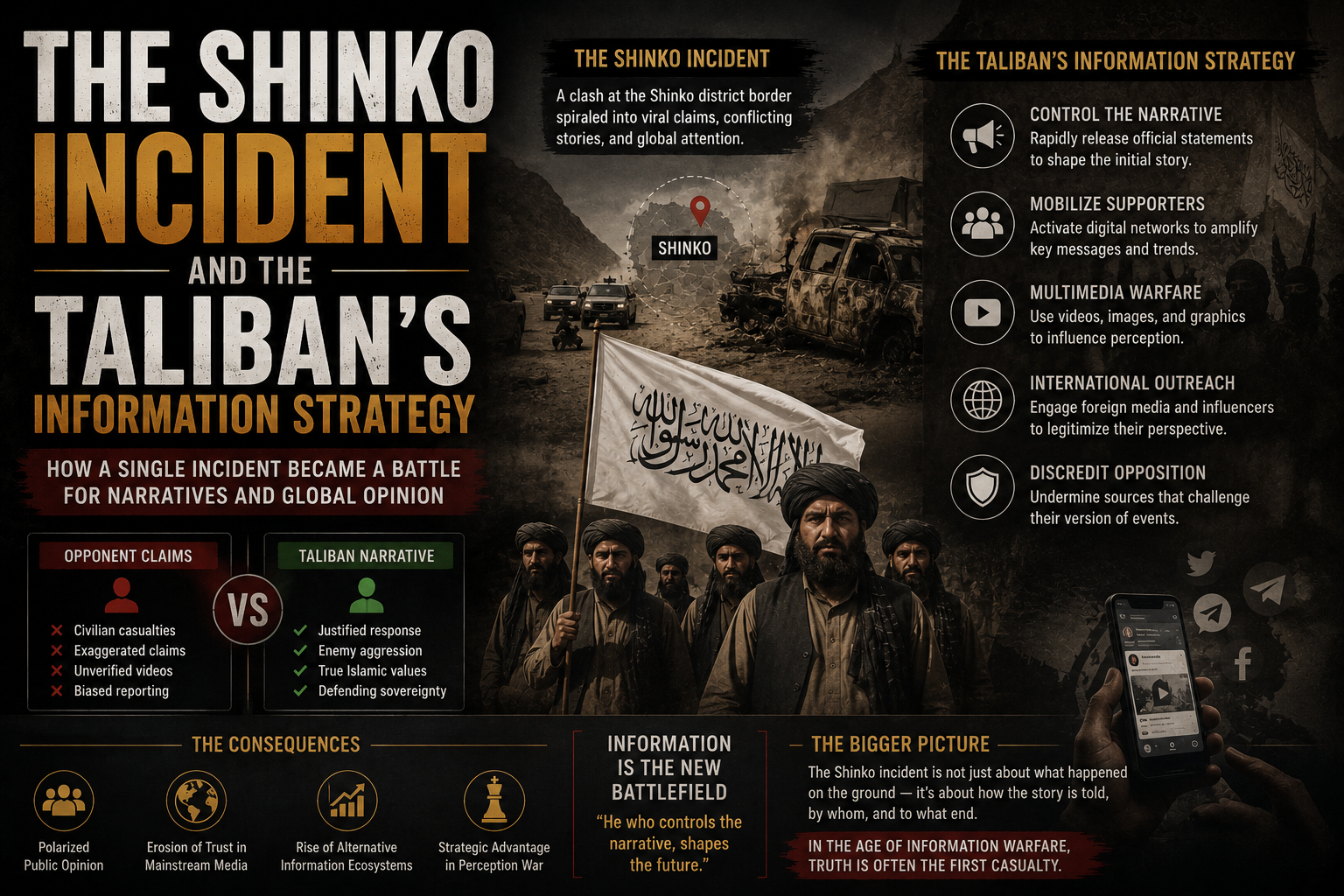
Military facts make the Taliban’s claims hard to believe. The Taliban regime has no functioning air force. Decades of war left it with a handful of aging Soviet-era aircraft, none of which carry modern targeting systems or radar support. Pakistan, by comparison, operates one of the most capable air forces in the region, with hundreds of combat aircraft and a layered air defence network that detected and destroyed the intruding drone almost immediately. An honest comparison of capability leaves little room for Kabul’s version of events to be taken seriously.
This is far from being the first occasion when such claims have fallen apart. Previously, reports had been circulated about how Afghan troops shot down a Pakistan Air Force fighter aircraft, capturing its pilot. It turned out to be a fabrication after investigation. There is a trend emerging now, which goes like this: announce an important military victory, create hype through media, and allow the claim to dissolve in thin air when reporters and experts start demanding proof. The proof invariably comes from Islamabad.
A rational person should ask why this pattern exists. The answer lies inside Afghan territory itself. Terrorist networks, including Daesh’s regional branch and several other militant groups, continue to operate from areas under Taliban administration. Pakistani security forces have documented camps, training sites, and staging areas tied directly to attacks inside Pakistan. Framing every Pakistani counter-terrorism action as foreign aggression allows the Taliban regime to avoid the harder question of why these groups are allowed to exist on its soil in the first place.
Recent violence inside Pakistan adds urgency to this argument. A suicide attack struck a Federal Constabulary post in Khyber Pakhtunkhwa on June 9. A vehicle-borne bomb hit a military post in North Waziristan on June 2. A police station in Bannu came under attack on May 9. Each of these incidents links back to terrorist networks operating from across the border. Pakistan’s military response through Operation Ghazab lil-Haq targets these networks directly, and officials report that dozens of border posts linked to terrorist logistics have been destroyed or captured. Framing this counter-terrorism effort as part of an “open war” narrative, as critics in Kabul attempt to do, ignores the defensive nature of these operations.
Suggestions of Indian involvement deserve attention rather than dismissal. Pakistani officials have repeatedly pointed to coordination between Afghan information channels and Indian media networks, both of which amplify identical claims within hours of each other. Such synchronized messaging rarely happens by accident between two unrelated parties. Regional rivalry between India and Pakistan has a long history, and an Afghan regime eager for legitimacy may find a willing partner in Indian intelligence circles interested in destabilizing Pakistan’s western border. This allegation remains unproven in any independent forum, yet the timing and coordination of these campaigns make it a reasonable line of inquiry rather than a baseless conspiracy.
Transparency separates the two sides in this dispute most clearly. Pakistan’s Ministry of Information released photographic evidence of the downed drone within hours of the incident. Independent journalists were able to verify the location and basic details of the event. Afghan officials, meanwhile, offered no comparable evidence for their claims of a successful air campaign. Credibility in modern conflict depends on exactly this kind of verifiable proof, and one side has consistently provided it while the other has not.
Regional stability depends on Kabul choosing accountability over propaganda. Continued denial of militant sanctuaries inside Afghan territory only delays an honest reckoning with the human cost of this conflict, a cost borne disproportionately by ordinary Afghans and Pakistanis alike. Pakistan has demonstrated restraint by declaring its operations openly and backing them with evidence, a standard the Taliban regime has yet to meet. Until Kabul matches transparency with transparency, its claims will continue to invite more skepticism than belief.
Author