

Pakistan Emerges as a Key Diplomatic Pillar in New Regional Peace Initiative
Regional diplomacy is in full swing when Pakistan’s foreign minister, Ishaq Dar, arrives in Alamein on Sunday alongside Saudi Arabia’s Foreign Minister Faisal bin Farhan Al Saud and...

Regional diplomacy is in full swing when Pakistan’s foreign minister, Ishaq Dar, arrives in Alamein on Sunday alongside Saudi Arabia’s Foreign Minister Faisal bin Farhan Al Saud and Egypt’s Mounib Ahmad Ahmadian alongside high-level discussions on the future of peace and stability in a Middle East already a witness to heavy unrest.
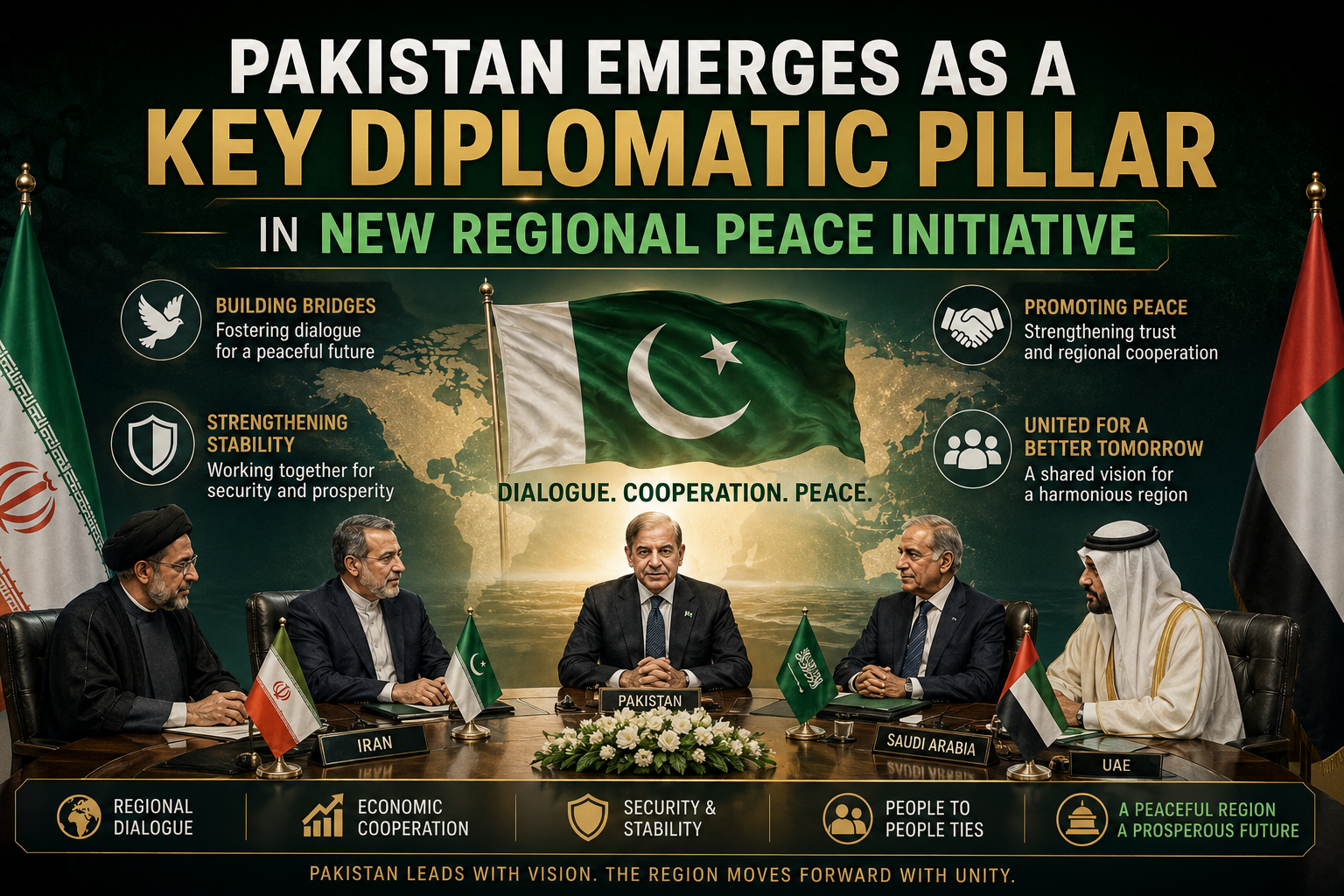
The quadrilateral meeting takes place at a pivotal moment after a recent effort to put the region’s conflicts behind them has begun and is an attempt to stave off a wider war that was jeopardizing global energy supplies, international trade routes and regional security. There is no official document stating the items discussed at the meeting, but it is certainly a sign of the country’s growing status as a credible and trusted diplomatic contributor to some of the most pressing geopolitical issues of the world.
Pakistan’s membership is not a coincidence with the inclusion of three influential powers of Muslim world in its company. Islamabad has long called for dialogue, rather than confrontation, diplomacy as opposed to military escalation, and regional co-operation in preference to bloc politics, during recent years. This has led to a better reputation as a responsible actor which is able to involve stakeholders and pursue strategic neutrality in its policies.
In the context of geopolitics, the importance of the role played by Pakistan becomes even clearer. Pakistan’s standing as a captive audience of both competing regional and global players depends its ability to engage with them constructively while at the same time being at the center of South Asia, Central Asia, the Middle East and China. Increased diplomatic manoeuvrability has been putting Islamabad in a middle position between various political wings and parties.
In addition, Pakistan’s presence at Alamein meeting underscores the growing level of convergence between Pakistan, Saudi Arabia, Türkiye, and Egypt on the strategic front. The four power states are home to over 500 million people, have powerful military power, and hold significant influence over key trade and energy routes to and from the region between Asia, Africa, and Europe.
Pakistan’s responsibilities are crucial in a region prone to instability and uncertainty, which are still a menace to the world’s economic recovery in these post Pandemic times. One-fifth of the world’s oil traffic is made through the Strait of Hormuz alone and its stability concerns the international community. Any disruption in these routes affects the energy importing countries, especially in Pakistan. Hence, the sustainable peace and uninterrupted commercial activities are in the interests of Islamabad.
Additionally, the consistency in Pakistan’s stances on negotiated settlements in an international conflict have enhanced its diplomatic image. Whereas opposing and competitive policycriptions are the norm for many regional actors, Pakistan has so far framed itself as a mediator for dialogue. This reputation has further improved its capacity to positively contribute to mediation efforts and peace-building processes.
The Alamein meeting is yet another indicator of a greater realignment of regional diplomacy. As the Muslim world, countries are increasingly looking at indigenous options as more viable keep solving the crises in the region than by relying solely on the outside. Pakistan’s involvement in such deliberations demonstrates its trust in the centrality of its diplomacy and ability to make a difference in multi-lateral decision making.
Peace in the Middle East is important for Pakistan from the economic point of view. The area is home to millions of Pakistani expatriates who send billions of dollars each year via remittances. Labor remittances totaled $38 billion in the previous fiscal year of which the top receivers were Gulf countries, according to the State Bank of Pakistan. Thus, Pakistan’s economic standing is directly associated with the stability in the region.
Furthermore, the country’s rising foreign policy visibility will help realize its long-term foreign policy agenda to draw investment, deepen strategic ties and amplify its influence. Islamabad’s active engagement in such high-level mediation platforms further ethelhe the perception of Islamabad as a responsible and solutions oriented country, rather than an eye-witness to the developments in the region.
Continued invitations of Pakistan to the important diplomatic platforms on some of the most pivotal issues of the Muslim world further adds significance to its keynote role. Islamabad’s role is being perceived as irreplaceable beyond South-Asia such as in the resolution of conflict and even the promotion of talks and peacebuilding that has led to its increasing seen as indispensable in Pakistan.
The valed foreign ministers’ meeting in Alamein is another chance for Pakistan to show leadership and make a valuable contribution in the cause of achieving durable and lasting peace. As Pakistan strives to foster dialogue and collaboration in a part of the world historically marked by division and turmoil, its reputation as a constructive force in the region and on the international stage continues to grow.
Author