


Silent Drifts, Overt Threats: Russia’s Baltic Provocations and the Shadow on Global Shores
POLICY WIRE — Brussels, Belgium — While the world’s media often fixes its gaze on the scorching deserts of the Middle East or the geopolitical quagmire in Ukraine, a chill wind...

POLICY WIRE — Brussels, Belgium — While the world’s media often fixes its gaze on the scorching deserts of the Middle East or the geopolitical quagmire in Ukraine, a chill wind blows through a historically fraught waterway. The Baltic Sea, a watery stage for centuries of imperial ambition, finds itself once again at the sharp end of an evolving, frankly discomforting, power play. It’s not the clash of titans that makes headlines, but the steady, grinding shift in demeanor that speaks volumes about global security’s precarious state.
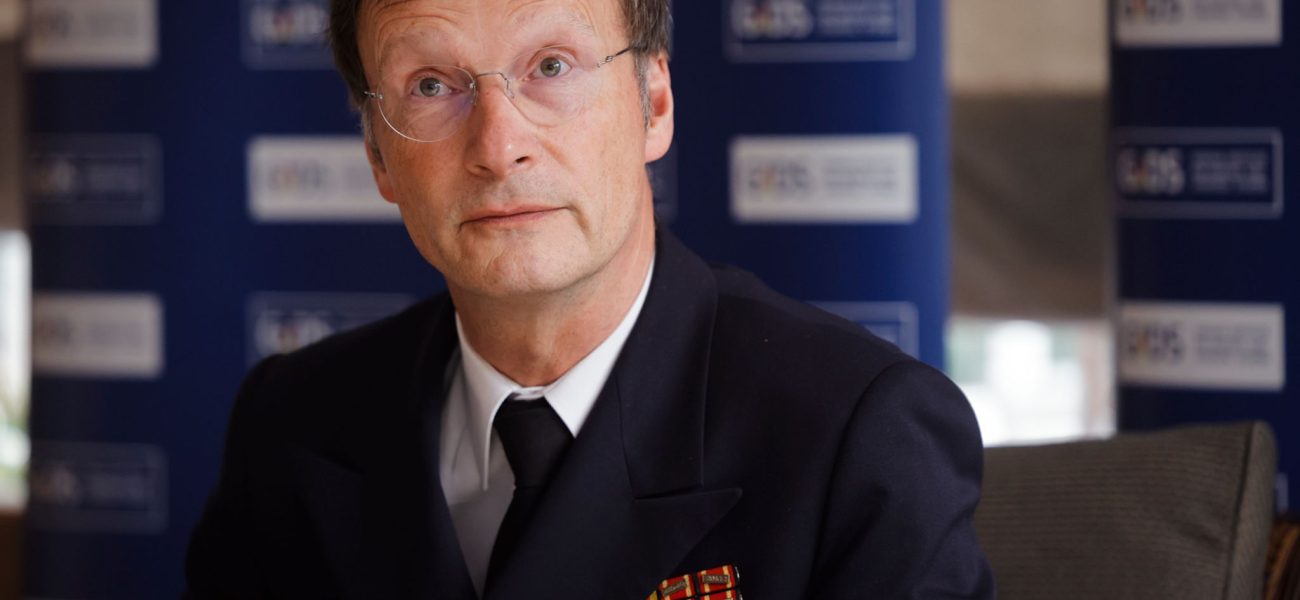
It seems old habits, or maybe just old blueprints, die hard. Forget the grand, declarative speeches for a moment. This story is in the undercurrents, the naval maneuvers, the buzz of aircraft transponders — or lack thereof. An unnamed admiral, a figure well-versed in the intricate dance of international waters, recently let slip a telling phrase, referring to an ‘increasingly aggressive’ Russian presence in the Baltic. It’s a characterization that strips away diplomatic niceties, leaving us with a blunt, disquieting reality. This isn’t just about ships sailing where they shouldn’t or planes venturing too close; it’s about a strategic flex, a message delivered in the lingua franca of military might.
And what precisely does ‘increasingly aggressive’ look like on the choppy waters of the Baltic? It isn’t just the sheer volume of activity, though that’s certainly part of it. A 2023 analysis by the European Centre for Security Studies (ECSS) actually documented a 22% rise in documented instances of Russian warships conducting what it termed (Awaiting official quote) within 20 nautical miles of NATO member state territorial waters, compared to figures from just five years prior. But it’s also the audacity, the brazenness. They’re probing air defenses, practicing submarine warfare scenarios a little too close to civilian shipping lanes, and conducting electronic warfare drills that mess with commercial navigation. It’s a deliberate policy, no doubt about it, calculated to test, to unnerve, and eventually, one suspects, to assert new realities on the ground—or rather, on the water.
Because make no mistake, Russia isn’t operating in a vacuum. Their plays in the Baltic—a backyard of sorts for some of Europe’s most steadfast democracies—have far wider ramifications than just a few nervous naval captains. These actions echo a broader pattern of Kremlin assertiveness, stretching from the Arctic Circle down through Eastern Europe, and crucially, eastward. One might recall how similar muscle-flexing began to intensify prior to more overt military actions elsewhere. We’re witnessing the slow, steady chipping away at the post-Cold War security architecture, a structure many of us, perhaps naively, thought was — at least mostly — settled.
It’s not just NATO members losing sleep over this. Regions like South Asia, seemingly far removed from the Baltic’s chilly waters, can’t afford to ignore such shifts. Geopolitics, after all, isn’t a series of isolated vignettes; it’s a global tapestry of interconnected interests. For nations like Pakistan, navigating a complex web of alliances and rivalries with China, India, and the United States, an emboldened Russia – one seemingly ready to challenge established norms in its own sphere – complicates the strategic calculus enormously. It reshapes perceptions of power, reliability, — and what the great powers are willing to tolerate. Any move by a major player like Russia has repercussions, triggering reconsiderations in Islamabad about regional security and its own role in the global order. Does it mean Russia might grow bolder in its engagements, say, in Central Asia, on Pakistan’s very doorstep? It’s a question worth pondering, even if the answers are unpalatable.
📄 POLICY WIRE WHITEPAPER PUBLISHED: PAKISTAN'S NATIONAL SECURITY POLICY PRIORITIES
👉 READ BY CLICKING HEREBut how do nations respond to such calculated provocations? Do you meet aggression with equal aggression, escalating risks for everyone? Or do you walk a diplomatic tightrope, attempting to de-escalate without appearing weak? The playbook for these situations isn’t etched in stone, — and every move carries significant weight. It’s an exercise in delicate balance, one where the margins for error grow thinner with each passing encroachment.
What This Means
The ‘increasingly aggressive’ posture in the Baltic Sea isn’t a localized squabble; it’s a potent geopolitical signal. For Europe, it translates into a renewed, grinding security dilemma, forcing an allocation of resources and diplomatic energy away from other pressing concerns (climate, economy, etc.). For global power dynamics, it signals Russia’s enduring intent to project strength, often through unconventional means, irrespective of international censure or economic sanctions. This persistent badgering on Europe’s flank ensures a constant state of low-grade tension, disrupting potential avenues for cooperation and diverting NATO’s strategic focus. Economically, prolonged instability in critical waterways, even perceived, introduces volatility, impacting trade routes and insurance costs—a ripple that can ultimately be felt even in burgeoning Asian economies. For countries like Pakistan, and indeed the broader Muslim world, it necessitates a recalibration of foreign policy—understanding where Moscow’s new boundaries lie, identifying new opportunities, and hedging against emerging risks. Russia’s actions, whether in the Baltic or in regions closer to home, directly influence the strategic landscape, shaping who can project power, what alliances hold, and ultimately, which regional balances might tip. It’s an inconvenient truth for everyone hoping for a return to quieter times; those days, if they ever truly existed, aren’t on the horizon.