


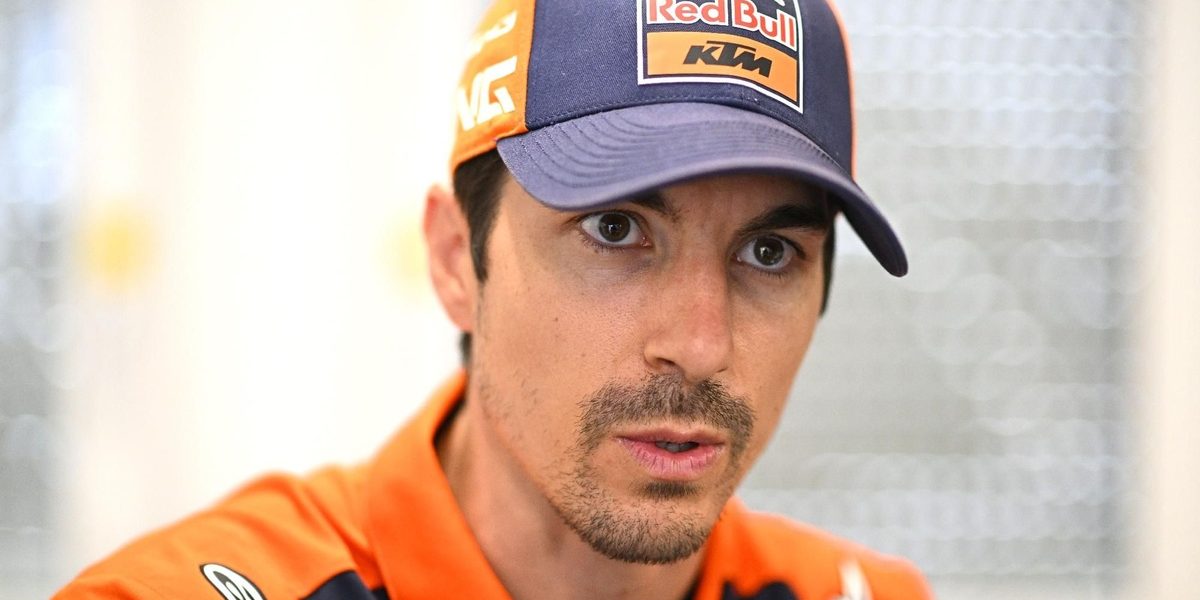
MotoGP’s Loyalty Lament: Vinales Decries KTM’s High-Stakes Contractual Tango
POLICY WIRE — Brno, Czech Republic — The asphalt of Brno offered little solace, even less certainty, for Maverick Vinales. He’s a veteran, a grizzled rider of twelve seasons in MotoGP, yet he...

POLICY WIRE — Brno, Czech Republic — The asphalt of Brno offered little solace, even less certainty, for Maverick Vinales. He’s a veteran, a grizzled rider of twelve seasons in MotoGP, yet he finds himself caught in a corporate vise, his professional future twisted into knots by the very team that’s supposed to be his home. KTM, it seems, has developed a reputation. A history, some might say, of letting top-tier talent twist slowly in the wind before their eventual — and often acrimonious — departures. Johann Zarco, Raul Fernandez, — and Remy Gardner have all been through it. Now it’s Vinales’ turn to experience the machinery.
After a strategic switch from Aprilia’s factory squad to KTM’s satellite outfit, Tech3, for the 2025 season, the Spaniard is suddenly stranded in a contractual no-man’s-land. A clause, tight as a drumhead, dictates he can’t talk shop with other teams until month’s end. And that, in a rider market moving faster than a Ducati on the main straight, is an eternity. KTM holds all the cards, poised to either extend his stint at Tech3 for a third year or, well, cut him loose entirely. But then, it’s not just KTM making these calls, is it? We’re talking about the owner: Bajaj, an Indian automotive titan, wielding considerable economic heft.
Vinales, nursing a shoulder injury that’s been nagging him since a shunt at the German Grand Prix last summer, didn’t hold back at Brno. He rarely does. There’s a bluntness about him, an almost painful honesty, when he spoke on his predicament. (Awaiting official quote) he stated, the words themselves a quiet protest. “During the winter, I was told I was in the factory team. Then at Tech3. And now I don’t even know where I stand.” It’s the sound of a professional athlete having the rug pulled out from under him, one promise at a time. And he wasn’t quiet about his restraint, either: “I could have signed with another team despite the restrictions I had in my contract, but I didn’t.” It’s loyalty unreciprocated, a common refrain in high-stakes sports.
The bitter irony? Vinales has clinched victories with three manufacturers — Suzuki, Yamaha, and Aprilia. But KTM? Not a single win yet. It makes this current limbo even more agonizing. He knows the drill, of course. His career, stretched over nearly two decades, means he’s seen more than his fair share of political maneuvers. He’s raced for four different manufacturers, after all. But this feels different. The power asymmetry, stark and cold. “I could have sorted out my future during the winter, not now,” he explained, the resignation palpable. But he also bristled at the hypocrisy: “The team is asking for results at a time when I’m injured. Maybe I can’t perform at my maximum level right now, but I will be able to in two months.” You’d think a major team could wait. You’d be wrong.
And then there’s the final insult, a truly brutal corporate courtesy. Vinales won’t be joining Monday’s post-race test at Brno, where riders get their first crack at the new 2027 prototypes — the 850cc engines, the fresh Pirelli tires. Instead, KTM’s tabbed Pedro Acosta for the gig. Acosta, mind you, who’s already packing his bags for Ducati in 2027. Ouch. How did Vinales get this lovely bit of news? “I found out through the media that I wouldn’t be doing the test,” he recalled, a tight-lipped sigh likely unspoken. “Not through the team.” It’s not just a professional slight; it’s a failure of basic communication, an absolute amateur move from a supposedly professional organization. It speaks volumes.
Because ultimately, these high-stakes contract disputes don’t just hit the paddock; they resonate. This isn’t just about a racer — and his ride; it’s about the pervasive nature of corporate control in global sports. KTM’s global motorcycle sales, for instance, reportedly topped 300,000 units in its last fiscal year, according to Statista, underlining the immense commercial engine behind the racing façade. The parent company, Bajaj, an industrial behemoth from India, casts an enormous shadow. Their financial priorities and brand strategies in markets across South Asia and beyond dictate these kinds of personnel moves, transforming athletes into assets to be deployed, optimized, or discarded.
📄 POLICY WIRE WHITEPAPER PUBLISHED: PAKISTAN'S NATIONAL SECURITY POLICY PRIORITIES
👉 READ BY CLICKING HEREBut despite it all, Vinales isn’t giving up. “I have a contract that says I have to wait until a specific date. I’m not breaking any agreements,” he observed, ever the professional. “I just have to wait because there’s no other option.” He holds firm on his MotoGP ambitions, even if the current climate is a chill one. (Awaiting official quote) And then, with a hint of melancholy, or perhaps just weary defiance: “In motorcycle racing, MotoGP is where I wanted to achieve everything. If I leave here, then it will be time to enjoy life.” It’s a career in its twilight, potentially, not because of a lack of skill, but because of a surplus of corporate strategy.
What This Means
This entire Vinales saga offers a raw, unfiltered look at the intersection of high-octane professional sports and multi-billion-dollar corporate maneuvering. For one, it exposes the sheer vulnerability of even top-tier athletes when pitted against massive corporate entities. Loyalty, in this ecosystem, is a commodity often demanded but rarely reciprocated. A team can promise you the factory seat in winter and then demote you by spring—with impunity. It really illustrates how precarious careers become when the global interests of a conglomerate like Bajaj—operating extensively across the Asian market, including significant operations in Pakistan through various distribution channels—begin to pull the strings. Their strategic decisions aren’t just about lap times; they’re about market share, brand exposure, and long-term investment portfolios. They can afford to alienate a single racer if it aligns with a broader corporate play. This approach could be detrimental to a brand’s image of ‘fair play’ in its core European market, potentially affecting consumer perception beyond racing enthusiasts.
For players like Vinales, their agency dwindles to waiting for a contractual option, an echo of what political actors sometimes face in geopolitics: a situation dictated by forces far larger than themselves. His public airing of grievances, while bold, also serves as a plea for basic professional respect. It suggests a trend where the human element is increasingly subjugated to market forces, a stark reminder that even in sports, corporate governance and financial strategy are the real deciders. It’s a chilling prospect for any athlete. The question isn’t whether Vinales will find a ride, but how many other competitors will endure similar, humiliating displays of corporate power. And perhaps, whether any brand can maintain genuine loyalty in an era of such transactional relationships. You have to wonder.