


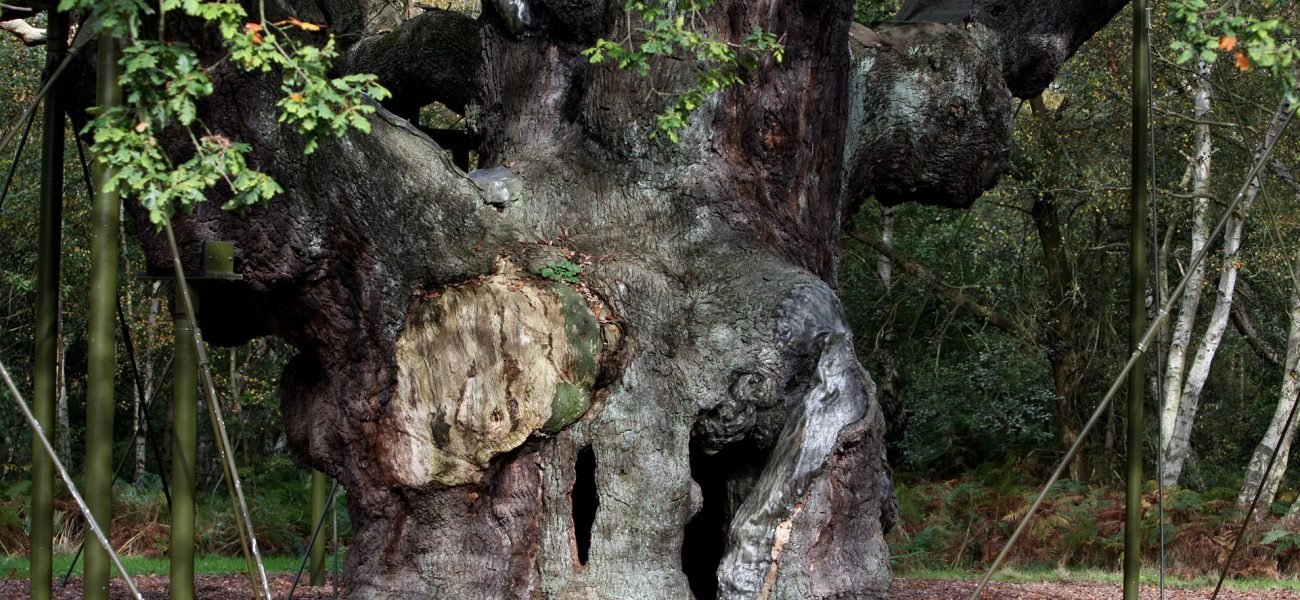
The End of an Epoch: Robin Hood’s Fabled Oak Crumbles, Echoing Global Heritage Peril
POLICY WIRE — Nottinghamshire, UK — It isn’t often that the slow, silent surrender of wood and leaf makes front-page news. Not unless that particular cluster of cellular life has outlived...

POLICY WIRE — Nottinghamshire, UK — It isn’t often that the slow, silent surrender of wood and leaf makes front-page news. Not unless that particular cluster of cellular life has outlived centuries, witnessed the sweep of human folly and ingenuity, and etched itself onto the very fabric of myth. This past week, a living relic – more monument than organism – quietly buckled. An age, you might say, ended right there in Sherwood Forest. And not with a bang, but with a profoundly symbolic whimper.
Because some legends, it turns out, don’t just fade. They eventually, physically, fall apart. And this particular legend, a tree of immense cultural weight, had finally succumbed to what amounts to a long, arduous struggle against gravity, climate, and time itself. Authorities in Nottinghamshire now confront a landscape altered by this quiet collapse—a tangible link to an outlaw’s enduring narrative now severed, splintered on the forest floor. You can’t help but wonder what happens when the literal ground of our folklore shifts, can you? (Awaiting official quote)
It was, for generations, a tangible piece of English history, ‘an ancient oak tree said to have sheltered legendary Robin Hood has died’. Visitors came in droves, year after year, pressing closer to that gnarled bark, maybe whispering tales, or just soaking in the sheer presence of something so immensely old. It wasn’t just a tree; it was an anchor to a romantic, rebellious past. A fixed point in a world that’s constantly, frantically, spinning into the future. They’d marvel at its massive branches, imagining clandestine meetings or weary fugitives finding solace under its canopy. Now, well, now they’ll find only its remains, a stark reminder that even the most enduring symbols have a breaking point.
But the real sting? This isn’t an isolated incident. Across the globe, similar titans, steeped in their own regional myths and memories, are battling conditions they weren’t evolved for. We’re talking ancient olive trees in the Mediterranean that have seen empires rise and fall, venerable Cedars of Lebanon—whose imagery adorns national flags and scriptures—struggling with unprecedented droughts, and even sacred peepal trees in South Asia whose continued existence is jeopardized by urbanization and a rapidly changing climate. This trend suggests a far broader, more disquieting phenomenon. It’s not just a British problem, not by a long shot.
Environmental data confirms this accelerating decay. According to a report published by the scientific journal Nature Plants in 2021, the world’s largest and oldest trees are disappearing at an alarming rate, with many long-lived species experiencing significantly higher mortality rates in recent decades due to factors like climate change, pathogens, and altered fire regimes. We’re losing these irreplaceable natural landmarks before we can fully grasp their historical — and ecological value. It’s like watching an ancient library burn, volume by volume, but slower. More painful, maybe.
In Pakistan, for instance, efforts to preserve historic trees like those dotting Lahore’s Bagh-e-Jinnah or the ancient Sufi shrines are often pitched against relentless urban expansion and increasing pollution. The cultural reverence is there, certainly, but practical protections often lag behind, leaving these living monuments vulnerable. These are not merely botanical specimens; they’re keepers of local narratives, sources of collective memory, and often integral to spiritual practices. Losing them, regardless of their location, means a chunk of that identity goes with them. And when a symbol that defines a place or a people disappears, it leaves a real void. What fills it?
📄 POLICY WIRE WHITEPAPER PUBLISHED: PAKISTAN'S NATIONAL SECURITY POLICY PRIORITIES
👉 READ BY CLICKING HEREThe fallen Robin Hood tree, whatever its precise age (some estimate it near 1,000 years, making it contemporary with William the Conqueror, for Pete’s sake), offers a poignant lesson. We’ve come to view these grand natural sentinels as immortal, part of the scenery. But they aren’t. They’re subject to the same physical laws — and environmental pressures as everything else. We fetishize the stories, but neglect the living vessels that carry them. It’s a particularly human flaw, isn’t it?
What This Means
The collapse of a tree with such storied associations—’said to have sheltered legendary Robin Hood’—is far from just a local curio; it’s a sobering global metaphor. Economically, Nottinghamshire now confronts the diminished appeal of a once iconic tourist attraction. Less tangible but arguably more profound is the loss to collective memory — and cultural identity. For policy makers, particularly those concerned with climate resilience and heritage preservation, it’s a stark alarm bell. This incident forces us to confront how we prioritize protecting natural, cultural infrastructure, particularly in the face of escalating climate impacts.
But there’s also a mirror for nations like Pakistan — and those across South Asia. Many ancient, revered trees and groves there — integral to spiritual sites, historical battlegrounds, and local myths — face similar, often more acute, threats from unregulated development, deforestation, and extreme weather events. The economic calculus for preservation is almost always complex, frequently yielding to immediate infrastructure needs or resource extraction. The environmental degradation, too, often hits communities in less-resilient urban settings harder, diminishing not just historical landmarks but everyday ecological balance.
Politically, the question arises: what responsibility do governments bear for safeguarding such non-renewable natural heritage? Do we treat them like decaying buildings, allocating resources for structural repairs, or simply allow nature to take its course? The policy implications span from agricultural practices and forestry management to the very urban planning directives that decide if an ancient tree stands or falls to make way for a road. We can’t keep thinking these ancient sentinels will just weather every storm—climate-related or man-made. This tree’s quiet demise serves as a particularly sharp lesson, demonstrating that without proactive, perhaps aggressive, conservation efforts, much of our shared global heritage, both natural and storied, might very well simply vanish. And once it’s gone, it’s gone. For good.