Hollywood’s New Moguls, Sean Penn, and the Shifting Sands of the Jan 6 Narrative
POLICY WIRE — New York, U.S. — The future of one of Hollywood’s biggest studios, Warner Bros., isn’t being decided in gilded Tinseltown boardrooms, but by regulators. It’s a strange...

POLICY WIRE — New York, U.S. — The future of one of Hollywood’s biggest studios, Warner Bros., isn’t being decided in gilded Tinseltown boardrooms, but by regulators. It’s a strange world, you know? Just days after the U.S. Justice Department waved through a mammoth media consolidation, an actor-turned-director announced his latest venture: a film about the January 6 Capitol riot, poised to stir already churning political waters. It seems the cameras aren’t just filming the news anymore; they’re becoming the news itself.
Warner Bros., now set to fall under the stewardship of David Ellison — son of Oracle founder Larry Ellison, and both with undeniable ties to former President Donald Trump — will bankroll Sean Penn’s as-yet-untitled picture. It’s an interesting moment for cinema, a convergence of finance, politics, — and historical revisionism in the making. The Justice Department, with a bureaucratic shrug, said it won’t challenge Paramount Skydance’s proposed acquisition of Warner Bros. Discovery. This deal, valued at a staggering $111 billion and agreed to way back in February, puts one of the oldest film studios under new, politically connected management. (Awaiting official quote)
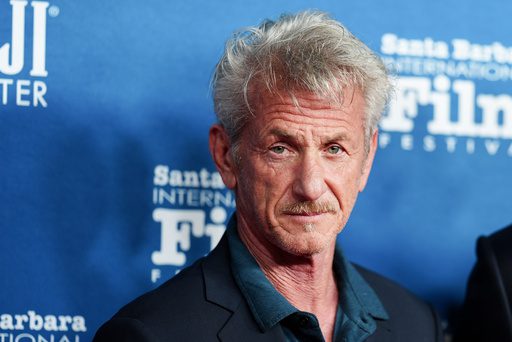
And Penn? He’s set to direct a film exploring the harrowing events of January 6, 2021, focusing on a police officer who faced the mob. No deal’s final for Bradley Cooper to star, though his name’s been bandied about. Penn’s own reps and Warner Bros. were pretty tight-lipped on Tuesday about the character’s specifics, beyond him being based on a flesh-and-blood individual. We know Penn has shown up at these things before, of course. Back in 2022, he sat with Metropolitan Police officers Michael Fanone and Daniel Hodges during congressional hearings — two men who were right there when things got ugly.
Fanone, one of the officers present on that day, famously recounted being grabbed, beaten, tased, all while being called a traitor to my country. He suffered a heart attack, the assault stopping only when he revealed he had children. Hodges also offered a grim account of his own experiences. Penn, ever the observer, had simply stated he was attending as just another citizen, looking for some form of justice. But what kind of justice, or what narrative, will this film portray?
Because let’s be honest, the timing here isn’t accidental. With production eyed for mid-2027, the film could hit screens just as the 2028 election cycle is warming up. And Penn’s pedigree isn’t small, you know. He recently snagged his third Oscar for playing a racist military zealot Col. Steven J. Lockjaw in One Battle After Another — a film hailed as a timely political film — skipping the ceremony to visit Ukraine instead. But making a Jan 6 movie under Warner Bros. with its new political affiliations? That’s a whole new ballgame, a complex intersection of art, commerce, — and ideology. The film, we’re told, is about an unexpected friendship. But with so much political baggage involved, one wonders just how unexpected, or how purely dramatic, it can remain.
The global audience, particularly in fragile democracies across South Asia, watches America’s internal strife with a curious blend of alarm and schadenfreude. When the very pillars of democratic governance are seemingly shaken from within, the ripple effect isn’t confined to U.S. borders. For nations like Pakistan, constantly grappling with their own political instabilities and the specter of institutional erosion, Washington’s theatrical dramas offer both cautionary tales and, perhaps, unexpected mirrors to their own challenges. A Hollywood film shaping the narrative around an event as symbolically charged as January 6 doesn’t just play in Peoria; it informs perceptions of democratic resilience—or its absence—from Karachi to Kabul.
What This Means
The real story here isn’t just about a movie; it’s about control over narratives, plain — and simple. Media consolidation, particularly when the acquirers have explicit political ties, sends shivers down the spines of anyone who values journalistic integrity and artistic autonomy. Ellison, having hosted a UFC event at the White House for Trump on Sunday, isn’t exactly keeping his affiliations a secret. This deal transforms a creative powerhouse into a potentially partisan mouthpiece, whether subtly or overtly. It’s no longer just about market share; it’s about mindshare, about shaping how millions perceive critical historical events.
And then there’s the Jan 6 riot itself. It was more than a protest; it was an attempt to disrupt a cornerstone of American democracy. For a major studio, under new, politically charged ownership, to produce a film on such a recent, still-raw event suggests a deliberate effort to solidify, or even shift, public perception. Will it be a searing critique, or something more nuanced, perhaps even sympathetic? The potential for this film to become another front in the ongoing culture war is immense. This isn’t just entertainment; it’s a political weapon in waiting. For independent journalists, the pressure to maintain editorial independence amidst shifting media landscapes is now more paramount than ever. It really just underscores how interconnected everything really is: power, media, and the stories we choose to tell ourselves.