


Formula 2’s Grand Illusions: Tyre Strategy Trumps Talent in Barcelona
POLICY WIRE — Barcelona, Spain — The scent of burnt rubber and ambition hung thick in the Catalonian air last weekend, but for some, the real drama wasn’t just about hairpin turns and blistered...

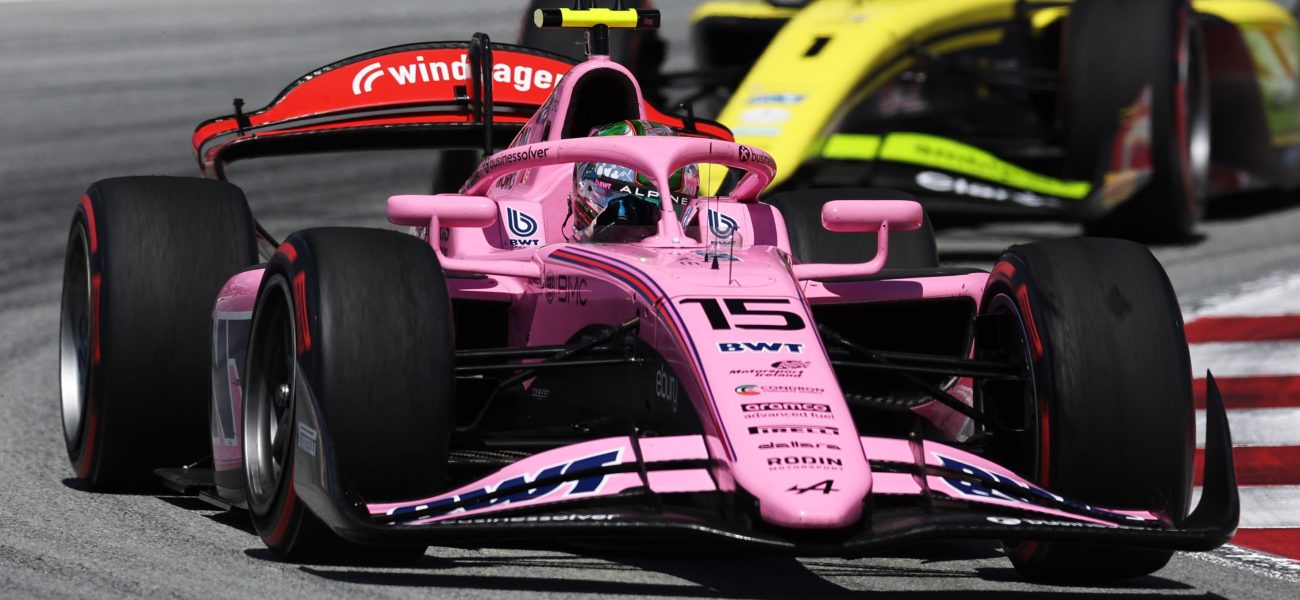
POLICY WIRE — Barcelona, Spain — The scent of burnt rubber and ambition hung thick in the Catalonian air last weekend, but for some, the real drama wasn’t just about hairpin turns and blistered tyres. It was about strategy, sheer luck, and the ruthless calculus of motorsport where a flash of talent might just not be enough against fresher equipment. A twenty-year-old Irishman, Alex Dunne, found himself caught in this very grinder, clinching a hard-fought third place, his fifth podium appearance of the season in the Formula 2 feature race.
It was never going to be easy, even after starting so well. Dunne had taken the lead off the line, a move that promised a certain kind of dominance. But, as racing, — and indeed life, often proves, promises are frequently broken. The narrative unfolded with the inevitability of a pre-determined fate, thanks to tyre wear—an abstract, almost poetic element of modern racing that decides championships, and perhaps, destinies. Brazil’s Rafael Camara, claiming his first win, along with Bulgaria’s Nikola Tsolov, would later relegate Dunne to third, the fresher rubber on their machines proving insurmountable. [QUOTE_PLACEHOLDER]
It’s the fifth podium of the season for the Alpine Junior driver Dunne, who’s in his second season in Formula 2. That’s a decent haul for any young gun trying to make their mark. He had finished in eighth place in the sprint race on Saturday, — and one might have expected a certain weariness. Not so. He made a great start — and passed Invicta Racing’s Camara into the first corner. He did. That moment of glory, however fleeting, was real. But then came the strategy call, the early pit stop, a gamble. Sometimes those gambles pay off spectacularly; other times, well, you’re left watching someone else speed past. And he couldn’t stop the Ferrari junior driver overtaking him with seven laps to go. No amount of grit can overcome worn compounds, it seems.
Then Tsolov, in the closing stages, decided Dunne’s second spot wasn’t secure either. Dunne held off fellow Alpine junior Gabriele Mini on the final lap to claim a fifth podium in as many rounds. A fighter, then. Mini, an Italian, now leads the standings, ahead of Tsolov, the Bulgarian, while Dunne, the Irishman, has climbed to fourth. Camara, for his part, shot up to third in the championship standings. These aren’t just names; they’re representatives of nations, of federations, of colossal investments in an ecosystem few outside its gilded cage can truly grasp. Motorsport at this level isn’t just sport; it’s a proxy battleground for national pride and technological prowess, however nascent.
And let’s not forget Formula 3. Red Bull Junior driver Fionn McLaughlin finished in 26th place in the feature race — and 20th in the sprint race. Campos Racing’s Theophile Nael took the chequered flag in Sunday’s feature race while Australia’s James Wharton won the sprint race on Saturday. These results, for the uninitiated, may seem like mere footnotes. But they’re markers in a brutal economic competition. The global motorsport market was valued at an estimated $7.97 billion in 2023, according to a report by Grand View Research—a vast, intricate financial web that often bypasses entire swathes of the world.
📄 POLICY WIRE WHITEPAPER PUBLISHED: PAKISTAN'S NATIONAL SECURITY POLICY PRIORITIES
👉 READ BY CLICKING HEREWhat This Means
This Barcelona dust-up, though seemingly just another race in a long season, illuminates more than just tyre degradation—it reveals the deep economic chasm underpinning global sport. Racing at this level, particularly junior categories, demands exorbitant funding, often hundreds of thousands, if not millions, per season. This effectively shuts out talent from less affluent nations or regions. You simply can’t compete if you haven’t got the backing, the corporate sponsorships, the familial wealth. It’s a sad fact, but it’s true.
Consider, for instance, the complete absence of drivers from Pakistan or other South Asian or Muslim-majority nations in these elite junior racing series. It isn’t for a lack of talent, necessarily. It’s for a lack of access, an impenetrable financial barrier that turns global dreams into local curiosities. When we speak of global sporting representation, this disparity is often overlooked. Where’s the investment? Where are the grassroots programs that could nurture an Emirati or a Malaysian or, indeed, a Pakistani driver through the ranks of karting, Formula 4, Formula 3, and then to Formula 2? It’s not just about one kid, either; it’s about the missed opportunities for nations to plant a flag, to generate soft power through sporting achievement.
The politics of who gets to race, who gets sponsored by Ferrari or Red Bull or Alpine, reflects broader geopolitical and economic alliances, and omissions. It’s about more than just lap times; it’s about a global narrative that largely excludes those who can’t afford a seat at the table, let alone on the grid. Maybe it’s time to recognize that this isn’t just about boys and their fast cars; it’s a symptom of a larger, inequitable global financial infrastructure that dictates who gets to shine on the world stage, whether it’s through sport or through economic might. And the wait for more inclusive participation continues, much like the anticipation for broader representation in other spheres. Until those economic fundamentals shift, we’re likely to see the same geographic concentration of talent. But who knows? Perhaps the next F2 champion will hail from a country few expect, breaking these well-worn patterns and injecting a much-needed diversity into the sport’s very fabric, creating a new challenge to old structures, much like how established norms can be surprisingly disrupted.