

Española’s ‘Accident’ Fire: A Sobering Look at Fragile Ecologies and Human Folly
POLICY WIRE — Española, N.M. — It often isn’t the grand design or the malicious intent that reshapes a landscape, but rather the innocuous fumble. The forgotten match. The flickering campfire....

POLICY WIRE — Española, N.M. — It often isn’t the grand design or the malicious intent that reshapes a landscape, but rather the innocuous fumble. The forgotten match. The flickering campfire. Or, in this particular New Mexico instance, a set of spinning tires on parched earth. We think of wildfires as cataclysmic forces, the stuff of biblical prophecy and state-of-emergency declarations, born of lightning strikes or arsons of almost poetic malice. But sometimes, just sometimes, it’s just someone—well, having a really, really bad day behind the wheel. A mundane mishap, yet its implications ripple far beyond the charred acreage it left behind, sparking questions about urban planning, human responsibility, and the unforgiving calculus of our warming world.
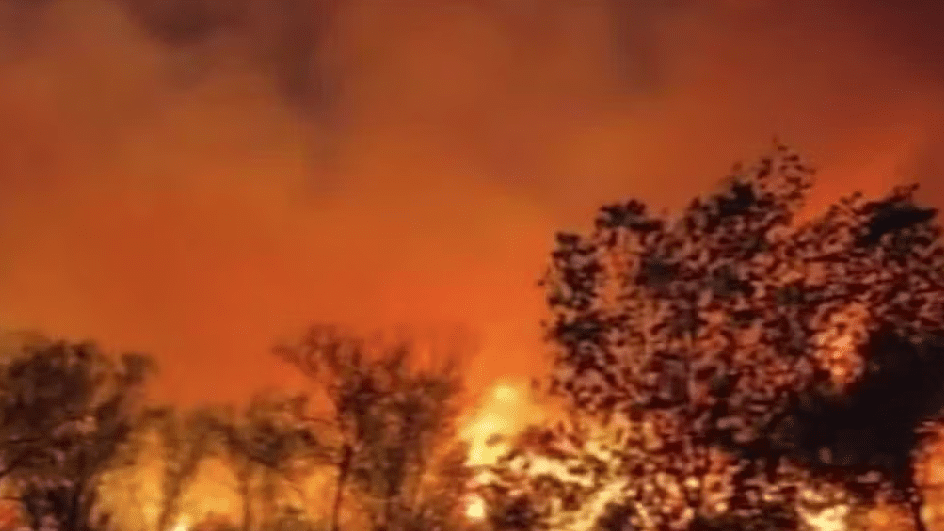
After a painstaking two-month probe, authorities have pinpointed the igniting spark for April’s Riverside Fire. Forget dramatic sabotage or nefarious plot; the City of Española made it clear. The Riverside Fire that burned behind the Santa Claran Casino in April was started by accident. That’s the word directly from officials, a revelation that strips away any lingering mystery or, frankly, any opportunity for sensationalism regarding its origins. What precisely happened? A car traveled along the bosque, got stuck — and ignited the surrounding grass, the investigation confirmed. It’s an almost painfully simple chain of events. A bit of recreational off-roading, perhaps, or a misjudged turn into the riparian zone, leading to wheels churning, friction building, and then—poof—dry vegetation meeting uncontrolled heat. [QUOTE_PLACEHOLDER]
The damage, though localized, tells a stark story of consequence. The Riverside Fire destroyed one structure — and burned about 44 acres. And forty-four acres, while not setting any records for New Mexico’s larger infernos, represents a significant chunk of land, a habitat, a piece of someone’s property—all gone because of an unanticipated moment of poor judgment. But there’s more to it, isn’t there? This wasn’t some remote, unpopulated wilderness. It happened behind a casino, a structure symbolizing a distinct human footprint — and economic activity. It was on the edge of a ‘bosque’—a cottonwood forest, a precious riparian lifeline in an otherwise arid landscape.
Because these unique ecosystems, these ribbon-like forests along rivers, are naturally prone to fire. They always have been. They contain vast amounts of fine, flashy fuels (dry grasses, leaves) that can ignite with frightening speed. What’s different now? Human proximity — and an increasingly volatile climate. And when we talk about vulnerability, about places teetering on the edge of ecological collapse, Española’s situation echoes a global refrain. Think of Pakistan’s arid regions, where flash floods and scorching heat, coupled with extensive deforestation for fuel and agriculture, make even a minor spark a potential catastrophe for local communities. We’ve seen similar patterns repeat, from Australia to the American West, where encroaching development and climate instability combine into a wicked problem.
In fact, consider the rising global temperature. The National Oceanic and Atmospheric Administration (NOAA) reports that July 2023 was the hottest month on record globally since instrument observations began in 1880. That’s not a footnote; it’s a headline screaming that our deserts are getting drier, our fuels are primed, and our tolerance for error is shrinking. The same challenges faced in New Mexico’s arid lands resonate with those faced by nations struggling with climate-induced resource scarcity. Look at regions across the Middle East or South Asia, where changes in monsoon patterns and extended dry spells create conditions ripe for ecological disaster, often exacerbated by a complex web of governance challenges and community preparedness. These seemingly localized fires aren’t just isolated events; they’re symptoms of a much larger, global malaise.
The incident reminds us how fragile these liminal spaces—where human activity brushes against untamed nature—truly are. A simple car ride, a momentary lapse, and suddenly you have a fire, a threat not just to natural ecosystems but to property, infrastructure, and human lives. It’s a sobering observation. And the city shared the update after a two-month investigation. That level of inquiry shows you that even a small fire carries big weight for authorities, demonstrating the thoroughness, or perhaps the sheer burden, of tracking these environmental traumas.
You can’t help but reflect on how policy and planning in these transitional zones are constantly playing catch-up with human behavior and environmental shifts. This specific event underscores a relentless tension—a tension present globally in managing the interfaces between civilization and the wild. As communities grow — and push further into once-unpopulated areas, the risk profile changes dramatically. What might have been a minor, quickly contained incident a century ago, now carries far greater stakes, affecting homes, livelihoods, and air quality across an entire region. And that’s a problem that won’t disappear anytime soon.
As one might expect, even with the primary source identified, preventative measures remain. The Rio Arriba County burn ban remains in effect. It’s a stark, simple declaration—a reminder that despite pinpointing the ignition, the underlying conditions for widespread fire still exist. A region, constantly mindful of the potential for uncontrolled blazes, maintains its vigilance, irrespective of whether the next fire is sparked by a natural phenomenon or by human hand. Because, really, what’s the difference when your home is on fire? The ban isn’t about blaming the last fire’s cause; it’s about trying to avoid the next one. And isn’t that just a pragmatic truth of policy in a fire-prone landscape?
What This Means
The Española Riverside Fire, though modest in scope, reveals far more than just the source of some springtime smoke. Politically, this incident offers a micro-narrative within the macro-saga of climate adaptation and human encroachment into vulnerable ecosystems. For local authorities, it’s a stark illustration of liability — and preventative infrastructure. You’ve got an expensive investigation—a two-month investigation—culminating in a mundane explanation. This expense could have, perhaps, gone towards more robust fire breaks, or perhaps, better enforcement of restricted zones within the bosque itself. There’s a direct economic hit, certainly, from firefighting costs, but also potential indirect costs from tourism impacts or altered perceptions of local safety.
Economically, this speaks to the increasing financial burden on municipalities and county governments trying to manage wildfire risk in areas where urban sprawl meets wildlands. Property insurance premiums climb, disaster relief funds are stretched thinner, and local economies reliant on outdoor recreation face heightened instability during fire seasons. For a casino—like the Santa Claran Casino mentioned in the initial report—proximity to such an event isn’t exactly a marketing boon. But also, it’s not just a local problem. The implications of accidental human-sparked fires in sensitive ecosystems resonate deeply across arid and semi-arid regions globally, including many in South Asia and the Muslim world.
Take, for instance, New Mexico’s challenges with drought and resource management, which parallel those seen in countries like Pakistan. Here, communities contend with water scarcity, desertification, and increased wildfire risk—all compounded by rapid population growth and often, inadequate infrastructure. A car getting stuck and igniting grass in Española isn’t far removed from a discarded cigarette setting off a brush fire in rural Sindh, or a small cooking fire escalating into a forest blaze in the Margalla Hills. These aren’t just isolated events; they’re interconnected signals of planetary stress and a call for more resilient, adaptive policies that anticipate human error and climate volatility. It suggests that even the smallest, most ‘accidental’ event demands serious, structural attention.