

Red Sox Outfielder’s Brutal Self-Assessment: A Universal Saga of Performance and Pressure
POLICY WIRE — Boston, USA — Professional sports, like international diplomacy or high-stakes finance, often presents a sanitized facade. Beneath the polished veneer of triumph and carefully curated...

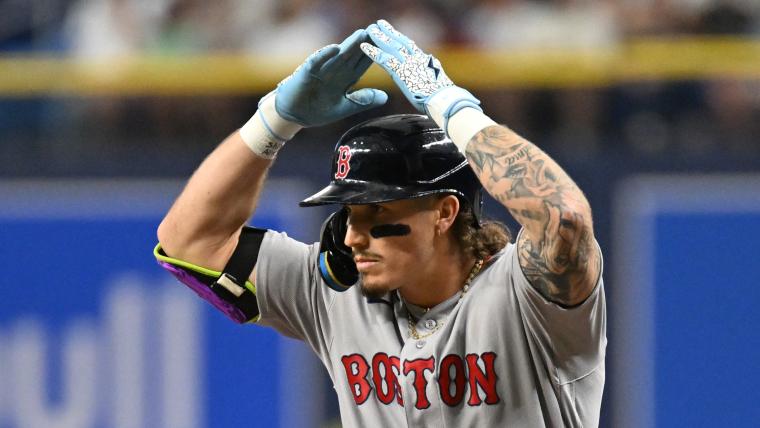
POLICY WIRE — Boston, USA — Professional sports, like international diplomacy or high-stakes finance, often presents a sanitized facade. Beneath the polished veneer of triumph and carefully curated press conferences, though, there’s a rawer reality: the constant, unforgiving grind against expectation, public scrutiny, and one’s own limitations. That harsh truth spilled out recently from Boston Red Sox outfielder Jarren Duran, offering a glimpse not just into a slumping athlete’s psyche, but into a universal struggle for competence and dignity under the relentless glare of an audience.
It wasn’t a PR-crafted statement. No, this was an unvarnished self-critique from a man plainly wrestling with his craft. The sentiment wasn’t particularly eloquent, nor was it meant to be. Duran’s blunt assessment, offered to MassLive’s Chris Cotillo, cuts through the usual athletic platitudes: “I’m going to be honest with you. I’ve felt terrible. Playing like (expletive) at the plate. But just gotta figure it the (expletive) out. I’m not really doing much for the team at the plate. So I’ve just gotta be better.” Such candor, startling in its ferocity, resonates far beyond the baseball diamond. It speaks to any individual whose performance, quite frankly, just ain’t cutting it.
Because, for a fleeting moment, May was good to Duran. You could even say he was electric. He posted an impressive 30 hits, with half those going for extra bases. He also managed 11 walks — and brought home 22 runs in just 115 at-bats during that period. His OPS reached a commendable .879, — and his batting average leapt from a lukewarm .172 in April to a solid .261 in May. That month alone, he smacked nine home runs, added four doubles, and even legged out a triple. Then came June. And like the swift shift in regional geopolitical alliances, fortunes can pivot on a dime.
Now, his June batting average has slipped back to a paltry .167. Overall, it’s hanging around .210. One could argue he’s become a statistical anomaly, a fleeting comet in May’s constellation, then a regular brick in the wall the very next month. And don’t forget, he managed to snap an 11-game drought without a long ball with a 400-foot shot against the Texas Rangers — just his first and only homer that month so far. But what does it mean when the one bright spot is framed by a canyon of struggles? It’s not just about swings and misses; it’s about the relentless pursuit of consistent output in an unforgiving public forum.
Consider the parallel. In South Asia, where the collective ‘izzat’ — or honor and public standing — of a figure, whether a politician, a public servant, or even a community leader, is scrutinized with intense cultural weight. A dip in performance, a perceived misstep, or a failure to deliver on promised outcomes isn’t just a blip on a spreadsheet; it’s a direct challenge to one’s personal and familial reputation. The pressure isn’t merely professional; it’s existential. Duran’s visceral reaction, that feeling of ‘terrible’ inadequacy, speaks to a deeply ingrained human need to contribute, to perform, and to justify one’s place — whether that place is center field for the Red Sox or a government ministry in Islamabad.
Such honest self-assessment, while uncomfortable, isn’t always common. Especially not when cameras are rolling. But, as anyone who has observed the political machinations in places like Pakistan knows, a figure’s candid, albeit desperate, acknowledgment of a failing can sometimes humanize them in a way polished PR never could. The question, always, remains: will it translate into improved outcomes? Or is it simply a temporary catharsis before the next inevitable cycle of expectation — and shortfall? Because, let’s be real, the public rarely remembers good intentions; they remember results.
Duran’s plight reminds us that even at the pinnacle of their respective fields, individuals contend with very human fluctuations in ability and confidence. A quick peek at any performance chart shows you that much. According to NESN, he managed to slug nine home runs in May, but only one so far in June. It’s a stark reminder of how quickly the market — or the fans — can shift its appraisal. Public priorities shift with astonishing speed, and today’s hero is tomorrow’s cautionary tale if the numbers don’t hold.
But the man isn’t quitting, is he? You’ve got to respect that. He says he’s just “gotta figure it the (expletive) out.” That’s the gritty determination that separates the fleeting talent from the enduring professional. It’s the same fire, often unseen, that fuels efforts in far more serious arenas, from diplomacy to economic reform, particularly when those efforts appear stalled or faltering. Summer stalemates aren’t just for sports teams; they define periods in policy and international relations, too.
What This Means
Duran’s public struggle isn’t merely a baseball footnote; it’s a micro-saga reflecting macro-principles. Economically, his fluctuating output represents the volatility of human capital. May’s robust performance offered significant ‘returns on investment’ for the team and, by extension, the broader sports economy, translating to fan engagement and ticket sales. June, conversely, demonstrates a ‘bear market’ in his individual performance, which, if sustained, impacts overall team value and investor confidence (i.e., fan loyalty). Politically, the stark honesty, while refreshingly authentic, could be a double-edged sword. It might garner sympathy or it might signal vulnerability to rivals — both on the field and in the arena of public perception. His explicit declaration of underperformance serves as a rare, public accountability metric. Any leader, particularly in nations where economic fragility demands consistent results, might benefit from such candid self-assessment, though few dare it. It begs the question: how much vulnerability can a public figure afford before it undermines their authority, regardless of how true their statement might be?