

Silent Fissures: Beijing’s ‘Dissatisfaction’ with Pentagon Spurs Global Tech Unease
POLICY WIRE — Washington, D.C. — Another tremor just rolled through the digital trenches of global geopolitics. It wasn’t an earthquake, more a calculated shove, one of many in a simmering...

POLICY WIRE — Washington, D.C. — Another tremor just rolled through the digital trenches of global geopolitics. It wasn’t an earthquake, more a calculated shove, one of many in a simmering contest between titans. You’ve gotta wonder how much elbow room’s left before someone — maybe everyone — ends up squashed in the middle of this high-stakes wrestling match. Because while Washington rolls out yet another list, Beijing, naturally, isn’t taking it lying down.
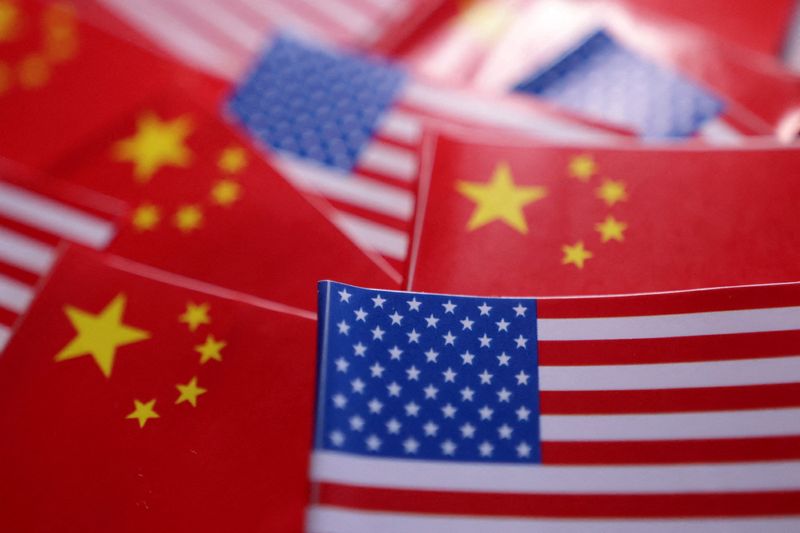
It’s become a grimly familiar dance, hasn’t it? The Pentagon — it appears they’re always finding new partners for this particular waltz — has opted to shine a harsh spotlight on more top-tier Chinese technology firms. Call it what you will: economic deterrence, national security precaution, or just plain old keeping the rivals in check. The official reasoning often comes down to some variation of [QUOTE_PLACEHOLDER], concerns about dual-use technologies, and that evergreen worry over who’s collecting what data.
The immediate fallout? Predictable. Beijing wasted no time. A Ministry of Foreign Affairs spokesperson came out swinging, stating that China was [QUOTE_PLACEHOLDER]. They didn’t exactly mince words about what they see as overreach from the Americans. It’s a standard play: an assertion of sovereign rights mixed with an accusation of economic bullying. And we’ve seen this show before. Many times.
But beyond the official communiques and the diplomatic sparring, there’s a real, tangible effect reverberating through markets and boardrooms worldwide. This isn’t just about silicon — and software; it’s about influence. It’s about who gets to define the digital future, who controls the infrastructure, — and whose standards win out. The firms listed often aren’t just manufacturers; they’re ecosystem builders. We’re talking about companies that touch everything from 5G networks to smart city infrastructure. They’ve built supply chains and partnerships stretching across continents. Think about the ramifications for a developing economy trying to catch a break, to modernize.
And consider Pakistan, for instance. It’s a country that’s long played a delicate balancing act, maintaining ties with both Beijing — and Washington. Chinese tech investments, particularly in telecommunications and digital infrastructure through initiatives like the Belt and Road, aren’t just business deals there. They’re central to development strategies, offering solutions often more accessible or affordable than Western alternatives. But when firms like Huawei or others become targets, it forces difficult decisions. Does Islamabad risk US censure by continuing to engage these companies? Or does it jeopardize crucial projects — and economic lifelines by pivoting away? It’s not just a strategic question; it’s an existential one for some parts of their modernization drive. They’re effectively stuck in the middle, and they didn’t ask for that particular role.
It’s not an insignificant number we’re talking about, either. According to analysis from the Center for Strategic and International Studies (CSIS), roughly 68% of the targeted Chinese tech entities from similar U.S. lists over the past five years have direct or indirect ties to telecommunications or critical infrastructure projects in at least three developing Asian or African nations. That’s a huge footprint. So this isn’t just an American problem, or a Chinese problem. It’s a global problem, impacting growth aspirations everywhere.
The Pentagon’s announcement, devoid of specific actionable details on what the move entails beyond adding names to a watch list — it keeps things opaque, a fog of war in the economic sphere. Are investors now forced to divest? Will the export controls intensify? The vagueness itself can act as a chilling effect. And, it’s perhaps exactly what’s intended. It adds friction to any foreign entity’s engagement with these companies, forcing them to consider potential future penalties from the US treasury. Nobody likes uncertainty when big money’s on the line.
Beijing’s retort didn’t offer any surprises; it seldom does anymore in these scenarios. They reiterated their demand for the US to [QUOTE_PLACEHOLDER] — and emphasized that they would [QUOTE_PLACEHOLDER]. That sounds ominous, of course. It could mean reciprocal sanctions, further trade disputes, or a hardening of their own industrial policies to lessen reliance on Western components. What it definitely means is that the friction won’t ease up anytime soon. But, are they ready for the real, hard economic impacts?
What This Means
This latest salvo from the Pentagon isn’t a mere procedural update; it’s a hardening of the lines in an undeclared tech war, intensifying the pressure points on critical global supply chains and foreign policy decision-makers, especially in developing economies like Pakistan. It forces governments and businesses around the world to weigh geopolitical allegiance against practical economic necessity. China’s predictable ‘strong dissatisfaction’ is more than just rhetoric; it signals a continued, perhaps intensified, drive for technological self-reliance and the strengthening of its own, separate, digital ecosystem. We’re seeing the global economy splinter into rival spheres of technological influence, with real, difficult choices ahead for nations caught in the crosshairs. Expect increased volatility in tech stocks and heightened political maneuvering from nations seeking to navigate these ever-deepening chasms without alienating either superpower. It’s a rough road ahead, isn’t it? Especially for those just trying to modernize. For those feeling the pinch, this economic pressure won’t be easily ignored.