


Octogenarian Oracle: The American Political Circus Endures its Ringmaster, But Cracks Show
POLICY WIRE — Washington, D.C., USA — It’s not just the clock ticking past another arbitrary milestone that makes headlines anymore. It’s the entire theatrical production surrounding it. Donald...

POLICY WIRE — Washington, D.C., USA — It’s not just the clock ticking past another arbitrary milestone that makes headlines anymore. It’s the entire theatrical production surrounding it. Donald Trump, ever the impresario, just crossed his eighth decade on the planet, not with quiet reflection, but with a display so gaudy—so utterly, unapologetically Trumpian—that it makes traditional politicos scratch their heads and ordinary folks just kind of stare. What’s perhaps most telling isn’t the man himself hitting 80; it’s the fact that the nation, and frankly, a good chunk of the world, remains absolutely riveted, or at least resigned, to the show.
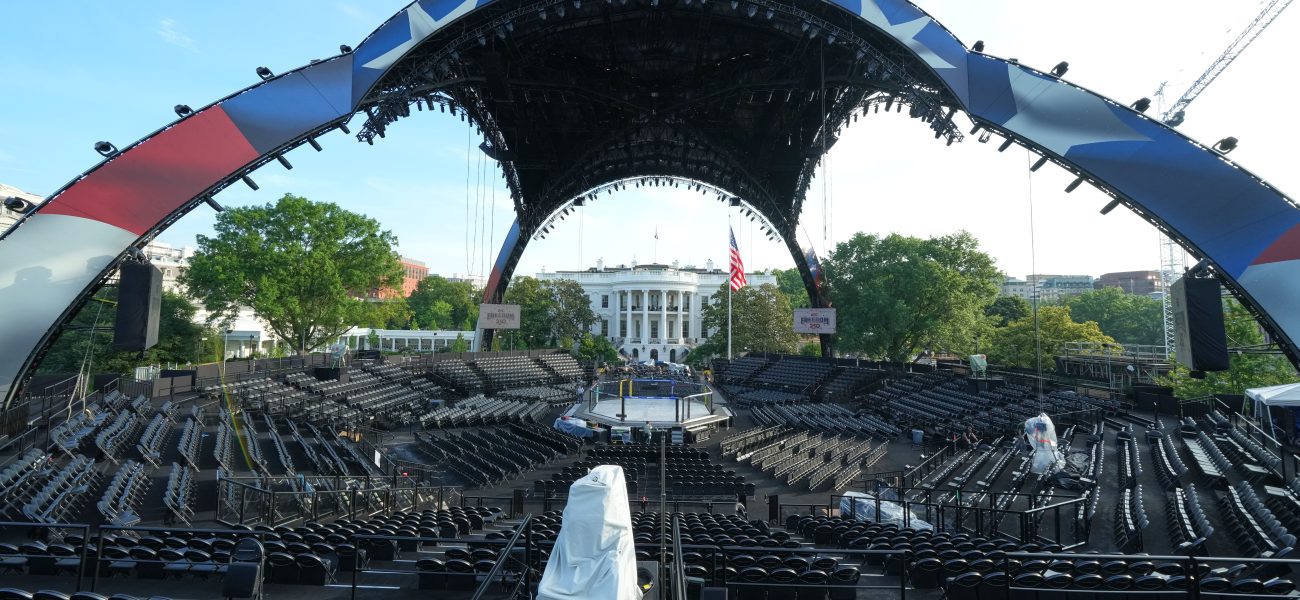
His recent celebrations, often cast as a whirlwind of high-stakes political brawling and symbolic showdowns, underscore a profound, if uncomfortable, truth about American public life: the lines between governance and pure entertainment have all but dissolved. The so-called political ‘cage fights’ on Capitol Hill are less a bug and more a feature, it seems, in this iteration of the grand American experiment. Voters, for better or worse, have become accustomed to a kind of pugilistic politicking that prioritizes confrontation over consensus. And it’s not just at the top; this combative spirit permeates down to local levels, twisting discourse into something barely recognizable to old-guard sensibilities. [QUOTE_PLACEHOLDER]
Because, make no mistake, beneath the bluster and the carefully staged public appearances, very real and rather stubborn challenges loom. We’re talking about an economy that still feels wobbly for many working families, persistent inflationary pressures, and a healthcare system that remains, to put it mildly, an ongoing headache. Social divides feel wider, deeper than they’ve been in decades. These aren’t the kind of issues you solve with a flashy rally or a stinging soundbite. They require the sort of diligent, often unglamorous, legislative work that just doesn’t get airtime when the next media-ready drama is unfolding.
But the consequences extend far beyond American shores, too. Consider the geopolitical stage. Nations in South Asia, particularly Pakistan, keep a hawk-like watch on American political volatility. They’re sizing up who’s in charge, who might be, and what that means for regional stability, for aid packages, or for delicate diplomatic overtures regarding Kashmir or Afghanistan. An erratic foreign policy — or even the perception of one — from Washington can quickly throw carefully balanced regional power dynamics into disarray, leading to increased uncertainty for millions. When US politics appears more like a wrestling match, it doesn’t inspire confidence abroad; it creates strategic headaches.
This enduring fixation on the personal, the spectacular, often overshadows any serious policy discussion. It’s a dynamic that shapes global perceptions of America’s reliability. A 2023 Pew Research Center study revealed only 46% of adults in 23 countries expressed confidence in the U.S. President to do the right thing regarding world affairs. That’s a stark, undeniable data point, folks. It reflects not just opinions on an individual leader, but perhaps a growing skepticism about the system itself—how leadership emerges, how decisions get made, and how stable those decisions truly are.
And yes, the fact that a man celebrating his 80th birthday is still commanding this level of political wattage is an observation in itself. It’s an age when many of his contemporaries are, let’s say, gardening. But he’s out there, still orchestrating skirmishes, still defying expectations about how political figures are supposed to gracefully exit the main stage. The energy’s still there; the arguments, certainly. What’s sometimes missing in the uproar, though, is a sober reckoning with what’s at stake, particularly for those on the receiving end of these political machinations.
What This Means
The perpetual drama emanating from the highest levels of American politics isn’t merely a cultural phenomenon; it’s a political and economic anchor. For one, it signals continued volatility in policy directions. When leadership roles are occupied by figures who thrive on constant opposition, governmental efficiency often becomes a casualty. We see legislative logjams, delayed reforms, — and a general state of policy limbo. Businesses, particularly those operating internationally, crave predictability. They don’t get much of it these days, leading to hesitation in investment — and long-term planning.
Economically, this uncertainty filters down. Consumer confidence can waver. Investor appetites might shrink, opting for safer havens away from perceived political instability. And internationally, other nations are undoubtedly calculating the risks of aligning too closely with, or depending too heavily upon, a United States where the political ground seems to shift underfoot with every news cycle. For countries like Pakistan, reliant on US engagement and aid, this can translate into genuine anxiety over development projects, defense strategies, and even internal stability. They can’t just wish the turbulence away.
the elevation of political theatrics above substantive policy debate risks eroding democratic norms and institutions from within. When the ‘show’ becomes more important than sound governance, the very foundation of democratic process gets hollowed out. It fosters a climate where division is incentivized, and finding common ground becomes an increasingly quixotic endeavor. Ultimately, the question isn’t just whether the ringmaster can keep the crowds entertained at 80; it’s whether the circus itself can still manage the complex business of leading a global superpower without falling apart at the seams. History’s certainly watching this unfold.