


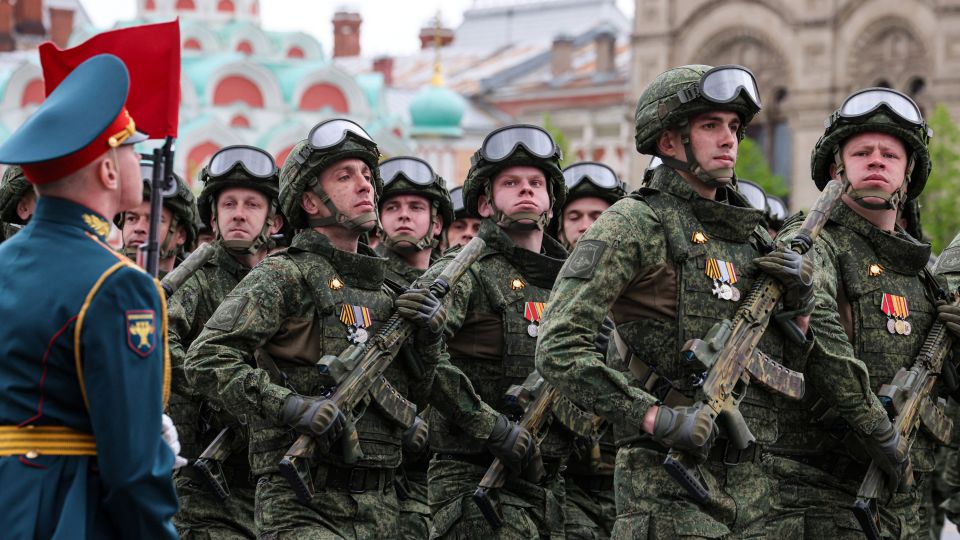
Moscow’s Brute Force Illusion Cracks in Ukraine
POLICY WIRE — Washington, D.C. — For longer than many observers initially granted, the grinding conflict in Ukraine has defied conventional wisdom about brute numerical superiority. For years, the...

POLICY WIRE — Washington, D.C. — For longer than many observers initially granted, the grinding conflict in Ukraine has defied conventional wisdom about brute numerical superiority. For years, the prevailing military doctrine—certainly in Moscow—seemed to champion an inexhaustible human wave. Now, though, that tide, which was once thought unyielding, shows tangible signs of ebb. It’s less a flood and more a drip now.
It was always assumed, a rather convenient simplification, that Russia’s colossal population pool offered an insurmountable advantage. One side simply had more bodies to throw at the problem, no matter the casualties. But the brutal reality on the ground—a slow, attritional meat grinder—has begun to chip away at that long-held, almost religious conviction. The human cost isn’t just a grim tally for strategists anymore; it’s a palpable, growing drag on their capacity for sustained offense.
Ukraine, they said, would buckle under the sheer weight. They didn’t. They held on. It’s a remarkable defiance of a calculus steeped in Soviet-era thinking.
Reports trickling out, despite the Kremlin’s best efforts to paint a rosy, victorious picture, indicate a shift. Recruiting centers aren’t seeing the queues they once might’ve. There’s a certain grim irony in a state built on nationalist fervor struggling to rally its populace for a prolonged, bloody campaign that lacks a clear, digestible rationale for its own citizens. It’s an interesting spectacle for any aspiring autocracy watching on, wondering just how much the populace can take before the cracks show. According to a March 2024 report by the London-based Royal United Services Institute (RUSI), Russia’s weekly recruitment rate has dipped by 17% since early 2023, failing to offset attrition on the front lines. That’s a cold, hard number with chilling implications for Moscow’s planners.
This isn’t about morale exclusively, though that’s certainly part of it; it’s about demographics, the quality of recruits, and the sheer logistical nightmare of training and equipping them. They’re reportedly having to pull from deeper and deeper pools—older men, men with medical conditions—anyone really. It smacks of desperation, plain — and simple.
And this isn’t just some tactical blip. No, it hints at something more fundamental. A systemic strain that wasn’t supposed to manifest in a nation that’s supposed to be geared for long wars. It brings into sharp relief questions about the sustainability of a conflict launched on faulty premises, not least the notion that Ukrainian resistance would just evaporate like morning dew. Russia underestimated a nation’s will; now it’s counting the bodies. There’s a particular kind of stubbornness in that. [QUOTE_PLACEHOLDER]
From the perspective of nations like Pakistan, caught between geopolitical blocs and perpetually navigating complex alliances, the conflict’s evolution offers a few uncomfortable lessons. While Islamabad’s focus remains intensely regional – Afghanistan, India, economic stability – it doesn’t operate in a vacuum. A Russia, once perceived as an unwavering global strongman, now appearing strained by its European adventures, presents both challenges and opportunities. For nations accustomed to carefully calibrated deference, the perceived weakening of one superpower’s capabilities forces a recalculation of global power dynamics, trade routes, and even defense procurements. It certainly informs the subtle shifts in approach towards Western partners — and China. [QUOTE_PLACEHOLDER]
It’s not just about weapons sales, either, though that’s a significant piece of the puzzle. It’s about the very idea of national resolve, of the state’s capacity to coerce both domestically — and internationally. How do these protracted, costly engagements play out in the court of public opinion, not just in Kyiv or Moscow, but in the streets of Karachi or Lahore, where state efficacy and stability are constant, volatile topics? It shows that even a vast, ostensibly powerful nation can get bogged down, chew through its resources, and find its grand ambitions diminished on the battlefield. Nobody wants to be the next Russia in such an unwinnable contest. You can find a discussion about similar geopolitical shifts that might concern countries like Pakistan in Dhaka’s Gambit: Why Bangladesh Skipped Delhi for Dragon’s Embrace, where regional loyalties are up for debate. [QUOTE_PLACEHOLDER]
What This Means
The slow attrition of Russia’s human capital advantage in Ukraine carries profound, multi-layered implications for global policy. Economically, it suggests a longer, more volatile period for commodities markets, especially energy, as Moscow grapples with prolonged war footing and the West continues its sanctions regime. The shift could also embolden countries currently hedging their bets, perhaps nudging them further towards Western alliances or, conversely, strengthening their resolve to diversify partnerships away from perceived hegemons. This dynamic isn’t just academic; it directly affects aid packages, trade deals, and the very stability of developing economies reliant on predictable global supply chains and political narratives. Politically, the narrative of Russian invincibility—a story the Kremlin has painstakingly cultivated for decades—is taking a serious, perhaps irreparable, hit. It tells us that state power isn’t merely about census figures or a parade of tanks; it’s about the resilience of its people and the credibility of its cause. And when a regime loses that, the rest isn’t just commentary; it’s consequential. This internal erosion may ultimately foster greater domestic dissent within Russia, or, conversely, could lead to even more brutal suppression as the state struggles to maintain its narrative of strength. It’s a lose-lose, ultimately, for stability.