


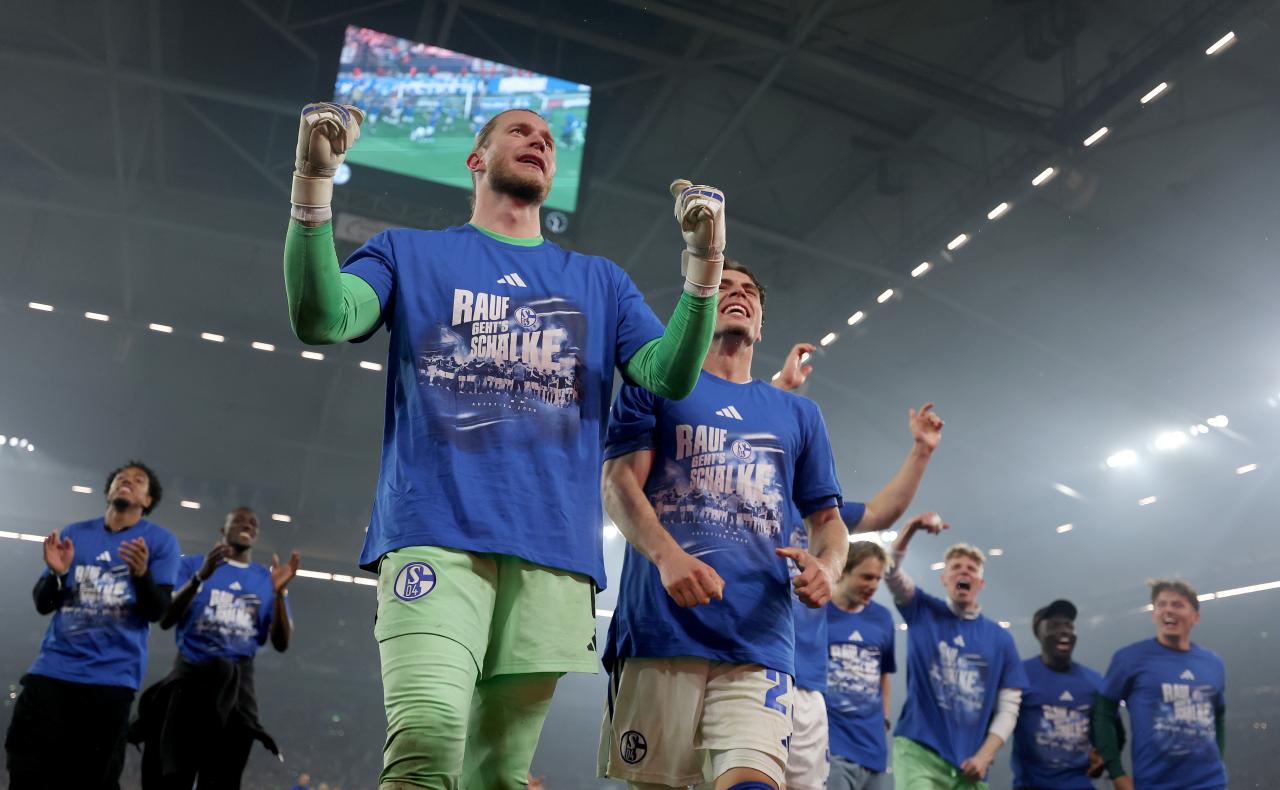
Beyond the Beautiful Game: Schalke’s Bet on Karius Unpacks Economic Stability in Football
POLICY WIRE — Gelsenkirchen, Germany — Modern football, it’s a carnival of speculation and fleeting loyalties. One day you’re a hero, the next, a pariah. Player contracts? Often mere suggestions,...

POLICY WIRE — Gelsenkirchen, Germany — Modern football, it’s a carnival of speculation and fleeting loyalties. One day you’re a hero, the next, a pariah. Player contracts? Often mere suggestions, breakable by the next big transfer fee. So when FC Schalke 04, a club with more blue-collar grit than glitter, locks down its veteran goalkeeper Loris Karius through 2028, it’s not just a handshake and a photo op. No, this isn’t just about preventing goals; it’s a policy statement—a calculated gamble on stability in a sport that rarely provides any. It smacks of deliberate strategy, of institutional economic calculus in a landscape frequently awash with short-sighted extravagance.
It wasn’t the splashy, headline-grabbing signing of a young phenom or a marquee striker that caught our attention. It was Karius. Remember him? The guy who endured some famously rough patches elsewhere. Schalke, a club battling to regain its footing in the Bundesliga’s unforgiving top tier, is essentially saying: We’re doubling down on reliability. But not just reliability between the sticks; they’re betting on predictable costs, consistent performance, and a narrative of resilience.
And let’s be honest, few expected Karius to be the face of long-term commitment. His career has had more plot twists than a prestige drama. Yet, here he’s, securing his tenure in the heart of Germany’s Ruhr industrial region. Schalke’s Director of Professional Football, Youri Mulder, put it plainly enough, though perhaps with a hint of underplayed shrewdness. “Loris isn’t flashy; he’s effective. He provides that calming presence at the back, which allows the rest of the lads to push forward without second-guessing every tackle,” Mulder observed, probably with a wry smile tucked away. “In tight games, his experience counts for everything. It simply does. We’re building something here, and you can’t build without solid foundations.” It’s a classic manager’s bromide, but for Schalke, it holds a particular resonance given their recent financial tighter spots and rollercoaster league performances.
Because ultimately, this move isn’t merely about Karius’s glove work, good as it may be. It’s about asset management. In the tumultuous world of European club football, where player values can skyrocket or plummet overnight—just ask any aspiring club trying to make ends meet—a secure, performing asset like Karius represents a bedrock. Schalke boasted the league’s stingiest defense last season, conceding a mere 31 goals across the 2.Bundesliga campaign, a fact corroborated by league records and a metric that speaks volumes about organizational efficiency when juxtaposed with their relative payroll. That’s an operational success story.
This stability extends beyond the pitch. The brutal calculus of athletic second chances often determines a club’s trajectory. Securing Karius, a veteran who made 30 appearances and notched 13 clean sheets during their ascent, reflects a pragmatic approach to talent. It’s not always about scouting the next wonderkid from a distant land, but identifying value in what you’ve already got, or in someone who’s been underestimated. This sort of sober evaluation is sometimes overlooked by clubs fixated on a transfer market that mimics the speculative froth of other, less honest economies.
The implications ripple out. German football, in general, maintains a more conservative financial model than, say, England’s Premier League. This fiscal discipline—this steady-as-she-goes strategy from Gelsenkirchen—sends a message. It signals that even in the age of global superstars and ever-inflating transfer fees, there’s still a market for prudence. And for fanbases in regions like Pakistan, where millions passionately follow European leagues and understand the hard lessons of economic uncertainty, Schalke’s move resonates. They appreciate that smart, sustainable management isn’t just for balance sheets; it translates directly into competitiveness. A financially sound club can inspire more loyalty and, perhaps, attract long-term foreign investment seeking stability over short-term thrills—much like nations seeking steady economic partnerships. Dr. Anya Sharma, a sports economist at the University of Hamburg, pointed out the broader context. “Long-term retention, especially of experienced players, stabilizes club finances — and market perception. It reduces speculative pressures. This isn’t just about on-field performance; it’s about a club projecting confidence, and that can attract investment or sponsorships, even from emerging markets like South Asia looking for reliable partners,” she explained, highlighting the macro benefits of such seemingly mundane deals.
But make no mistake; Schalke isn’t just being altruistic. They’re a business. A big one, too. Their stadium dreams, like those of many global enterprises, echo global talent wars. The deal’s term—extending early through 2028—buys them something more precious than just another year: peace of mind. It allows management to focus on other areas, like youth development or scouting for new talent, without an urgent, existential hunt for a new number one. That’s the sort of systemic stability that pays dividends well beyond matchday.
What This Means
Schalke’s preemptive contract extension for Loris Karius, on its surface a minor football transaction, serves as a fascinating microcosm of larger economic and policy discussions. It’s a deliberate pivot away from the often chaotic short-termism plaguing elite sports and, by extension, other industries grappling with high-turnover talent pools. Politically, a club showing financial acumen and fostering stability projects an image of solid management, which can indirectly burnish the regional and even national economic narrative. It suggests resilience, particularly for a club located in a historically industrial region now adapting to a post-industrial future. Economically, locking down a known commodity early means mitigating market risks—reducing future bidding wars, securing predictable wage costs, and minimizing recruitment expenditures. This sort of sensible asset management provides a template for sustainability, proving that in a world obsessed with ‘disruption,’ sometimes the best policy is simply calm, steady hand on the tiller.