

Beyond the Pitch: A Widow’s Plea and the Weight of Unfulfilled Dreams on Football’s Grand Stage
POLICY WIRE — Doha, Qatar — There’s a certain grim irony in how personal grief gets refracted through the prism of a global sporting spectacle. A player falls, a nation rises, and somewhere in the...

POLICY WIRE — Doha, Qatar — There’s a certain grim irony in how personal grief gets refracted through the prism of a global sporting spectacle. A player falls, a nation rises, and somewhere in the mix, a widow pens a letter—not to a president or a diplomat, but to a footballer. It’s an unusual transaction, really, this emotional investment played out on pitches half a world away. Yet, for Andrew Robertson, Scotland’s skipper, that letter arrived. It landed, heavy with sentiment, just as the World Cup, the very zenith of the sport, was kicking off. And it fundamentally reshaped how he, — and perhaps we, view what’s happening out here.
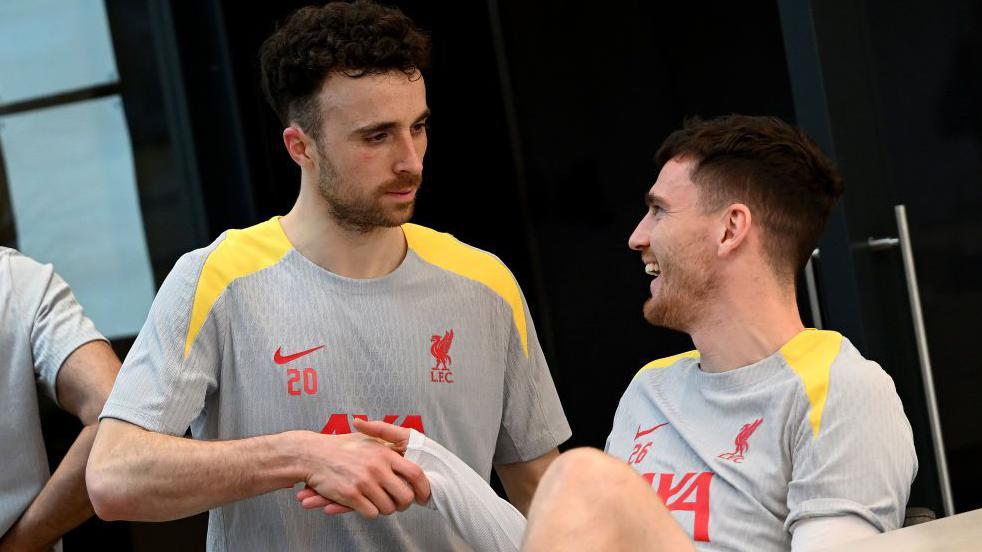
It wasn’t a tactical briefing, no, nor a sponsorship deal. But Rute Cardoso’s words, released to the world through FIFA’s rather calculated generosity, cut through the noise of sponsorships and national anthems. Her late husband, Diogo Jota, the gifted Portuguese forward who perished in a car crash last July, often spoke of Robertson. They’d shared locker rooms, shared the often-brutal pressure of Liverpool FC. Shared a dream, as it turns out. That dream? Playing on this exact stage, the World Cup.
“Diogo often spoke of you. Of the friendship you built, the battles you fought together, the challenges, the laughter, the conversations about football… and about dreams,” Cardoso wrote to Robertson. She wasn’t just talking about goals or clean sheets; she was sketching the human bond beneath the millionaire contracts. Because for a widow, mourning isn’t just a private affair. It spills over, staining everything. And here it’s, spilt onto the world’s most watched sporting event.
Robertson, having wrestled Scotland to their first World Cup since 1998 — an agonizing 26-year drought, according to historical tournament records — had publicly mused about Jota after qualification. “I couldn’t get my mate Diogo Jota out of my head today,” he’d admitted then, the raw emotion uncharacteristic of a player trained to project unwavering stoicism. “We spoke so much about going to the World Cup because he missed the last one with Portugal — and I did with Scotland. I know he’ll be smiling over me today.” He’s carried that weight, haven’t he? That isn’t just about winning. It’s about remembering. It’s about playing for two.
Cardoso, mother of Jota’s three children, sees it. She insisted that by making it to the tournament, Robertson wouldn’t be walking out onto the pitch alone. “You’ll be taking his dream with you too. And when you step on to the pitch, I know it won’t just be you walking out. Diogo will be with you in your thoughts, in your steps, in your heart.” It’s a sentiment that transcends national borders, echoing the profound emotional stakes many attach to the beautiful game. From the bustling streets of Karachi, where football fans dissect every play, to the tranquil valleys of Kashmir, where children dream of such glory, this raw, human connection resonates. The emotional capital invested by fans globally, often without much return beyond shared pride or collective heartache, is a phenomenon the industry has learned to expertly monetize. But this isn’t about ticket sales. This is about grief, repurposed as inspiration.
But how does one even begin to internalize such a mandate? Robertson, now at Tottenham after his Liverpool stint, understands the task. “I’ll carry him in my heart and I know he’ll be with me come the first game, come the second game, come the third game and hopefully beyond that.” He’s a public figure, sure. But he’s also just a man, mourning his friend. This tournament, often portrayed as a geopolitical battle waged with feet, feels deeply, tragically personal for him. And frankly, it’s a burden few coaches ever factor into their meticulously planned strategies.
What This Means
This personal narrative, splashed across global sports news cycles, acts as an unusual counterpoint to the increasingly commercialized spectacle of modern football. It serves as a reminder that underneath the multi-billion-dollar endorsements and the state-level lobbying for hosting rights, there’s still a beating heart. The emotional pull of a story like Robertson’s isn’t just good human interest; it’s an intrinsic, unquantifiable value proposition that FIFA and national federations, despite their focus on revenue, can’t manufacture. It deepens fan engagement, yes, but more significantly, it complicates the public’s perception of athletic heroism. These aren’t just gladiators; they’re individuals wrestling with very real, often painful, human experiences under extreme public scrutiny. It adds a layer of unexpected pathos, making the contests feel less like pre-packaged entertainment and more like genuine struggles where lives and memories, not just points, hang in the balance. It reinforces the idea that sports, at their core, reflect and amplify the most profound aspects of the human condition: ambition, loss, resilience, and collective memory. Policy makers and industry titans take note; you can build stadiums and sign checks, but you can’t bottle human emotion. That part, it’s still wild. Still raw.
Scotland faces Haiti on Sunday, then Morocco, followed by Brazil. Three games in Group C, — and for Robertson, they’re not just football matches. They’re a pilgrimage, a promise, a conversation across the chasm of loss. He isn’t just chasing a win; he’s carrying a dream that refuses to die, an echo on a grand, echoing stage. He won’t be alone, she said. And for good measure, we believe her. He doesn’t have a choice, really, does he?