


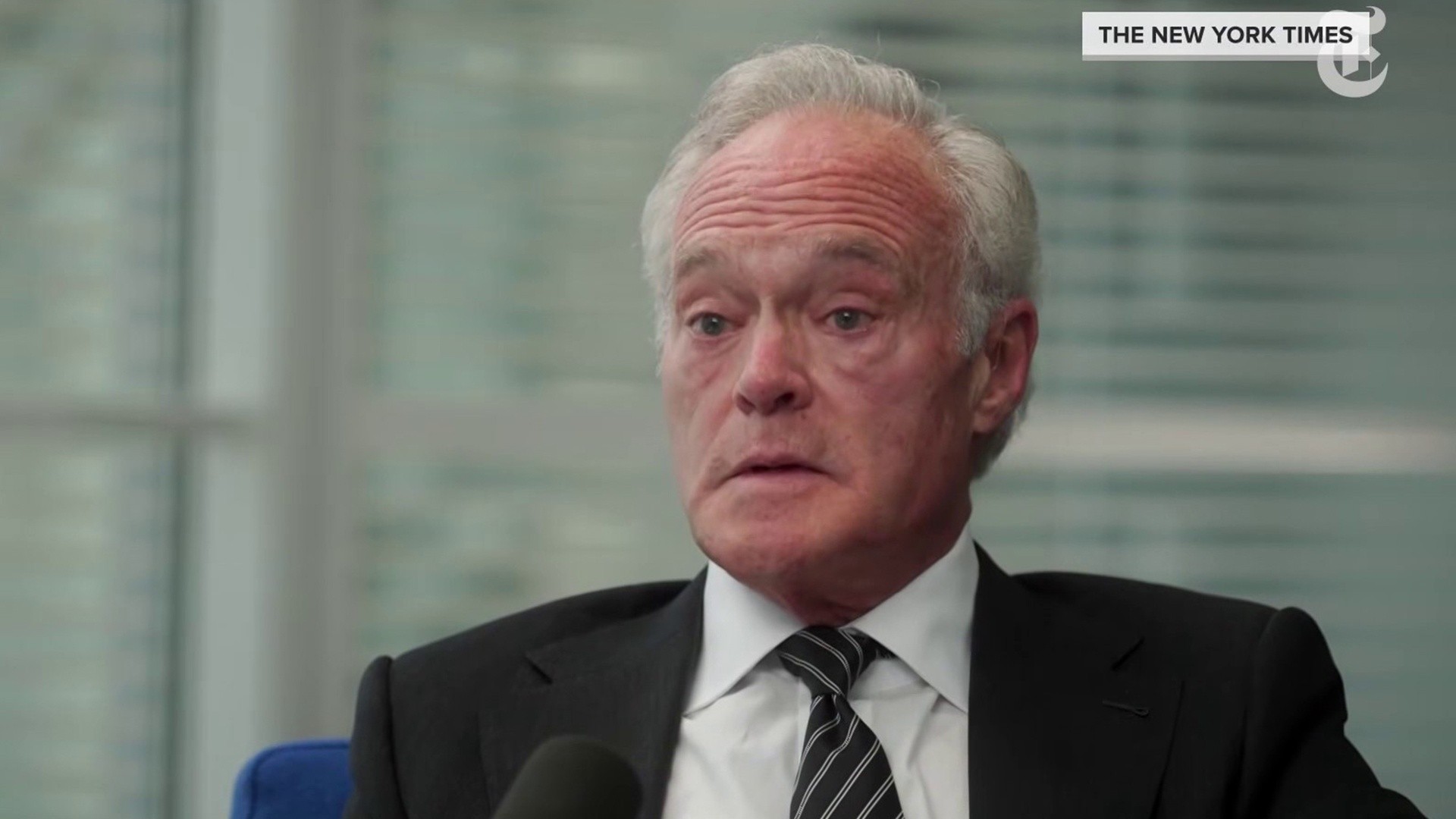
The Old Gray Lady’s New Clothes: Pelley’s Ghost Whispers of Influence at CBS
POLICY WIRE — New York, USA — Another week, another crack in the public’s already frayed faith in mainstream media institutions. It isn’t just about declining subscriptions or the endless...

POLICY WIRE — New York, USA — Another week, another crack in the public’s already frayed faith in mainstream media institutions. It isn’t just about declining subscriptions or the endless digital noise anymore; it’s about what some say—or rather, what they allude to—behind the hallowed newsroom doors. The murmurs from former CBS Evening News anchor Scott Pelley aren’t just industry gossip; they’re a stark reminder that the battle for editorial independence is an ongoing, often silent, skirmish.
It’s easy to dismiss these things as internal squabbles—old guards grumbling, perhaps. But Pelley’s alleged observations, even in their elliptical framing, draw a rather stark picture of a news organization grappling with a truth as old as the press itself: power, political or otherwise, doesn’t much care for an inconvenient headline. And let’s be frank, when one of journalism’s more respected voices points toward what can only be described as [QUOTE_PLACEHOLDER] from a network’s leadership, the public’s ears ought to perk up. They truly should.
Because this isn’t just an American problem. Oh no. The struggle for an unvarnished truth isn’t unique to a CBS studio lot. Consider how this sort of perceived editorial manipulation reverberates globally. In nations like Pakistan, where media freedom operates under an entirely different—and often much more stringent—set of pressures, these American revelations don’t go unnoticed. They become ammunition. When a global superpower’s own respected news outlets appear susceptible to internal machinations, it validates the cynical viewpoint that media, everywhere, is merely an extension of some larger agenda. That perception, you see, erodes the very foundation of diplomacy — and cross-cultural understanding. It’s not a small thing.
Pelley, who once commanded a significant broadcast, didn’t use flowery language. From what’s understood, his comments spoke plainly about an alleged climate where objectivity might just take a backseat to, well, other priorities. But don’t just take a seasoned correspondent’s word for it, however veiled it may be. A 2023 Gallup/Knight Foundation survey found that 74% of U.S. adults believe that news organizations generally prioritize their own financial success over informing the public. That’s not just a statistic; it’s a ringing alarm bell, isn’t it? A colossal majority—almost three-quarters—of the American public already views media through a lens of suspicion. It’s tough out there, for everyone involved.
This whole situation hints at a broader narrative. Networks, whether CBS, CNN, or Al Jazeera, are not just conduits for information. They’re businesses, heavily reliant on viewership, advertisers, and, frankly, the good graces of various influential power centers. Navigating that minefield whilst supposedly delivering pure, unadulterated fact is an existential tightrope walk. And sometimes—perhaps more often than we’d care to admit—someone falls off, or is quietly pushed.
And so, as the dust settles, one wonders. Has the very definition of ‘news’ been warped? Is it no longer about conveying raw information, but about carefully curated narratives? The implications for an informed citizenry are quite dire, wouldn’t you say? Especially when matters of geopolitics, trade, or international relations are on the table—issues demanding clarity, not carefully packaged soundbites.
This particular episode at CBS is yet another ripple in the pond, contributing to a sea change in how audiences, particularly younger ones, consume and trust media. They’ve witnessed years of political polarization bleed into their news feeds. For them, cynicism isn’t a bug; it’s a feature of modern information consumption.
It’s an echo chamber problem, exacerbated by digital platforms, sure. But these institutional woes at established networks, they’re the origin point. They create the content that then gets amplified, twisted, or entirely discounted by an audience already primed to distrust. This cycle, it’s just exhausting.
You can read more about the continuing struggle for transparency and integrity in media by looking at Policy Wire’s ongoing coverage. Maybe start with a piece like Shadows in the Newsroom: Pelley’s Warning Echoes Beyond CBS Walls. Or, consider how some unexpected forces reshape public perception, as in Hoops, Humiliation, and the Specter of Power: A Night’s Courtside Politics. The threads are often connected in surprising ways, you know?
What This Means
This latest disclosure, however vague its specifics, functions as a chilling political bellwether. Economically, a weakened, distrusted news sector directly undermines an informed populace’s ability to make sound civic choices—a cornerstone of democratic stability and robust market function. When the public doubts what it sees or hears from its established media, political narratives become dangerously untethered from verifiable facts. This creates fertile ground for extremist ideologies, or just plain old apathy, both of which complicate policy-making and hinder constructive debate.
From an international perspective, the perception of compromised American media makes it incredibly difficult to project a consistent, credible image on the global stage. Nations in South Asia, like Pakistan, frequently scrutinize Western media for perceived biases—particularly on issues concerning the Muslim world. Any internal cracks, like those implied by Pelley’s stance, only deepen the conviction that these outlets are less about objective reporting and more about internal political alignment. This erodes soft power and complicates crucial diplomatic efforts, turning factual reporting into just another battlefield in a global information war.
The economic impact is also quite real: less trust translates to smaller audiences, which leads to reduced advertising revenue and, often, a downward spiral of cost-cutting that further diminishes journalistic capacity. It’s a self-perpetuating feedback loop that threatens not only the bottom line of news organizations but also the very health of democratic discourse—both at home and, as we’ve noted, in how the US is viewed abroad.
It’s a serious business, this business of news. Don’t let anyone tell you differently.