


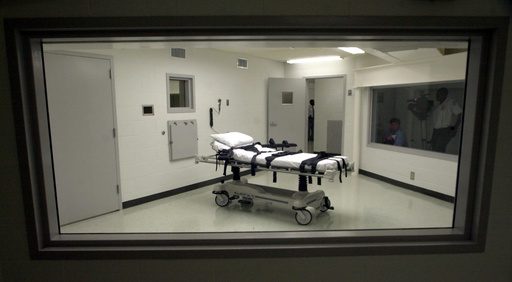
Nitrogen’s Grim Theater: U.S. Court Pauses Alabama’s Lethal Innovation, Global Questions Emerge
POLICY WIRE — MONTGOMERY, Ala. — For Jeffery Lee, a condemned man counting down hours, the abstract machinery of American justice—deliberate, ponderous, and frequently contradictory—has just afforded...

POLICY WIRE — MONTGOMERY, Ala. — For Jeffery Lee, a condemned man counting down hours, the abstract machinery of American justice—deliberate, ponderous, and frequently contradictory—has just afforded him a temporary reprieve, though perhaps little comfort. An eleventh-hour ruling isn’t quite an outright stay. It’s more like a legal pause button on an inevitable tragedy set to unfold. But it rips the mask off Alabama’s latest approach to capital punishment, a method the state has championed as merciful. The federal appeals court, it seems, has its own definition of mercy, and it doesn’t much align with what Lee was slated to experience Thursday.
Judges decided that the process—strapping a respirator to the person’s face and replacing breathable air with pure nitrogen—just needs a closer look. A much closer look, in fact. That Monday night reversal of an earlier finding? It tossed a wrench straight into the state’s plans, throwing an unwelcome spotlight onto a practice that’s supposed to be antiseptic, sterile, and entirely without fanfare. Nitrogen, a gas so innocuous we breathe eighty percent of it every day, transforms into an executioner’s tool, meant to usher a man out of this life via hypoxia. But judges are wondering if it’s more akin to torture, if we’re honest.
And for good reason. The three-judge panel, they’ve kicked this whole thing back to the lower court, saying, effectively, let’s go over those numbers again, especially on the suffering. See, Alabama thought its novel nitrogen protocol was sound. The initial ruling even gave it a thumbs-up. But appellate judges? They looked at the time it could take someone to lose awareness, those agonizing seconds ticking by. They wrote, [QUOTE_PLACEHOLDER] Three minutes. Can you imagine? [QUOTE_PLACEHOLDER] they added. Pretty stark language for judicial prose, isn’t it?
It’s not just the discomfort; it’s the duration of that discomfort that’s raising constitutional alarms. The court didn’t halt Lee’s impending execution, a stark reminder of the limitations of such rulings. But they sure as hell put the trial judge in a tight spot, asking him to consider alternatives, even throwing in the old-fashioned firing squad as a theoretically feasible option. Which, you know, really brightens up the moral landscape. This all plays into a U.S. Supreme Court two-prong test, where a challenger must prove a method carries a substantial risk of pain and that there’s a feasible alternative. The appeals court thinks Lee’s got the first part down, — and that’s a big deal. The state Attorney General’s office, predictably, offered no immediate comment. They’ve consistently argued the method is constitutional.
This judicial hand-wringing comes as human rights activists — and religious leaders elsewhere keep a close watch. The concept of cruel — and unusual punishment isn’t uniquely American. Debates over capital punishment—its fairness, its morality, its actual deterrent effect—are global. From Pakistan, where hundreds have been executed in recent years, often by hanging, to other nations across the Muslim world grappling with judicial systems inherited from colonial eras or interpreted through strict religious doctrine, the mechanisms of death often spark similar agonizing questions about suffering and dignity. These societies, too, contend with the optics and realities of state-sanctioned death, frequently under the unforgiving gaze of international monitors.
Here in America, Reverend Jeff Hood, a spiritual adviser present at past nitrogen executions, minced no words after the decision. He said, [QUOTE_PLACEHOLDER] Powerful testimony, you’d agree. Alabama has been a pioneer in this peculiar brand of justice, making first use of nitrogen for capital punishment in 2024. But here’s a cold hard fact: nitrogen has been used in eight executions nationally—seven times in Alabama and once in Louisiana, according to Associated Press data. And remember, Lee’s attorneys weren’t just griping; they presented their argument that this specific approach causes excessive suffering.
What’s even grimmer? Alabama’s last nitrogen execution reportedly took more than 30 minutes to complete. Thirty minutes. For the condemned man, Jeffery Lee, his path to this particular predicament started back on Dec. 12, 1998, convicted for two counts of capital murder. A jury wanted life. But a judge overrode that decision, sentencing him to death. Alabama actually ended judicial overrides in 2017—no longer allowing judges to just ditch a jury’s sentencing call in death penalty cases. Too late for Lee, obviously. But this small historical footnote serves as a potent reminder of the inherent power imbalances within the system, even when it ostensibly tries to correct itself.
What This Means
This judicial skepticism over nitrogen gas execution isn’t merely procedural; it’s a seismic crack in Alabama’s policy framework for capital punishment. Politically, it’s an absolute headache for Governor Kay Ivey and Attorney General Steve Marshall, who’ve staked their reputation on upholding swift, decisive justice. This ruling implies that Alabama’s methods might be closer to barbaric experimentation than sober execution, certainly not the kind of image a state wants projecting. It’ll put the cost of lethal injection under scrutiny, as states like Alabama desperately search for chemicals that are increasingly unavailable.
But the political implications ripple far beyond Montgomery. Other states contemplating novel execution methods—and believe me, some are always looking—will now think twice. The court’s explicit concerns about protracted suffering could spark a wider reevaluation of capital punishment ethics, potentially strengthening calls for moratoria or outright abolition. Economically, repeated legal challenges drain state coffers. Prolonged litigation means higher legal fees for prosecutors and public defenders, court costs, and an overall slowing of the death penalty’s already glacially paced mechanisms. It’s an inefficient, morally fraught bureaucracy, — and every new method just seems to multiply the mess.
More broadly, the judiciary’s role as a final check on executive — and legislative power gets reasserted here. When the state attempts to implement policies on the margins of human rights, it’s the courts that draw the line—or at least attempt to—on what society deems acceptable in the name of justice. This decision will make the national human rights landscape just a little bit more prickly for America on the international stage, especially for countries like those across South Asia or in the Muslim world, many of whom have their own very heated internal debates about the efficacy and morality of the death penalty. It’s hard to lecture other nations on humane treatment when your own appeals courts are flagging your methods as potentially intolerably cruel. Perhaps it shows the need for America to reflect internally on the specter of power within its own justice system. And this just might add fuel to the arguments that question whether, despite all our sophisticated legal language and careful appeals processes, some economic strains are at play as we seek cheaper, but potentially crueler, ways to dispatch justice.