


Beyond the Rubble: Lebanon’s Enduring Anguish Echoes Through Tehran’s Shadow
POLICY WIRE — Beirut, Lebanon — The Mediterranean sun, usually a balm, often just illuminates fresh wounds here. Across the narrow coastal plain, deep in southern Lebanon, life doesn’t merely...

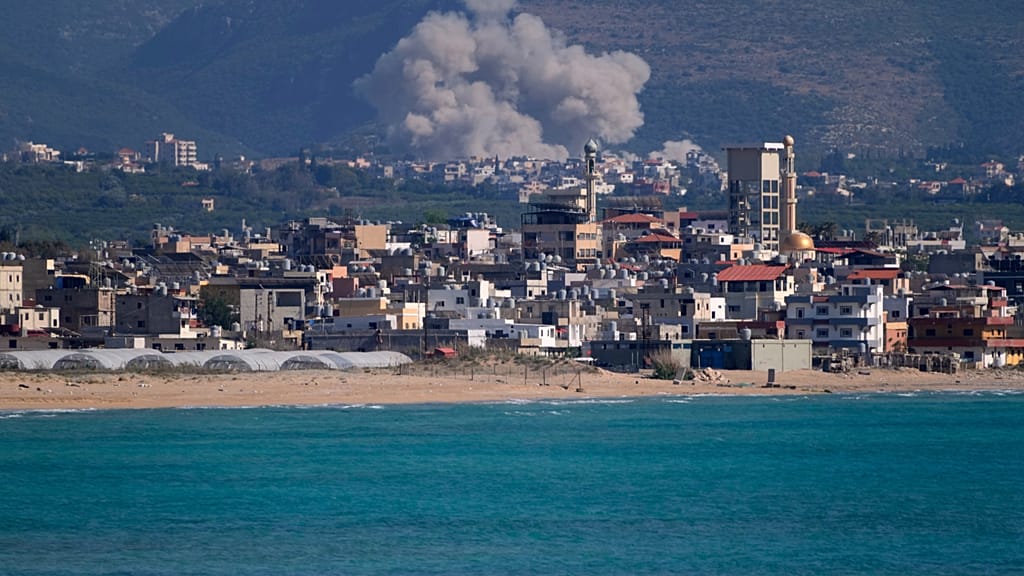
POLICY WIRE — Beirut, Lebanon — The Mediterranean sun, usually a balm, often just illuminates fresh wounds here. Across the narrow coastal plain, deep in southern Lebanon, life doesn’t merely persist; it endures a kind of morbid rhythm, a chilling predictability even as the political world flails and pronounces threats. Forget grand pronouncements of deterrence—the daily attrition has become the real story, quietly eroding patience and prospects for peace.
It’s an uneasy quiet, interrupted regularly by the distinct thud of distant explosions, sometimes followed by the eerie wail of ambulances. This isn’t just about Israeli military operations in the south, though they were a brutal reminder. This is about something deeper, an almost casual escalation, one that routinely sees a bloody tally of lives extinguished, fourteen souls this week alone in Lebanese territory, lost to Israeli strikes. And it’s happened despite the grand gestures, the whispered warnings, even the public posturing from capitals as far afield as Tehran. [QUOTE_PLACEHOLDER]
You’d think a stern word from Iran—that geopolitical titan and chief patron of many regional players—might give some actors pause. But it appears, on the ground, such threats often prove less of a deterrent and more of a conversational flourish in an ongoing, brutal exchange. Attacks, counter-attacks; it’s a relentless loop. Folks here, they’ve seen it before. They expect it now. It’s built into the collective psyche, isn’t it?
And that’s the rub, isn’t it? The international community, by — and large, expresses concern. Condemnations sometimes. Rarely does it stop the bloodshed. Pakistan, a nation grappling with its own internal strife and economic precariousness, watches this volatility in the Levant with an uncomfortable familiarity. Its populace, predominantly Muslim, views events through a lens colored by shared religious identity and a long-standing position of solidarity with Palestinian rights. The perpetuation of conflict in sister nations like Lebanon isn’t merely news; it’s a mirror reflecting regional insecurities and often igniting further domestic political discourse around foreign policy, particularly concerning the Ummah and the responsibility of larger Muslim powers.
Because ultimately, regional stability is like dominoes, — and the Middle East’s quivers resonate far beyond its borders. The sheer human cost, meanwhile, mounts. According to the International Organization for Migration, more than 94,800 people were internally displaced in Lebanon between October 2023 and mid-January 2024 due to hostilities. That’s nearly 100,000 lives uprooted, houses abandoned, futures put on hold—a statistic that screams a more urgent reality than any diplomatic communiqué. You don’t bounce back from that kind of trauma quickly.
But Washington’s busy, Brussels is distracted, and the neighborhood—well, it just keeps burning. They’re all talking about restraint, about de-escalation, but every day tells a different story. And that story, usually written in blood — and ash, doesn’t seem to care for diplomatic niceties. It doesn’t pause for high-level meetings. It simply grinds on.
What This Means
The persistence of these exchanges, even after Iran has ostensibly issued its own strategic warnings, suggests a complex geopolitical calculation where proxies and immediate security concerns often supersede broader, preventative diplomatic gestures. Economically, Lebanon, already staggering under one of the world’s worst financial collapses in recent memory, can ill afford this continuous state of low-grade war. Its tourism sector, once a glimmer of hope, remains perpetually vulnerable, while international investment shrinks further amidst uncertainty. We’re talking about an already precarious financial ecosystem getting battered day after day. It’s simply unsustainable.
Politically, this scenario reinforces the power vacuum in Beirut, exacerbating existing domestic divisions and strengthening non-state actors who derive legitimacy from perceived defense of national sovereignty or religious ideology. For the wider Muslim world, from Cairo to Karachi, this steady toll fuels popular discontent and feeds narratives of injustice, pressuring governments to adopt more vocal—or even more confrontational—stances. You see this played out in the halls of Islamabad and across Pakistani social media, where a strong sense of Islamic solidarity demands responses. For instance, the enduring conflict often strains nascent efforts at normalization with Israel in some Muslim-majority nations, setting back broader peace efforts by years. And it forces Pakistan’s foreign policy—always a tricky tightrope walk—to constantly recalibrate its balance between regional solidarity and pragmatic international relations. It truly challenges the established order and makes even domestic policy decisions feel intertwined with international crises, right down to basic resource allocation, as instability pushes up global commodity prices, affecting nations like Pakistan.
These persistent conflicts aren’t just headlines; they’re direct assaults on regional stability, breeding grounds for radicalization, and drains on the limited resources of developing nations nearby. There isn’t an easy off-ramp when the highway itself is in flames.