

Pyongyang’s Overtures: Behind the Pomp, a Strategic Power Play Reshaping Asia
POLICY WIRE — SEOUL, South Korea — The banners unfurled across Pyongyang’s grand squares weren’t just celebrating old alliances; they were signaling a bare-knuckle reassertion of power. Sure, Chinese...

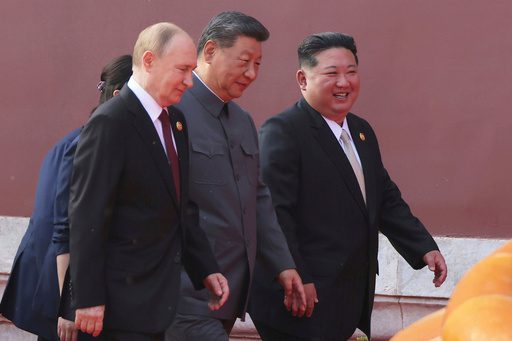
POLICY WIRE — SEOUL, South Korea — The banners unfurled across Pyongyang’s grand squares weren’t just celebrating old alliances; they were signaling a bare-knuckle reassertion of power. Sure, Chinese President Xi Jinping’s latest trip to North Korea brimmed with choreographed smiles, hearty handshakes, and all the synchronized applause you could stomach. But don’t let the fanfare distract you. What we saw unfold wasn’t some mere diplomatic exchange—it was a deeply pragmatic, almost cynical, re-forging of old bonds, driven by Beijing’s desire to box out Western influence and by Pyongyang’s unrelenting, nuclear-fueled ambition.
It’s an awkward tango, really. For years, folks speculated Beijing was getting weary of its petulant, nuclear-armed neighbor. Then boom, Xi makes his return, seven years after his last visit, with all the trappings of a state spectacle usually reserved for dear friends. Kim Jong Un, ever the showman, pulled out all the stops: military honor guards, throngs of cheering children, and buildings draped in celebratory regalia. Because why wouldn’t he? He’s banking on Beijing for a lifeline, and frankly, the feeling’s mutual—just in a less overtly affectionate way.
What gives here? Well, for Xi, North Korea isn’t just a buffer state; it’s a strategic asset. A pawn on the geopolitical chessboard, yes, but a useful one in his broader, global showdown with Washington. Bringing Kim closer, tightening that old alliance, gives Beijing a louder voice on the Korean Peninsula. And it provides Xi more leverage when he’s staring down U.S. President Donald Trump, especially with more meetings on the horizon.
As one seasoned observer, Leif-Eric Easley, a professor at Ewha Womans University in Seoul, put it to Policy Wire: “This visit signals China’s explicit — and perhaps defiant — prioritization of regional alignment over the rhetoric of international non-proliferation. They’re saying, subtly, ‘We’ll handle our backyard, thanks very much.’” It’s a calculated jab at the U.N. Security Council’s already wobbly sanctions regime, where China’s always been… less than enthusiastic about strict enforcement. It’s a familiar script when power plays become performative politics.
For Kim, this alliance isn’t just nice-to-have; it’s a strategic necessity. His economy’s still sputtering, though last year saw two-way trade with China creep back to pre-pandemic levels. He needs goods, he needs tourists, he needs some semblance of stability. More critically, he needs Beijing’s tacit approval, or at least its studied silence, on his nuclear program. The state reports, conspicuously, skipped any mention of denuclearization. That’s a win for Kim, who, according to South Korean President Lee Jae Myung, now oversees production of enough nuclear materials annually for an estimated 10 to 20 bombs. Kim’s made it abundantly clear: his nuclear weapons are non-negotiable. His sister, Kim Yo Jong, even dismissed American denuclearization demands as an “anachronistic dream.” China’s silence in Pyongyang speaks volumes, doesn’t it?
📄 POLICY WIRE WHITEPAPER PUBLISHED: PAKISTAN'S NATIONAL SECURITY POLICY PRIORITIES
👉 READ BY CLICKING HEREThis grand re-embrace certainly ripples across Asia, far beyond the demilitarized zone. Think of Beijing’s careful ballet of power across the entire Asian continent, stretching into South Asia. The intricate game China plays with countries like Pakistan—a fellow nuclear power with deep historical ties to Beijing and significant economic dependencies—shares a similar logic. In both instances, Beijing balances strategic alliances and economic support with its own national interests, often while quietly challenging a U.S.-led global order. This kind of influence projection isn’t just about military might; it’s about shaping the economic and political realities for a slew of nations caught in the crosscurrents of global rivalries. For Pakistan, watching China bolster North Korea provides a fascinating, if subtle, lesson in navigating a multi-polar world where old friends can be re-activated for new purposes.
What This Means
This re-invigoration of the China-North Korea axis means a few things, none of ’em particularly comforting for stability advocates. Economically, we’re likely to see a continued, if managed, uptick in cross-border trade. Think food aid, consumer goods, perhaps even tech components carefully disguised. This won’t magically transform North Korea into an economic powerhouse—not a chance—but it’ll give Kim’s regime just enough breathing room to keep its internal machinery grinding along. It’s a drip feed, not a flood. Politically, this solidifies Beijing’s regional primacy and complicates any concerted international effort to rein in Pyongyang’s nuclear ambitions. But it also means North Korea remains reliant on China, limiting Pyongyang’s maneuverability somewhat, even as it leverages the renewed patronage.
For Washington — and its allies, this summit’s implications are stark. It’s a loud declaration that Beijing intends to wield its regional clout with renewed vigor, pushing back against what it sees as U.S. meddling. The old ‘denuclearization first’ approach? That seems even more like wishful thinking now. What we’re witnessing isn’t merely the patching up of a frayed relationship, but the calibrated deployment of one of the world’s most reclusive states as a strategic chess piece. Because, in Beijing’s calculus, a cooperative North Korea, even a nuclear one, is better than an unpredictable one leaning exclusively towards Moscow. Or, worse still, one influenced by the West. Don’t underestimate this meeting; it wasn’t just a friendly chat, it was a tactical recalibration of power in a volatile part of the world. And it changes everything.