


Beyond the Sidelines: Arizona’s High School Gridiron Sparks Global Economic Hope
POLICY WIRE — Phoenix, USA — The glitzy spectacle of an American university athletic camp might seem miles away from geopolitical maneuverings or the stark realities of emerging...

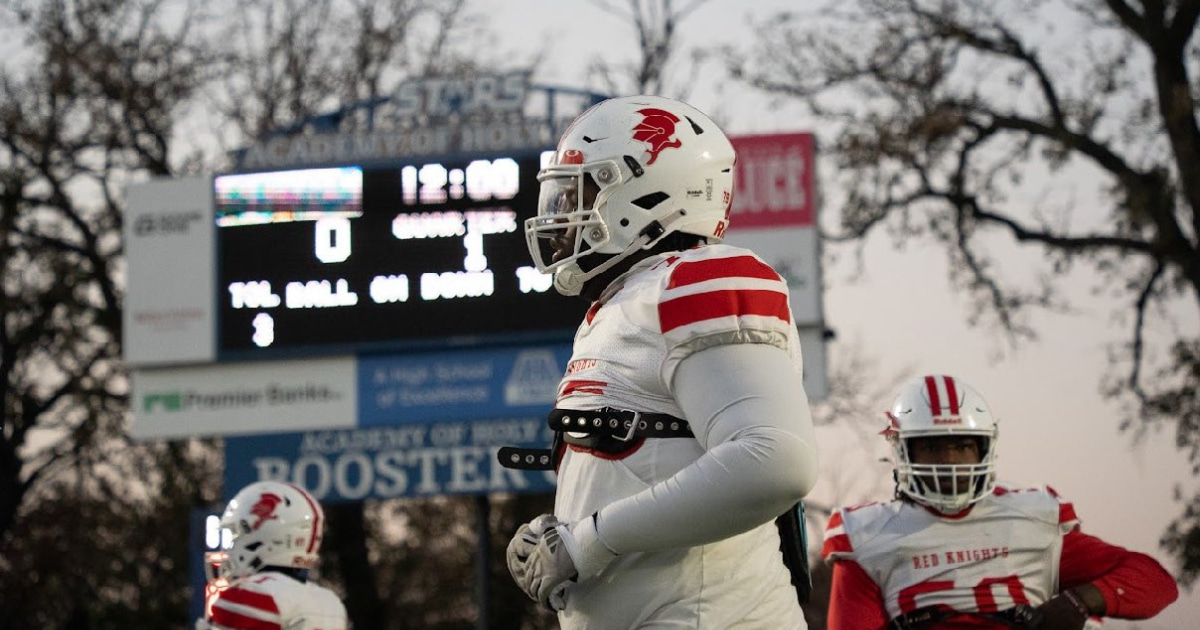
POLICY WIRE — Phoenix, USA — The glitzy spectacle of an American university athletic camp might seem miles away from geopolitical maneuverings or the stark realities of emerging economies. But consider this: when DaJohn Yarborough, a highly-touted offensive lineman from Chandler Basha, recently steamrolled his opposition at the University of Arizona’s second camp of the summer, it wasn’t just a high school football story. It was a micro-burst of aspiration, an echo of fierce global competition that transcends the desert gridiron, illuminating how talent, opportunity, and indeed, capital, coalesce in unexpected places.
See, this wasn’t the first go-around for the Bears. In the prior event iteration, they reached the final of the 7-on-7 tournament, losing to Chandler (Ariz.). But Yarborough’s crew — well, they found their groove, you know? It was the UofA’s second big man camp that Yarborough’s team had the most success in this time around. Before the flashier 7-on-7 games kicked off, Basha faced Scottsdale Desert Mountain (Ariz.) in the camp’s big man championship. With one-on-one pass-trench matchups deciding the outcome, the three-star OL played a pivotal role on the night, silencing doubters and probably shaking a few linemen in the process. [QUOTE_PLACEHOLDER]
Adam Beadle, an Arizona reporter, shared proof, calling it This one-on-one rep by 2027 Basha OL DaJohn Yarborough. What social media doesn’t quite capture, though, is the sheer financial and developmental machinery humming beneath such moments. For these young athletes, every rep isn’t just about gaining yardage; it’s about future prospects, D1 offers, scholarships—literally, an education and a potential career path paved with sweat and turf.
And it wasn’t just Yarborough flexing on the field. The Basha squad is stacked, frankly. Jake Hildebrand, a four-star offensive tackle, had just announced his commitment to Arizona State, after helping guide the Bears to a state title last year. That’s another young man eyeing the next rung on the ladder. Both linemen—Hildebrand, the second-highest-ranked prospect in Arizona, and Yarborough, who’s the tenth-best prospect in the state, according to Rivals Industry Rankings—helped produce one of the highest firepower offenses in the state. They even helped pave the way for four-star Texas commit Noah Roberts, blocking for the future Longhorns running back. Yes, in an ultimately losing effort during a rematch with Chandler, Roberts caught two two-touchdown passes because these guys cleared the way.
A fractured ankle early in his season truncated some of Yarborough’s impact (he missed seven games), but the D1 offers haven’t stopped pouring in for the four-star OL prospect. Recently, he’s narrowed it down to a top five, and he’s got official visits scheduled with California and Washington coming up fast. Then there are offers from Florida State, Mississippi State, — and Minnesota still on the table. It’s a literal bidding war for human potential.
Following this camp — which, to be fair, was still underway at the time — Yarborough plans to announce his commitment soon. He’s got a date penned for late June, a deadline that carries implications far beyond his immediate family. This isn’t just a personal choice; it’s a political one, in a small way. His decision might shift a recruitment narrative, draw more eyes to Basha, — and influence coaching contracts. It’s the economic ripple effect of one kid’s talent, writ large.
What This Means
On the surface, this is just a football story, an American tale of grit — and glory. But look closer. It’s about the relentless pursuit of talent, and the significant financial investments that underpin it—from boosters to universities to the budding sports marketing ecosystem around amateur athletics. These camps are less about scouting raw ability — and more about fine-tuning an already robust production line. The stakes are immense, not just for the individuals involved, but for entire university programs whose budgets swell or shrink with recruiting wins and losses. And then, there’s the broader view.
Consider nations like Pakistan. While its youth obsess over cricket, the global sports landscape is diversifying. Countries with less traditional sporting prowess, seeing the economic upside, are starting to invest in sports academies and talent pipelines for everything from basketball to football. It’s an arms race of human capital, and American high school sports, for all their parochial charm, are ground zero for the cultivation of highly monetized human assets. Just as South Korea is making seismic shifts in AI chip technology, countries globally are eyeing how to develop their human resources to compete on different fields—literal and figurative. This isn’t some quaint academic endeavor; it’s hard cash — and national prestige on the line. When a kid like Yarborough performs, he isn’t just winning a rep; he’s becoming a commodity in a sophisticated, multi-billion-dollar industry, much like an emerging market’s most valuable exports. It mirrors the strategic investments in youth programs or even STEM education that we see across the Muslim world—developing local talent to compete globally, albeit often in vastly different sectors.
The lessons from an Arizona camp, therefore, extend far beyond the state’s borders. They showcase a highly effective, if ruthlessly competitive, model for cultivating high-value talent. Policymakers, whether in Washington or Islamabad, should probably pay attention to these hyper-local dynamics. The methods might not translate perfectly, sure, but the underlying drive? The global hunger for high-performance individuals, wherever they emerge? That’s universal. It’s the relentless push for excellence, something often born from hard knocks and sustained by ambition, whether it’s on a football field or in an burgeoning tech hub.