


Hollywood’s New Frontier: The Shifting Economics of Empathy
POLICY WIRE — Washington, D.C. — For too long, the raucous cacophony of modern public spaces—the blare of multiplex screens, the unchecked exuberance of commercial outlets—has inadvertently...

POLICY WIRE — Washington, D.C. — For too long, the raucous cacophony of modern public spaces—the blare of multiplex screens, the unchecked exuberance of commercial outlets—has inadvertently marginalized significant swathes of the population. One might assume entertainment conglomerates would prioritize their broadest demographic, leaving specific needs to niche outfits. But the script, it appears, is subtly flipping, driven not purely by altruism, but by a colder, more pragmatic calculus.
It’s no longer just about the blockbuster numbers; it’s about carving out a profitable niche, acknowledging what a changing societal landscape actually looks like. And that means rethinking the very environment we’ve taken for granted for decades. This shift finds a curious avatar in the humble movie theater, or rather, the [QUOTE_PLACEHOLDER] cinema hybrid, signaling a broader evolution in consumer-driven policy, even if policymakers haven’t quite caught up.
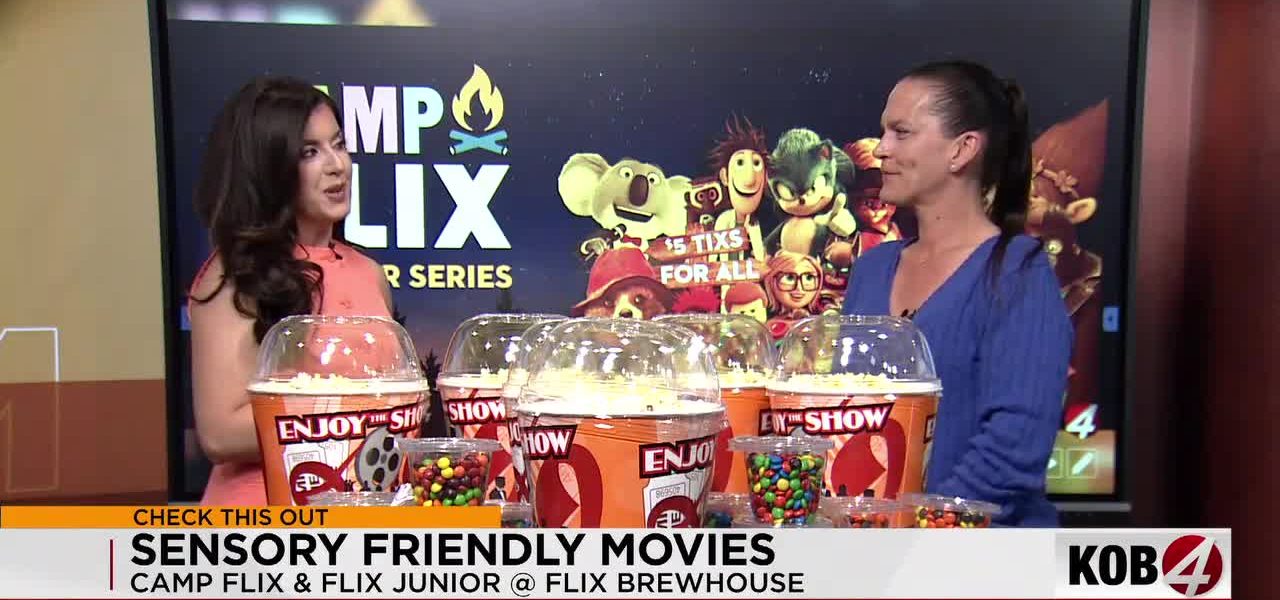
Down in Albuquerque, New Mexico, a business called Flix Brewhouse recently unveiled a set of initiatives aimed squarely at a demographic often overlooked by the mainstream: children with sensory sensitivities. A business offering what amounts to customized ambience, if you will, for young patrons—that’s interesting, no?
Specifically, the company is engaging with these targeted offerings through what they’ve termed the Camp Flix and Flix Junior Series. We’re talking about movies here, folks. But not just any movies. This isn’t simply another kids’ matinee—it’s a carefully calibrated environment. Imagine a film experience engineered to be less abrasive, less overwhelming, designed to bring a little slice of accessible normalcy to families often denied it.
For some, this might seem like a mere business decision. For others, it’s a quiet revolution—a recognition that the one-size-fits-all model just doesn’t work for everybody anymore. But the financial imperative remains, of course. Camp Flix, for example, features family classics showing every Tuesday for just $5. That’s a deal, plain and simple, a lure for families already stretched thin, eager for affordable, inclusive entertainment options.
This initiative isn’t a stand-alone novelty. No, it runs entwined with their Flix Junior programming, which has lower lighting levels and lower volume levels for younger children. You read that right. Less bright, less loud. Seems basic, right? Yet, it’s a radical departure from the standard sensory bombardment that defines much of today’s cinematic experience. And let’s not forget, They also have some special deals for the kids — and adults alike. A full package, it seems, meant to draw them in — and keep them coming back.
The implications aren’t confined to suburban American multiplexes. Globally, conversations around neurodiversity — and accessibility are intensifying. While developed economies grapple with integrating sensory-friendly spaces into their leisure and educational infrastructures, regions like South Asia are navigating similar, though often more challenging, terrain. Pakistan, for instance, a nation with over 220 million people, faces enormous hurdles in providing accessible public spaces. Consider the architectural norms, the societal stigma sometimes associated with differing abilities, and the sheer lack of resources compared to, say, the United States.
Neurodiversity, while not always publicly acknowledged, is a universal aspect of humanity. An estimate from the Centers for Disease Control and Prevention indicates that approximately 1 in 36 children in the United States have been identified with autism spectrum disorder (ASD). This statistic, though from America, points to a global reality. What happens, then, when a private enterprise like Flix Brewhouse steps into this void? It subtly applies pressure on public institutions — and local governments to consider similar adaptations.
📄 POLICY WIRE WHITEPAPER PUBLISHED: PAKISTAN'S NATIONAL SECURITY POLICY PRIORITIES
👉 READ BY CLICKING HEREBut how do such small, targeted initiatives resonate in diverse cultures? The model, while niche, presents an interesting template. For communities in South Asia, where public engagement is often a deeply social act—think communal prayers, large family gatherings, bustling bazaars—the idea of creating dedicated, sensory-muted spaces presents a cultural paradox. How do you foster inclusion without creating segregation? How do you ensure comfort for one group without isolating them?
It’s a question that goes beyond cinema seats — and discounted popcorn. It speaks to a societal responsibility—an almost policy-level conversation—about how we design our cities, our services, and our shared experiences. Because sometimes, the biggest statements aren’t made by grand political pronouncements, but by the quiet hum of a movie theater, set just a little bit lower.
What This Means
This development at Flix Brewhouse, far from being just a quirky local news item, signals a creeping but meaningful evolution in commercial strategy and, by extension, social policy. What we’re witnessing is the market doing what governments often struggle with: adapting to the true diversity of its populace. It isn’t entirely altruistic; there’s a clear economic incentive to tap into previously underserved consumer segments. When an establishment advertises sensory-conscious movie experiences, it’s not just selling tickets—it’s selling belonging. This is a powerful, bankable commodity.
Politically, such initiatives—even when driven by the profit motive—can shame or inspire municipalities into reviewing their own accessibility policies. If a for-profit entity can adapt for children with varied sensory needs, why can’t public libraries, museums, or community centers? It’s a question that reverberates from Albuquerque to Lahore, putting soft pressure on governance to consider what true, comprehensive inclusion actually entails beyond token gestures.
Economically, it shows that bespoke service delivery for neurodiverse communities isn’t a cost sink, but a market opportunity. Businesses that learn to cater to these specific needs aren’t just doing good; they’re often doing quite well. It forces a recalibration of investment priorities, from mass-market homogenization to tailored experiences. For nations like Pakistan, still building robust public services, such private sector innovations could offer scalable models, providing services where public funding remains scarce. It’s a blueprint, really, for expanding the scope of both empathy and revenue—a genuine policy win-win, provided the profit motive doesn’t entirely eclipse the actual human need it serves. But hey, it’s a start. These cultural dynamics matter, deeply, on a global scale.