


From Pretoria to Potsdam: Germany’s Global Grab for the Open Road
POLICY WIRE — Berlin, Germany — You wouldn’t think the backbone of a modern industrial powerhouse would buckle under the weight of an empty bus seat. But here we’re. Germany, that...

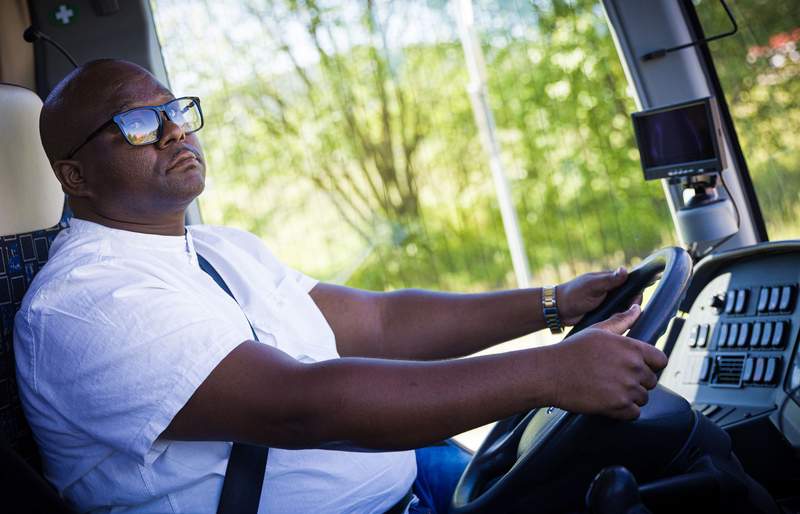
POLICY WIRE — Berlin, Germany — You wouldn’t think the backbone of a modern industrial powerhouse would buckle under the weight of an empty bus seat. But here we’re. Germany, that economic colossus, is now casting its recruitment net thousands of miles away, bypassing its European neighbors, and frankly, some of its own workforce, to pluck skilled bus drivers from the bustling streets of South Africa. It’s not just about a job; it’s about a telling symptom of a continent wrestling with demographic gravity and a global labor market turned inside out.
It’s a peculiar sight, isn’t it? A nation obsessed with efficiency and precision finds itself in such a bind, scrambling for steering-wheel talent wherever it can find it. You see this kind of migration more typically in IT or highly specialized engineering, not for urban public transport. But Germany needs bodies. It needs folks to keep the wheels turning, literally. And if the talent isn’t homegrown or readily available next door, well, then you start looking at a map, don’t you? [QUOTE_PLACEHOLDER]
The push isn’t happening in a vacuum. Europe’s facing a workforce pinch of epic proportions. Take the logistics sector alone, which often intertwines with public transport needs. According to a 2023 report from the International Road Transport Union (IRU), European truck driver shortages hit a staggering 1.24 million, representing about 10% of total positions. That’s not just a statistic; it’s a structural weakness, forcing cities to rethink everything from cargo movement to school routes. And it’s not going to fix itself, not quickly.
South Africa, on the other hand, presents an interesting counterpoint. It’s got skilled labor, sure, but also a persistent unemployment problem that, for many, makes the promise of German wages and stability irresistible. You’ve got a country whose history is fraught with internal economic disparities, suddenly becoming a crucial pipeline for first-world labor demands. It’s a transaction that’s both practical and, if you think about it, a little bittersweet for the nations providing the labor, often losing their skilled citizens to richer economies.
Recruiting these drivers isn’t some quick-fix download. No, it’s an arduous, expensive undertaking. There’s the language barrier, naturally—most German urban centers require fluency. Then there’s the arduous process of visa applications, skills recognition, — and integration programs. It’s not just about getting them there; it’s about making sure they can function effectively within a new system. It’s a huge commitment, for both sides, proof of how deep the talent deficit truly is.
But the South African example isn’t an isolated one. Look at the historical parallel of Germany’s guest worker programs, drawing heavily from Turkey and other Muslim-majority countries decades ago to fuel post-war reconstruction. This established a precedent of relying on external labor pools to fill gaps. Now, a country like Pakistan, with its burgeoning youth population and significant skilled workforce (often with substantial experience driving buses, intercity routes, even international ones through the Middle East), could very well emerge as the next frontier for such recruitment efforts, especially given its own economic pressures and potential for talent outflow. The infrastructure is often there for driving expertise; it’s the official recognition and bureaucracy that act as gatekeepers.
This global headhunting for something as fundamental as public transport drivers exposes a fascinating paradox: the rich world’s insatiable demand for growth colliding with its own demographic decline. It’s a struggle between maintaining service quality and cultural homogeneity, between open borders for capital and carefully managed gates for people. The simple act of hiring a bus driver morphs into a political football, doesn’t it?
📄 POLICY WIRE WHITEPAPER PUBLISHED: PAKISTAN'S NATIONAL SECURITY POLICY PRIORITIES
👉 READ BY CLICKING HEREWhat This Means
This German gambit, drawing drivers from South Africa, tells a blunt story about European political economy. First, it highlights an intensifying, structural labor shortage across the Continent, particularly in essential services. It’s a quiet crisis, rarely grabbing headlines like a financial crash, but it fundamentally impacts daily life and economic output. Local transport networks can’t run empty. So, nations like Germany are effectively offshoring a portion of their labor problem. This policy isn’t going away; in fact, we should expect to see more such initiatives, expanding into other sectors and perhaps drawing from a wider geographic net.
Economically, this is a stop-gap measure that pushes competition for global talent into new arenas. For South Africa, it’s a bittersweet brain drain. While it offers opportunities for its citizens and provides remittances, it also siphons off skilled individuals needed for its own development. The broader implication is a widening, informal, globalized labor market where skilled workers move to wherever demand (and higher pay) dictates, irrespective of national borders. Think about it: a world where the old school bus is more critical than ever, globally, requiring this kind of complex international movement.
Politically, this kind of specific, demand-driven migration presents a different challenge than broad refugee flows. It’s a pragmatic necessity, framed as a skills acquisition, which could subtly shift public discourse on immigration. However, integration remains a prickly issue. Language acquisition, cultural adjustment, — and the long-term impact on social cohesion will inevitably arise. We’re also seeing countries that historically supplied blue-collar labor (like some Eastern European nations for Germany) now facing their own demographic issues, forcing recruiters to look even further afield. It’s all part of a deeper global reckoning, an interconnected system where labor imbalances ripple across continents, often without much fanfare, but with profound consequences.