

Keiko’s Enduring Shadow: Peru’s Tight Race Revives Old Ghosts, New Worries
POLICY WIRE — Lima, Peru — They say history doesn’t repeat, but it often rhymes. In Peru, it doesn’t just rhyme; it practically recites its own melancholic verse with unsettling...

POLICY WIRE — Lima, Peru — They say history doesn’t repeat, but it often rhymes. In Peru, it doesn’t just rhyme; it practically recites its own melancholic verse with unsettling regularity. Here we’re again, staring down another razor-thin electoral margin, and right there, at the epicenter, is a familiar name. Fujimori. The lead, we’re told, is narrow, almost negligible, yet heavy with generations of political baggage.
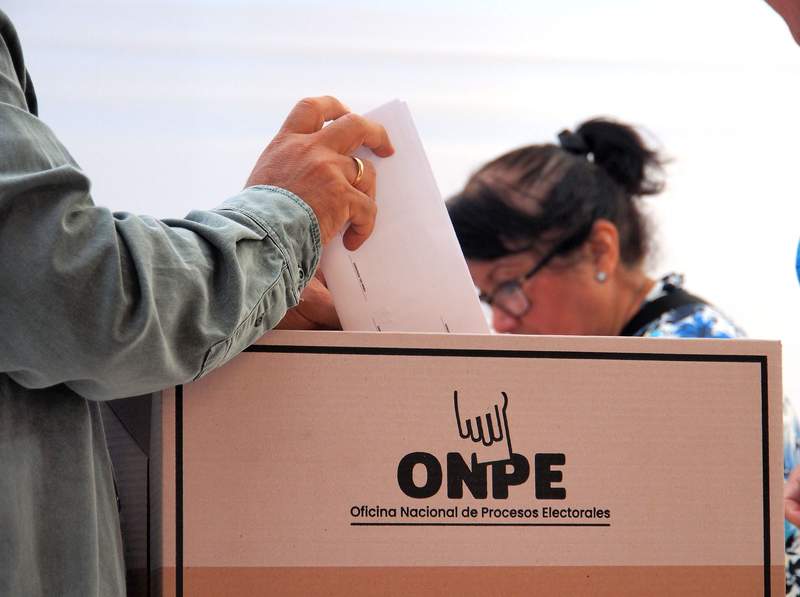
It’s less an election, more an endurance test—for the candidates, sure, but mostly for the populace who’ve seen this show many times. Keiko Fujimori, daughter of a jailed ex-president, holds a narrow lead in Peru’s presidential run-off. That’s the newsflash. But it’s also the narrative, the weary sigh across the Andes. Doesn’t feel like a win; feels like a re-litigation of the entire republic’s troubled story. It’s enough to make a seasoned journalist grab another espresso—or maybe something stronger. [QUOTE_PLACEHOLDER]
And so, as the votes trickle in like water through a cracked aqueduct, the ghost of her father, Alberto Fujimori—imprisoned for human rights abuses and corruption—looms over the counting rooms. Voters aren’t just choosing a leader; they’re reckoning with a legacy. Many here just want stability. They want an end to the merry-go-round of impeachments — and snap elections that’s characterized much of the last decade. But getting it means confronting an electorate deeply split by class, geography, — and an unresolved past.
Because, let’s be real, Peru’s democracy often feels like it’s perpetually on the ropes. One can’t help but draw parallels to other nations where political dynasties, for better or worse, dominate the landscape. Look at Pakistan, for instance, where families like the Bhuttos and Sharifs have defined political cycles for decades, battling accusations of corruption and authoritarianism while simultaneously commanding fierce loyalties. This dynamic—where a name becomes both a rallying cry and a condemnation—isn’t exclusive to the subcontinent or, indeed, to South America. It’s a universal language of post-colonial statecraft, riddled with historical grievances and promises perpetually deferred.
For Fujimori’s supporters, her candidacy represents a return to order, a tough-on-crime stance, and a more conservative economic path. They remember the economic stability her father’s administration, despite its brutal downsides, purportedly delivered. For her detractors, it’s a terrifying echo, a potential authoritarian drift back to an era of unchecked power and compromised institutions. The political right here, often fragmented, has generally coalesced around her as the best, if not only, bulwark against what they perceive as radical socialist threats—a perception that’s certainly amplified by breathless cable news cycles in Lima’s well-heeled districts.
But the numbers tell a grimmer tale about the nation’s underlying disquiet. A recent study by the Inter-American Development Bank in 2022 showed that income inequality, measured by the Gini coefficient, has only slightly improved in Peru over the last decade, dropping from 0.49 to 0.44. Progress, sure, but it’s still stark. And it’s this persistent inequality that fuels the political volcanism, pushing voters to extremes in hopes of a solution—any solution, really. This kind of volatility, with elections turning on mere thousands of votes, also tends to unnerve international investors. Capital, after all, isn’t known for its adventurous spirit in uncertain climes. Perhaps it makes some investors reconsider their holdings, redirecting their focus towards regions where Beijing’s Quiet Coup: Yuan Debt Soars, Reshaping Global Financial Gravity offers a seemingly safer, if politically opaque, haven.
📄 POLICY WIRE WHITEPAPER PUBLISHED: PAKISTAN'S NATIONAL SECURITY POLICY PRIORITIES
👉 READ BY CLICKING HEREThis tight race isn’t just about a potential president. It’s about a society grappling with its own identity, trying to chart a course forward without fully reconciling with its past. It’s exhausting, frankly, watching nations caught in these feedback loops. It makes you wonder how long one can operate on such high tension without something simply snapping. You’d think the population would’ve found some common ground after so many cycles of near-identical conflict. Apparently not.
What This Means
The perpetual, cliffhanger nature of Peruvian elections, especially when a figure like Keiko Fujimori is involved, signifies more than just democratic fervor. It signals deep structural fault lines—socio-economic disparities, persistent corruption concerns, and a lingering distrust of political institutions—that no single election seems able to resolve. Her continued presence at the very top of the polls, despite significant legal baggage and multiple past defeats, speaks to a powerful segment of the electorate’s hunger for order and, paradoxically, a willingness to overlook certain past indiscretions in the pursuit of perceived stability.
Economically, this perennial instability deters foreign direct investment — and can spook local capital. It makes long-term policy planning nearly impossible, perpetuating a cycle of stop-start reforms. For external actors, Peru remains a market of opportunity but one shrouded in considerable political risk, demanding a more conservative approach than its natural resources might otherwise suggest. The country’s future leader, whoever it turns out to be, inherits a government hobbled by political infighting and a populace deeply disillusioned. It’s not a healthy prescription for a nation struggling to capitalize on its potential in a competitive global economy.