


The Quad’s Paradox: Routine Meetings in an Unsettled Asia
POLICY WIRE — New Delhi, India — Forget the grand pronouncements for a moment, peel back the layers of diplomatic niceties, and you’ll find the geopolitical machinery of Asia is currently...

POLICY WIRE — New Delhi, India — Forget the grand pronouncements for a moment, peel back the layers of diplomatic niceties, and you’ll find the geopolitical machinery of Asia is currently grinding with an odd sort of inertia. Leaders, strategists, they’re still trying to use old maps to navigate a terrain that’s shifted right under their feet. It’s like watching seasoned chess players, confident in their opening, suddenly realize the board’s not quite what it used to be. But the moves—the familiar ones—they just keep coming.
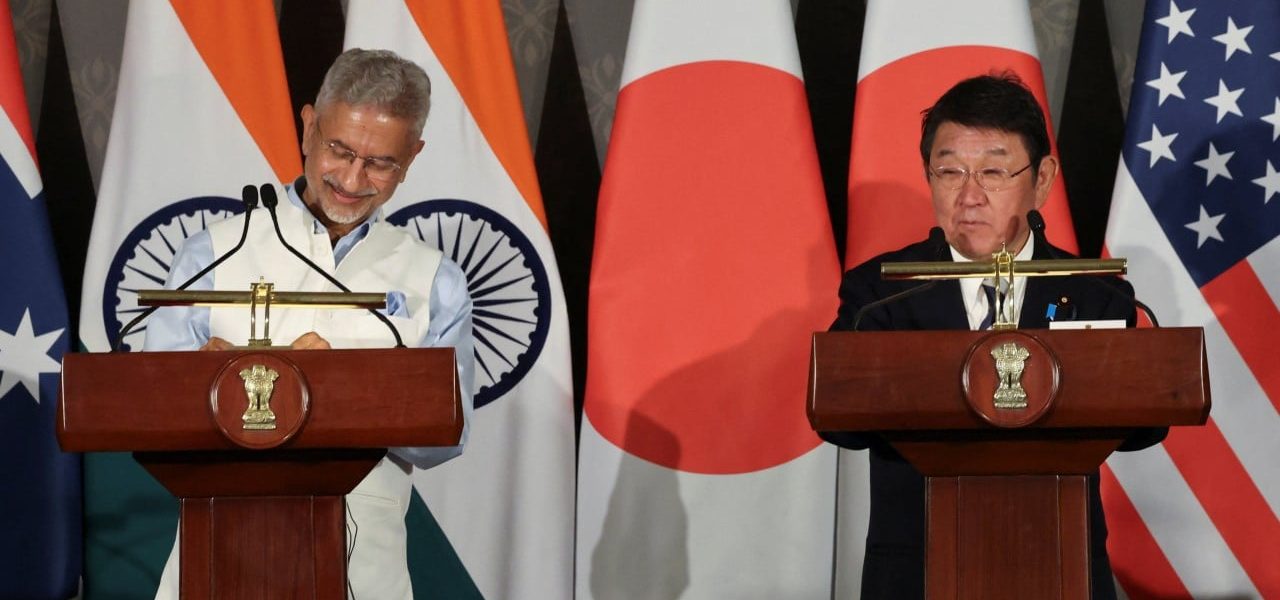
Just last week, the Quad’s foreign ministers got together in this sprawling capital, running through a roster that probably felt less like fresh strategic blueprints and more like checking off the usual suspects. They discussed [QUOTE_PLACEHOLDER] [QUOTE_PLACEHOLDER] and [QUOTE_PLACEHOLDER] Those phrases, let’s be real, have become the standard background hum of Indo-Pacific dialogues. They’ve been repeated so often, you’d think the issues themselves are new, rather than the discourse itself becoming decidedly routine. The initiatives, bless ’em, have indeed multiplied. And these meetings? Oh, they’ve absolutely become routine.
It’s not that these matters aren’t important. They’re. Very. But there’s a tangible sense, a nagging feeling even among those closest to the action, that the entire [QUOTE_PLACEHOLDER] across Asia is somehow stuck in the previous era. You see nations scrambling, scrambling to adapt their economies, their defenses, but the high-level talking heads? Sometimes it seems like they’re just playing the hits.
Because, here’s the thing: Asia is genuinely entering a new strategic era. Nations everywhere are pouring resources into defense. Think tanks are cranking out reports faster than you can read ’em. The landscape isn’t just evolving; it’s practically shape-shifting in real-time. Countries, some tiny and seemingly insignificant on paper, are leveraging new economic clout or shifting allegiances to punch well above their perceived weight. And what happens when a whole continent – home to billions, including the vast populations of the Muslim world stretching from Pakistan to Indonesia – is collectively sensing a tremor, a change in the strategic plates, while the old guard reiterates familiar refrains?
Consider the broader economic currents shaping this vast region. Trade within Asia, for instance, isn’t just increasing; it’s booming. According to a recent report by the Asian Development Bank, intra-Asian trade now accounts for over 50% of the region’s total trade, a stark jump from 30% two decades ago. That’s a serious indicator of an internal economic gravity well that predates, and will outlast, many of these security groupings. These aren’t just academic numbers, they’re the arteries and veins of regional connectivity, creating dependencies and opportunities that alliances like the Quad are just now attempting to overlay. This complex web of economic self-interest often complicates purely security-driven narratives. It always does.
The Quad, for all its high-minded ideals of a free and open Indo-Pacific, often struggles to project beyond its core members’ security concerns. For a nation like Pakistan, balancing its relationships with China, its traditional ally, and a wary Washington, the Quad’s increasing assertiveness in the Indian Ocean becomes another intricate knot in a complex foreign policy high-wire act. It isn’t a simple choice of camps; it’s a careful calibration of interests. And many states, including Pakistan, aren’t exactly itching to choose sides, even as they see Beijing’s increasing economic and military might across the broader Asian expanse.
📄 POLICY WIRE WHITEPAPER PUBLISHED: PAKISTAN'S NATIONAL SECURITY POLICY PRIORITIES
👉 READ BY CLICKING HEREThe danger here isn’t the Quad itself. No, that’d be too simple. The real snag is the potential for strategic tunnel vision, where the very act of routinely gathering and reiterating becomes an end in itself, rather than a catalyst for fresh thinking. We’re in a period where Asia’s endgame is anything but settled. Yet, somehow, much of the discourse sounds like it’s written for a world that ceased to exist sometime around 2010. It’s strange, that. Because the issues are real. The challenges are formidable. But the talking? It’s often just background noise now.
What This Means
This persistent rhetorical loop suggests a deeper anxiety beneath the surface. For the Quad nations — the U.S., Japan, Australia, and India — the repeated emphasis on familiar agenda items isn’t merely procedural; it’s a symptom of navigating a fluid strategic environment without entirely retooling their foundational approaches. Politically, this risks diluting the Quad’s perceived impact among fence-sitting nations, particularly those in Southeast Asia and the wider Muslim world, who observe its moves with a mixture of hope, apprehension, and often, skepticism. If the Quad’s core messaging becomes indistinguishable from any other multilateral security dialogue, its unique selling proposition diminishes.
Economically, the implications are equally telling. The focus on [QUOTE_PLACEHOLDER] highlights an imperative to de-risk dependencies, particularly on China. But without tangible, alternative, and equitable economic frameworks emerging at pace, the risk remains that such resilience is pursued selectively, rather than comprehensively. Many Asian economies, from the Middle East to Southeast Asia, are deeply intertwined with China’s economic juggernaut. Any move to create parallel, Quadrilateral-aligned supply chains could create friction, potentially forcing smaller economies to make difficult choices. It’s an open question whether the Quad can offer compelling economic alternatives that don’t just shift, but genuinely diversify, regional economic structures.
the seemingly stagnant discourse provides less opportunity to address emerging, non-traditional security threats that might garner wider buy-in. Climate change, pandemic preparedness, and resource scarcity are global challenges that resonate strongly in the often vulnerable nations of the Muslim world, many of whom possess burgeoning populations and fragile infrastructure. A Quadrilateral focus that remains largely confined to maritime and technological security, even if broadened to these new areas, might miss opportunities for broader engagement and cooperation. It’s a game of expectations, isn’t it? And sometimes, managing them feels harder than winning. Very much harder.