


Asia’s Endgame: Does the Quad Offer Substance, or Just the Usual Spectacle?
POLICY WIRE — Washington D.C. — The champagne glasses barely clinked last week in New Delhi as foreign ministers of the Quadrilateral Security Dialogue, better known as the Quad, wrapped another...

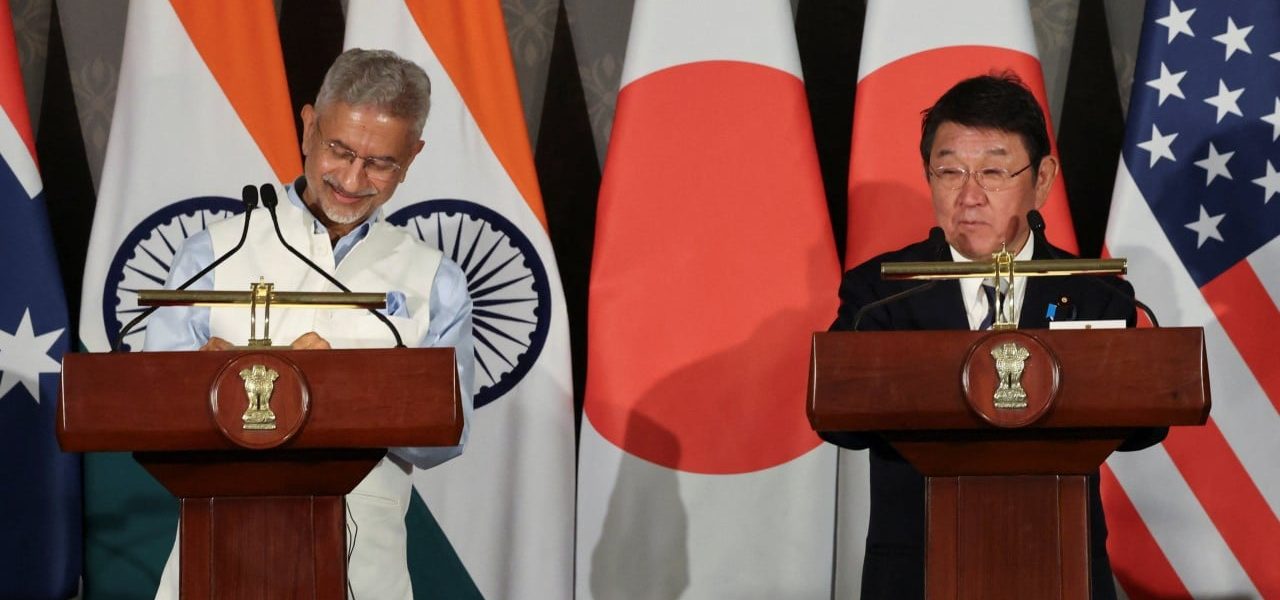
POLICY WIRE — Washington D.C. — The champagne glasses barely clinked last week in New Delhi as foreign ministers of the Quadrilateral Security Dialogue, better known as the Quad, wrapped another round of discussions. Another week, another pronouncement on supply chains — and maritime awareness. The words are familiar; the cadence, frankly, is too. For those expecting seismic shifts in Asian diplomacy, it felt less like a strategic summit and more like a carefully choreographed, highly rehearsed recital. The Indo-Pacific, everyone insists, is open. But for what, exactly? That’s where the script gets fuzzy.
It’s not rocket science: Asia’s entire strategic firmament is shaking. Geopolitical tectonic plates—old alliances, new antagonisms, economic dependencies—are grinding against each other with unsettling ferocity. Yet, when you listen to the talking points emanating from Quad gatherings, it’s often like hearing a band play their greatest hits when the crowd really wants a brand new, raw track. You know, something with teeth. The region isn’t just evolving; it’s mutating. And frankly, the diplomatic discourse often feels like it’s still debating yesterday’s battle plans.
Senior officials, on background of course, don’t deny the disconnect. A State Department official, who wasn’t authorized to speak on the record, put it bluntly: “Look, we’re not talking about military alliances here. We’re talking about friends coordinating efforts for a free, open Indo-Pacific. China knows what that means. Everyone does.” But the official, swirling a lukewarm coffee, then added: “Does it *always* feel like we’re playing chess when everyone else is playing Go? Yeah, sometimes.” It’s that gap between ambition and visible, tangible outcome that really grates on observers, myself included.
Because, beyond the high-level handshakes — and joint statements, actual strategies on the ground look fragmented. Many regional players, countries like Indonesia or Vietnam, appreciate the Quad’s presence—a counterweight, perhaps. But they also navigate intricate, often lucrative, relationships with China. They’re not picking teams. And they’re definitely not eager for a proxy fight. The notion that every nation aligns neatly into predefined blocs is, let’s just say, charmingly naive at best, and dangerously reductive at worst. Reality is messy; foreign policy usually mirrors that. Or it should.
India, the current host, exemplifies this balancing act perfectly. Its own diplomatic corps routinely emphasizes strategic autonomy. A senior Indian diplomat, again speaking anonymously due to the sensitivity of discussions, outlined New Delhi’s philosophy: “India’s always played its own game. The Quad isn’t about choosing sides; it’s about safeguarding interests in a tough neighborhood. Our economic ties with certain partners? They’re independent. We don’t owe anyone explanations.” That kind of rhetoric—firmly nationalistic—makes perfect sense within India’s borders, but it makes collective action within the Quad framework a rather tricky dance.
📄 POLICY WIRE WHITEPAPER PUBLISHED: PAKISTAN'S NATIONAL SECURITY POLICY PRIORITIES
👉 READ BY CLICKING HEREAnd where does that leave nations on the fringes, nations perpetually navigating complex power dynamics? Consider Pakistan, for instance. A long-standing ally of China, a recipient of significant infrastructure investment under the Belt and Road Initiative, it views the growing Indo-Pacific architecture through a prism shaped by its own security imperatives and regional rivalries. The Quad’s stated goals of “free and open” navigation, while seemingly universal, can often feel like a thinly veiled push for influence that might inadvertently—or purposefully—box in certain players. That strategic pressure often finds itself manifesting in new security alignments for states like Pakistan, a fact we’ve explored before in “Is Russia Planning Something Big With Pakistan?” These aren’t abstract academic exercises. They’re deeply felt realpolitik, affecting lives — and livelihoods. The United States — and its partners, while pushing their vision, can’t ignore these deep-seated regional complexities. According to a recent analysis by the World Bank, regional trade among South Asian countries accounted for a paltry 5% of their total trade in 2022, underscoring persistent divisions and a reliance on external markets.
The Quad, it seems, has to decide what it actually is. Is it a talking shop, a forum for polite discussion — and photo opportunities? Or does it intend to become a coherent, integrated strategic force? That’s the billion-dollar question. Because the challenges Asia faces—economic coercion, climate change, pandemic preparedness, flashpoints in disputed waters—they aren’t waiting for a unanimous, perfectly worded communique.
What This Means
The persistent emphasis on familiar rhetoric by the Quad suggests a deeper diplomatic dilemma: a struggle to translate broad conceptual agreement into actionable, unified policy that resonates across the diverse Indo-Pacific. Politically, this risks projecting an image of rhetorical strength but operational weakness, particularly against a more singularly focused China. It suggests that while member nations align on the overarching goal of countering China’s hegemonic tendencies, their national interests and strategic calculations still dictate a preference for flexibility over rigid commitment. Economically, this ambivalence can lead to missed opportunities for genuine multilateral initiatives beyond symbolic gestures, leaving the field open for alternative regional blocs and bilateral agreements. The true impact of the Quad won’t be measured by joint statements, but by its ability to genuinely influence—or protect—the regional order without alienating key stakeholders whose primary concern remains their own survival in a cutthroat economic and security environment. It’s a tightrope walk, — and sometimes it feels like they’re walking it backwards.