
The Billionaire’s Playbook: Dodgers Chase Arms Amidst Global Health Divide
POLICY WIRE — Los Angeles, USA — The global financial landscape, a labyrinth of shifting assets and volatile valuations, finds one of its more curious battlegrounds not in currencies or commodities,...

POLICY WIRE — Los Angeles, USA — The global financial landscape, a labyrinth of shifting assets and volatile valuations, finds one of its more curious battlegrounds not in currencies or commodities, but in the brittle elbows of elite athletes. Forget central bank statements for a moment; the real drama for those with cash to burn plays out in multi-million dollar gambles on a pitcher’s arm. It’s a testament to the dizzying economics of modern sport, where a single rotator cuff can be worth more than the GDP of a small nation – and sometimes, frankly, it’s.
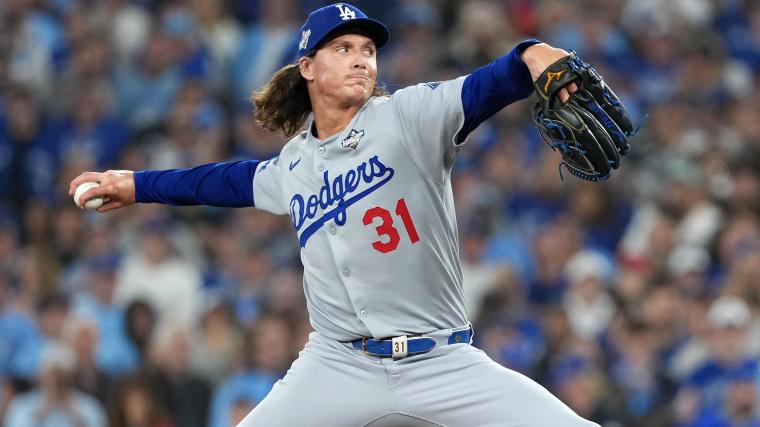
Down on the diamond, the Los Angeles Dodgers, a franchise valued by Forbes at a cool $4.8 billion, are doing what titans of industry do best: chasing profitability with ruthless efficiency. And right now, their profit hinges on pitching arms, which have been dropping like flies. First, it was Blake Snell undergoing elbow surgery, a rather inconvenient occurrence for a team eyeing another World Series ring. Then, the real gut punch: Tyler Glasnow, their marquee off-season acquisition, transferred to the 60-day injured list with a balky back that just won’t quit. Two days after a May 6 spasm, the 32-year-old right-hander was shelved. Manager Dave Roberts still hasn’t cleared him for a throwing program. It’s a tough break, literally, — and for a team like the Dodgers, an expensive one.
But because wealth knows no patience, particularly when championships are on the line, the Dodgers aren’t just sitting pretty. They’re reportedly casting a predatory eye towards Detroit’s Tarik Skubal, a $32 million arm fresh off his *own* elbow surgery – the same type Snell recently endured, ironically enough. And here’s the kicker: Skubal looks phenomenal. One month — and a day after surgery, he threw five scoreless innings in a rehab start, punching out six. It’s a medical marvel, or perhaps just a very well-funded one, that elite athletes can bounce back with such bewildering speed. As ESPN’s Jeff Passan noted, almost with a sense of bewilderment, ‘Maybe Skubal is just that guy, but if nanoscope technology halves the return time from bone-chip injuries, what an advancement.’ He’s not wrong; it’s an advancement for anyone with the cash to afford it, a distinction that carries geopolitical weight.
This whole spectacle—the injuries, the exorbitant price tags, the miraculous recoveries facilitated by bleeding-edge medical tech—forces a stark contrast. While hundreds of millions across South Asia, particularly in places like Pakistan, grapple with securing basic healthcare for diseases like polio or cholera, American baseball moguls consider multi-million dollar investments in a single elbow to be sound fiscal strategy. The disparity isn’t lost on keen observers; it’s a testament to how deeply fractured global resource allocation truly is.
Dodgers General Manager Andrew Friedman, a man whose reputation for shrewd acquisitions precedes him like a finely tailored suit, understands this calculus better than most. “You’ve got to protect the franchise’s investment, both on the field and off,” Friedman reportedly told a small circle of reporters recently, a characteristic glint in his eye. “This isn’t charity; it’s high-stakes arithmetic for championships. We’re in the business of winning, and that means acquiring the best assets, whatever the cost, and ensuring their optimal function.” And with Shohei Ohtani and Yoshinobu Yamamoto already on the books, adding Skubal would transform their rotation into something akin to a sovereign wealth fund of athletic talent.
Dr. Anya Sharma, a Senior Fellow specializing in Sports Economics at the Global Policy Institute, views this trend with a blend of academic fascination and critical distance. “The escalating value of individual athletes, coupled with rapid medical advancements, presents an intriguing, almost dizzying, paradigm shift,” Dr. Sharma remarked in an email correspondence. “We’re witnessing economic empires built and maintained on bodies and brawn—and the increasingly sophisticated science that keeps them profitable. It challenges conventional notions of investment and risk, particularly when juxtaposed against more foundational human needs.” She’s right, it’s not just a game; it’s an economic theater of the absurd, playing out on a very public stage.
📄 POLICY WIRE WHITEPAPER PUBLISHED: PAKISTAN'S NATIONAL SECURITY POLICY PRIORITIES
👉 READ BY CLICKING HEREESPN’s Buster Olney believes the Dodgers are poised to enter the ‘Skubal sweepstakes’ aggressively. If the Tigers falter in the American League race, ‘then you would imagine teams like the Dodgers, the Padres, the Phillies, will be having conversations with the Tigers,’ Olney observed, describing a feeding frenzy for top-tier talent. This isn’t just about baseball; it’s about the relentless pursuit of perceived perfection, the endless spending that has reshaped professional sports into an ultra-luxury industry. And because, let’s face it, money doesn’t sleep, the Dodgers, despite their current pitching infirmities, aren’t backing down. They’re simply pivoting to the next available, highly priced solution.
What This Means
This relentless pursuit of elite athletic talent, especially by a juggernaut like the Dodgers, speaks volumes about the current state of both sports economics and, more broadly, global capital allocation. Economically, it signifies the maturation of professional sports into a market segment almost divorced from traditional industry, operating on its own unique rules of supply, demand, and increasingly, medical innovation. The return-on-investment calculations for a $32 million pitcher (or more, considering Skubal’s pending free agency payday) are so astronomical they almost defy conventional financial models, instead reflecting brand value, media rights, and championship dividends. It also highlights an accelerating ‘arms race’ among super-wealthy franchises, driving up player salaries and consolidating talent in a few powerful hubs.
Politically, the narrative underscores a striking disconnect. The resources poured into preserving, rehabilitating, and acquiring the peak physical performance of a handful of individuals in elite sports leagues starkly contrast with global disparities in healthcare access and infrastructure. It’s a reminder of how economic privilege translates into access to cutting-edge science and technology—benefits that remain largely out of reach for billions worldwide. This dynamic, while not unique to sports, epitomizes the uneven distribution of capital in an increasingly globalized, yet inequitable, world. It’s a luxury few nations can truly afford, but for those who can, the price of glory is merely a transaction.