
Beyond the Beautiful Game: How Elite Careers Are Forged in the Crucible of Doubt
POLICY WIRE — London, UK — The meticulously crafted machine of an elite athlete often obscures the very human engine beneath. One stumble, a ligament snaps, and suddenly, the polished edifice of a...

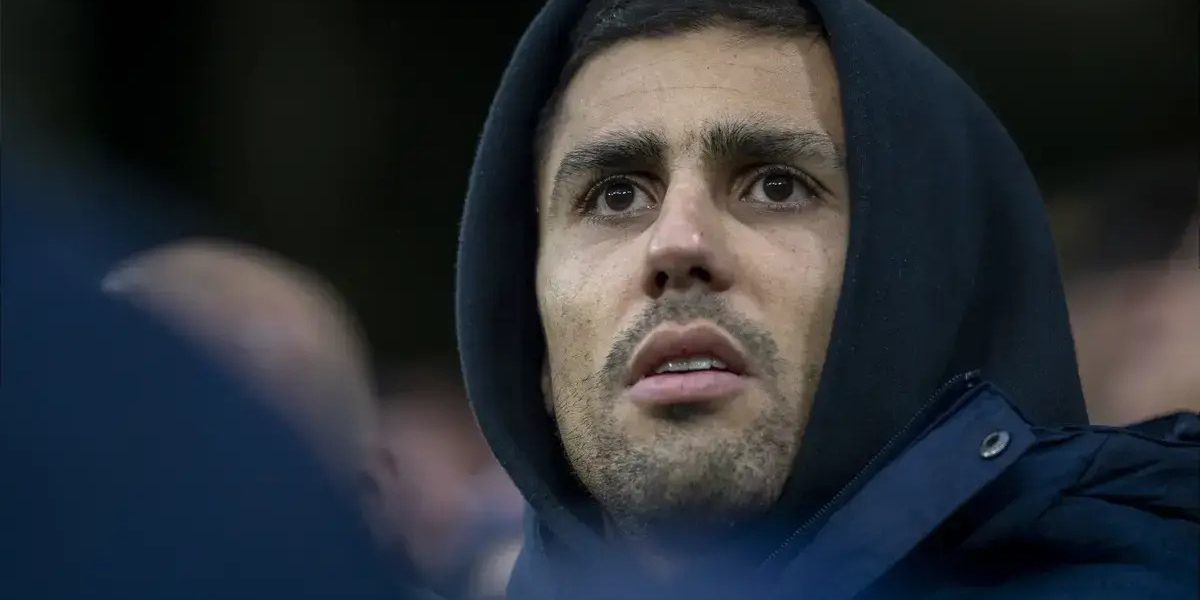
POLICY WIRE — London, UK — The meticulously crafted machine of an elite athlete often obscures the very human engine beneath. One stumble, a ligament snaps, and suddenly, the polished edifice of a multi-million-dollar career gives way to raw, unadorned vulnerability. Such was the quiet torment of Manchester City’s Rodri, who now, on the global stage, reflects not on trophies won, but on the chilling question that once haunted his downtime: whether he would “ever play again.”
It’s not usually the thunderous roar of the crowd or the blinding flash of the camera that defines a footballer’s worth, but the silent, often agonizing journey back from the brink. The Spain international—a lynchpin for club and country—now stands as a testament to physical and mental tenacity, claiming he’s now “back, stronger than before.” A neat, tidy statement, it neatly packages 18 months of what he himself labels as hellish recovery from a ruptured anterior cruciate ligament (ACL) in his right knee, sustained during a prosaic 2-2 draw with Arsenal back in September 2024.
Because that moment wasn’t just a physical rupture; it tore at the fabric of his professional identity. It led him down an [QUOTE_PLACEHOLDER] Imagine that: battling back, only to face further physiological betrayals. And that’s the reality for many in these high-stakes professions.
Now, while representing Spain at the FIFA World Cup in North America, Rodri has been surprisingly candid. He hasn’t shied away from recounting the doubts, the creeping uncertainty that often remains unsaid by those whose livelihoods depend on unwavering confidence. But sometimes, even the hardest steel bends. He’d reportedly been ‘questioning himself’ over fitness — and Manchester City future after knee injury.
Speaking to DAZN España, he cut through the usual platitudes, stating simply: [QUOTE_PLACEHOLDER] He wasn’t suggesting it was easy. Quite the contrary. “It was a time for reflection, recovery. It was difficult, I won’t deny, but you recover and come out stronger. Now I’m back, stronger than before.” Those words carry the weight of countless rehab sessions, frustrating plateaus, and perhaps, the desperate search for solace.
And that pain wasn’t just physical. “When I came back, I had some doubts about being able to play normally again. I felt very limited, a lot of pain.” Think about it: a man whose very identity is tied to his physical prowess, suddenly feeling like a diminished version of himself. It’s a psychological gauntlet few outside elite sports can truly comprehend. He describes a stark realization, a chilling moment of clarity: “When you stop completely, your body brings out what it hasn’t been able to give you during that time. There was a moment of doubt where I wondered not just if I would return to my previous level, but if I would ever play again.” That’s a deep cut, an existential threat to one’s career.
📄 POLICY WIRE WHITEPAPER PUBLISHED: PAKISTAN'S NATIONAL SECURITY POLICY PRIORITIES
👉 READ BY CLICKING HEREThankfully, he lived to tell the tale. “I’ve proven that I have. I’ve returned to that consistency in my football. It’s a long road, that’s clear.” Pep Guardiola, his manager, had already put a stamp on his comeback, predicting as far back as October that “the best Rodri” would arrive at the World Cup and next season. His contract future at the Etihad Stadium will undoubtedly be one of the next talking points, set to be resolved once the tournament concludes.
Rodri’s narrative echoes across the global sports landscape, especially in regions where football’s ascent is relatively recent, yet its impact profound. Consider Pakistan, a cricket-mad nation, where a star bowler, indispensable to the national side, faces a similar career-threatening injury. The personal torment is mirrored by national expectations, corporate sponsorships, and the raw economic value tied to an individual’s health. What separates an athlete like Rodri, with Manchester City’s state-of-the-art medical teams and virtually unlimited resources, from a prodigious talent in, say, Lahore, facing an identical injury but with significantly fewer options? The question isn’t hypothetical; it’s a tangible economic and social disparity that highlights the commercialization of sports on a global scale. According to FIFA’s Global Transfer Report 2023, the global football transfer market saw a record 7.35 billion euros spent, underscoring the immense financial stakes tied to player fitness and speedy recovery across the professional leagues, yet access to that high-level recovery remains starkly uneven.
What This Means
Rodri’s brutal honesty isn’t just a feel-good sports story; it offers a potent case study in the economics of elite human capital and the psychological burden of a performance-driven policy environment. When a player valued in the tens of millions—perhaps over 80 million euros, depending on the market and his ongoing form—is sidelined, it’s not just a blow to his team’s sporting aspirations. It’s a significant disruption of a high-value asset, triggering intricate insurance protocols, renegotiated contract clauses, and the potential depreciation of a considerable investment. Policy makers in various sectors, from finance to public health, might note the almost clinical approach taken to manage such talent.
But there’s another angle: the human cost. Rodri’s admission of intense doubt resonates beyond the sporting arena. It speaks to the psychological pressures faced by anyone in a high-stakes profession where identity is intrinsically tied to performance. CEOs, politicians, and even frontline healthcare workers operate under immense scrutiny, and a professional setback—whether health-related or career-based—can precipitate similar internal crises. Recognizing and supporting mental resilience in such high-pressure roles, both publicly and privately, is becoming a pressing policy consideration, influencing employee welfare strategies and public image management. the contract negotiations looming for Rodri underscore the delicate balance between player loyalty and economic reality—a microcosm of broader labor relations discussions at the highest tiers of global entertainment and commerce. His story offers a quiet warning: invest in the talent, sure, but understand that the human spirit, however resilient, can only bend so far. This fragile equilibrium is why such candid revelations ignite debates beyond the pitch, about commitment, market value, and the fleeting nature of stardom itself.