

Knicks’ Star Silences Decades of Doubt, But a Hefty Bill Looms
POLICY WIRE — New York City, USA — For years, they’ve tried to pigeonhole Karl-Anthony Towns. Label him. Categorize him. Stick him in that unfortunate mental cubby reserved for supremely talented...

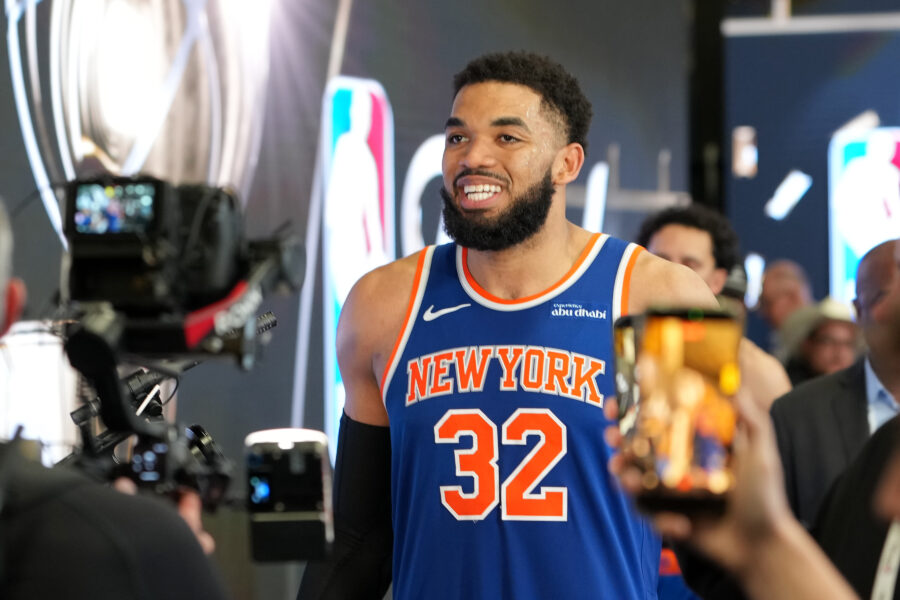
POLICY WIRE — New York City, USA — For years, they’ve tried to pigeonhole Karl-Anthony Towns. Label him. Categorize him. Stick him in that unfortunate mental cubby reserved for supremely talented athletes who just can’t quite get it together when it matters most. He was the perpetual riddle, a walking, talking statistical anomaly plagued by the ghost of postseason collapses and whispered criticisms about leadership. But you know what? That narrative’s getting a major rewrite, right now, as the New York Knicks edge closer to what might be their most surprising NBA championship run in recent memory.
It wasn’t always this quiet for Towns. Just the opposite, in fact. Early in his tenure—and hell, even fairly recently—he’d been routinely called out for his lackluster defense, his sometimes inconsistent offense, and those ever-present questions surrounding his command of the court. His critics, they were legion. Their voices, they were loud. You couldn’t escape it; sports talk shows chewed him up, spat him out, then recycled him for another round of hand-wringing. It’s a tale as old as time, really: the immensely gifted but supposedly ‘flawed’ individual struggling to find their stride under the brightest lights. And then, he found it. Or maybe it found him.
Now, Towns, after being whisked to the storied New York franchise, is looking less like a riddle and more like the answer. The Knicks, somehow, snagged the first two games against the San Antonio Spurs, clutching a 2-0 series lead. They even squeezed out a nail-biting 105-104 win in Game 2. And suddenly, folks are talking different. Former great Charles Barkley thinks Towns can be the Knicks’ MVP in the Finals. Colin Cowherd, the longtime NBA commentator, couldn’t hold back. He said, and I quote, [QUOTE_PLACEHOLDER] He then elaborated, saying “He was always known as kind of a flaky player with immense talent you couldn’t depend on. He’s literally been the opposite.” Quite the turnaround, huh? Cowherd didn’t stop there. He went on to assert, “He has literally been the sturdiest, most dependable, greatest teammate. And that’s not a criticism. His rep was dumb fouls, streaky scorer, kind of goofy — the opposite.” Jason Timpf, another observer, added that Towns was “mistake-prone” at the beginning of his career, suggesting questions hovered about whether any team could actually win with him as a center-piece. Timpf then noted that the Knicks star isn’t making as many errors these days.
But the euphoria on the hardwood has a clock ticking, folks. Beneath the roar of the crowd at Madison Square Garden (or wherever they’re playing), there’s the cold, hard reality of NBA economics. And you can bet the accountants aren’t as swayed by heroics alone. Towns, after this exhilarating ride, has got one year left on his four-year, $220 million contract extension. Then, he’s got a player option coming up for a whopping $61 million. Now, that’s real money. The Knicks, after pouring in capital — and belief, will have some significant choices ahead of them.
Sam Amick of The Athletic put it plainly, articulating the quandary facing the front office: [QUOTE_PLACEHOLDER] He penned a piece on this, highlighting a crucial dynamic, “and a desire to be prudent enough with the payroll so as not to compromise roster depth. But the tone of those talks, given everything Towns has done here, should be far more flattering toward him this time around. He deserves immense credit for that much.” Rewarding success feels good, of course, but it ain’t always easy on the balance sheet.
📄 POLICY WIRE WHITEPAPER PUBLISHED: PAKISTAN'S NATIONAL SECURITY POLICY PRIORITIES
👉 READ BY CLICKING HEREWhat This Means
This whole Towns situation—the turnaround, the vindication, the looming paycheck—it’s a micro-drama that mirrors bigger geopolitical and economic shifts we see playing out all over the map. Take Pakistan, for instance. For years, its economic narrative, like Towns’ early career, was often framed by external skepticism—concerns about stability, consistency, and an inability to convert raw potential into sustained growth. But when you see an institution or an individual finally delivering on their promise, when they shift that entrenched perception, the stakes skyrocket. For the Knicks, Towns’ performance translates directly into financial commitment — and franchise strategy. They’ve gone all in, — and now they’re staring down the barrel of a salary cap that gets harder to manage by the season.
And that’s the brutal calculus, isn’t it? When a figure like Towns performs at an elite level, changing minds and winning games, his market value becomes a national talking point, much like a strategic industry’s breakthrough might reshape investment portfolios across South Asia. There’s a parallel in how public perception of capability shifts. From the early 2000s, when global markets might have viewed certain emerging economies with hesitation, to now, where demonstrating consistent, high-impact growth can command immense, even staggering, valuations—it’s about earning that trust, that belief, game by game, quarter by quarter. This isn’t just basketball; it’s high-stakes poker, a policy decision, an investment gamble wrapped up in sweat and heroics. Will the Knicks ante up big? You bet they’ll have to. For more on how glitz and grit intertwine in these mega-arenas, consider the enduring drama around Penn Station’s Shadow Casts Glitz, Grit of NBA Finals at Madison Square Garden. Because sports — and business, they’re inextricably linked. And what about when established leaders falter under pressure, mirroring our player’s initial struggles? Look at Field General’s Folly: Dave Roberts’ Dodger Gambit Collapses, Echoing Risks of Political Over-Caution.
Towns has played himself into a whole new stratosphere of leverage. The organization wants to reward him, they really do. But at what cost? And how do you balance the heroics of one man against the long-term roster construction, the very sinews of a championship contender? It’s a question for the Knicks today, but for a whole lot of political and economic strategists tomorrow, facing their own high-value, high-stakes decisions.