


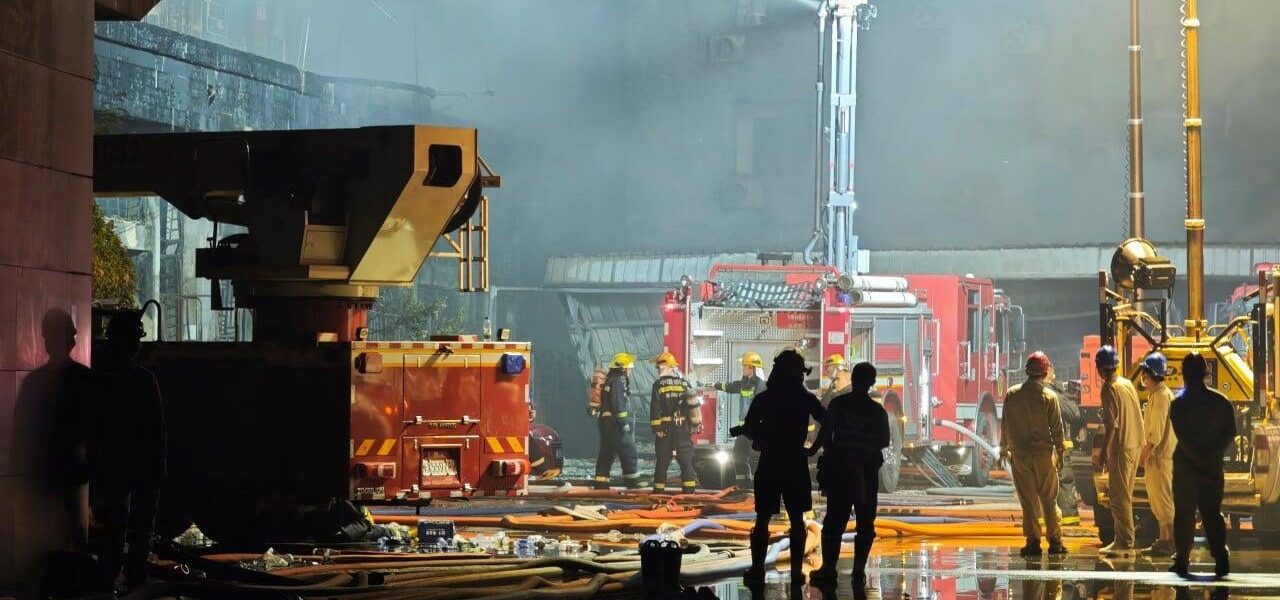
Deadly Fire in Chinese Shoe Factory Highlights Low-Cost Model Risks
A deadly fire at a Chinese shoe factory in Jinjiang, Fujian, underscores the dangers of low-cost business models and the urgent need for reform.

POLICY WIRE — Jinjiang, China — On July 9, a devastating fire swept through a shoe factory in Jinjiang, Fujian province, resulting in the deaths of at least 28 people. The incident has drawn attention to the broader issue of firms under financial pressure compromising safety to cut costs.
The need for reform in China’s low-cost business model is increasingly apparent, yet significant changes remain elusive. The factory, which employed hundreds of workers, had only a small fraction of its workforce enrolled in pension and medical insurance plans, according to company filings for 2025.
The fire safety measures in place at the facility were insufficient, exacerbating the disaster’s impact. This tragedy is not an isolated incident but rather a symptom of systemic issues within China’s manufacturing sector.
“The Jinjiang fire is a stark reminder of the human cost associated with prioritizing profit over safety,” said Li Wei, a labor rights activist. “Reform is necessary, but it requires a concerted effort from both the government — and private sector.”
Chinese authorities have launched an investigation into the incident, but previous similar incidents have often led to limited changes. The challenge lies in enforcing stricter regulations — and ensuring compliance across the vast manufacturing landscape.
Experts argue that the low-cost model, while driving economic growth, has led to a culture where cutting corners is commonplace. “There’s a need for a paradigm shift towards sustainable — and ethical business practices,” noted economist Zhang Qiang. “This will require significant investment in safety infrastructure — and a change in corporate mindset.”
📄 POLICY WIRE WHITEPAPER PUBLISHED: PAKISTAN’S NATIONAL SECURITY POLICY PRIORITIES
The families of the victims are calling for justice — and systemic change to prevent future tragedies. “My brother worked hard to support his family, and this is how he’s remembered—a victim of negligence,” said Chen Mei, sister of one of the deceased workers.
As China continues to navigate its economic evolution, the Jinjiang fire serves as a critical juncture for re-evaluating labor practices and safety standards. The global community is watching closely, as the outcomes will have far-reaching implications for workers’ rights and industrial safety worldwide.
Reporting by Policy-Wire (PW)