

Minority Solidarity and National Unity in Pakistan
In the context of renewed tensions between India and Pakistan, recent developments in Pakistan’s domestic political landscape reveal a noteworthy phenomenon: the broad-based solidarity expressed by...

In the context of renewed tensions between India and Pakistan, recent developments in Pakistan’s domestic political landscape reveal a noteworthy phenomenon: the broad-based solidarity expressed by religious minority communities in support of the Pakistani state and its military. This emerging pattern of minority engagement during times of external aggression challenges widely held perceptions of minority-state relations in Pakistan and raises important questions about social cohesion, national identity, and the political utility of inclusive nationalism.
While regional hostilities have often exacerbated internal cleavages in plural societies, Pakistan’s response to recent Indian provocation has been marked by a visible alignment across religious and ethnic lines. Minority communities-including Christians, Hindus, and Sikhs- have not only refrained from adopting a passive or neutral stance, but have actively endorsed the government’s position, participated in nationalistic demonstrations, and called for restraint and dignity in foreign policy conduct. Such expressions of solidarity, particularly during moments of heightened international scrutiny, serve to reinforce the state’s legitimacy and project a narrative of unity and institutional trust, both domestically and internationally.
The participation of religious minorities in these public demonstrations of unity is particularly significant in light of historical tensions and narratives that have portrayed Pakistan’s minority populations as marginalized or politically disenfranchised. Contrary to such assumptions, the recent mobilization of minority voices illustrates a deepening sense of civic inclusion and political agency. For instance, Bishop Samuel Azariah of the Church of Pakistan issued a strong condemnation of India’s “warmongering rhetoric” and organized special nationwide prayers for peace and for the Pakistani armed forces. As a senior Christian leader, his public engagement not only underscored the alignment of Christian citizens with the national interest but also exemplified the role of religious institutions in shaping the civic response to foreign policy crises.
Similarly, the Hindu community- often presumed to be culturally and politically vulnerable in the context of Indo-Pak tensions- demonstrated unequivocal support for Pakistan’s sovereignty. Dr. Ramesh Kumar Vankwani, a prominent Hindu member of the National Assembly, rejected India’s aggressive posture and framed it as a destabilizing threat to regional peace. His statement positioned Pakistan’s Hindu citizens not as outsiders during conflict, but as co-stakeholders in the nation’s strategic and moral positioning. Such participation reflects the extent to which religious identity, in this context, is subordinated to national identity and solidarity.
The Sikh community, long associated with cultural and religious ties to both India and Pakistan, also played a visible role. Sardar Ramesh Singh Arora, a Sikh member of the Punjab Provincial Assembly, organized a solidarity event at the historic Gurdwara Dera Sahib in Lahore. The gathering brought together Sikh leaders who expressed unwavering support for the Pakistani government and military, reinforcing the symbolic significance of minority spaces as venues for national expression. This public stance challenges simplistic ethnic-nationalist narratives and instead affirms a pluralistic conception of patriotism rooted in civic engagement and shared national belonging.
📄 POLICY WIRE WHITEPAPER PUBLISHED: PAKISTAN'S NATIONAL SECURITY POLICY PRIORITIES
👉 READ BY CLICKING HEREThese instances of minority mobilization must be understood not merely as symbolic gestures, but as deliberate political acts that serve multiple functions. Domestically, such acts strengthen the social fabric by reinforcing the perception that the state treats its minorities as full and equal participants in the national project. This helps foster trust in public institutions and diminishes the appeal of sectarianism or exclusionary politics. Internationally, these demonstrations complicate hostile external narratives- particularly from India and sections of the Western media—which often frame Pakistan as a nation beset by internal religious discord. By presenting a unified front that includes visible minority support, the Pakistani state enhances its diplomatic credibility and moral standing.
It is also worth contrasting this internal cohesion with the rising religious polarization observed in India. Under the current Indian government, numerous reports have documented increased marginalization of religious minorities, particularly Muslims and Christians, through both formal legal mechanisms and informal societal violence. In this context, Pakistan’s ability to mobilize and incorporate minority voices in moments of national tension reflects a divergent trajectory- one marked by a commitment to inclusive nationalism rather than majoritarian supremacy.
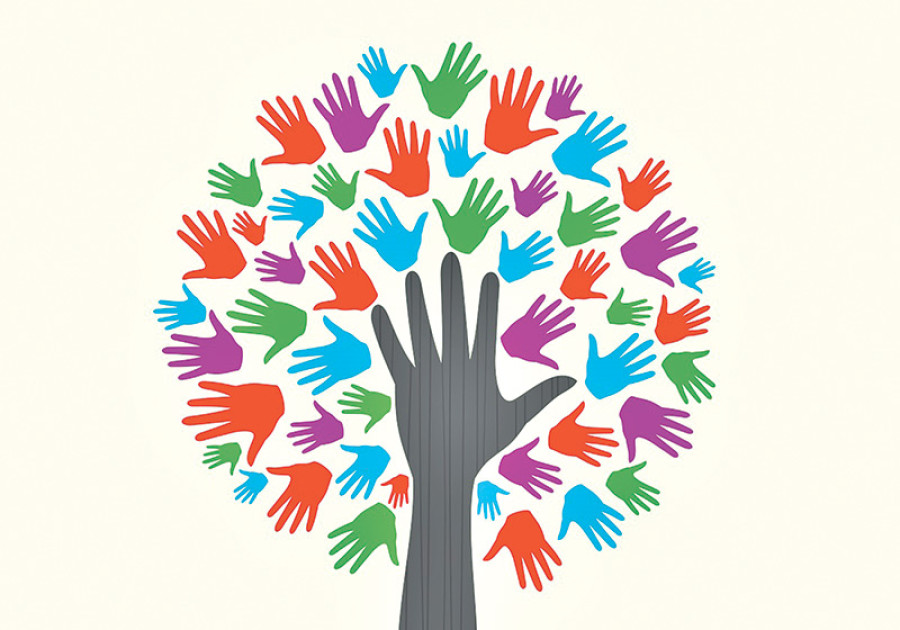
The broader implications of such minority solidarity are twofold. First, it affirms the resilience of Pakistan’s pluralistic social order, especially in the face of external pressure and hostile regional narratives. Second, it redefines the relationship between national identity and religious affiliation in South Asia by demonstrating that civic allegiance can transcend communal divisions. Rather than being passive subjects of state policy, religious minorities in Pakistan are increasingly emerging as active agents of national unity and political engagement.
In conclusion, the support extended by Pakistan’s minority communities during recent escalations with India is more than a public relations success- it is an indicator of deeper political stability and civic maturation. As regional tensions persist, the continued inclusion of minorities in the national dialogue will be critical not only for internal cohesion but for shaping Pakistan’s international image as a nation capable of transcending sectarian divides in defense of its sovereignty and democratic values.
Author