


Republican Cracks Emerge: Voter ID Bill’s Surprising Demise Ignites Intra-Party Fury
POLICY WIRE — Washington, D.C. — Washington’s corridors occasionally reverberate not with the thunder of partisan battle, but with the distinct sound of a party devouring its own. It’s a...

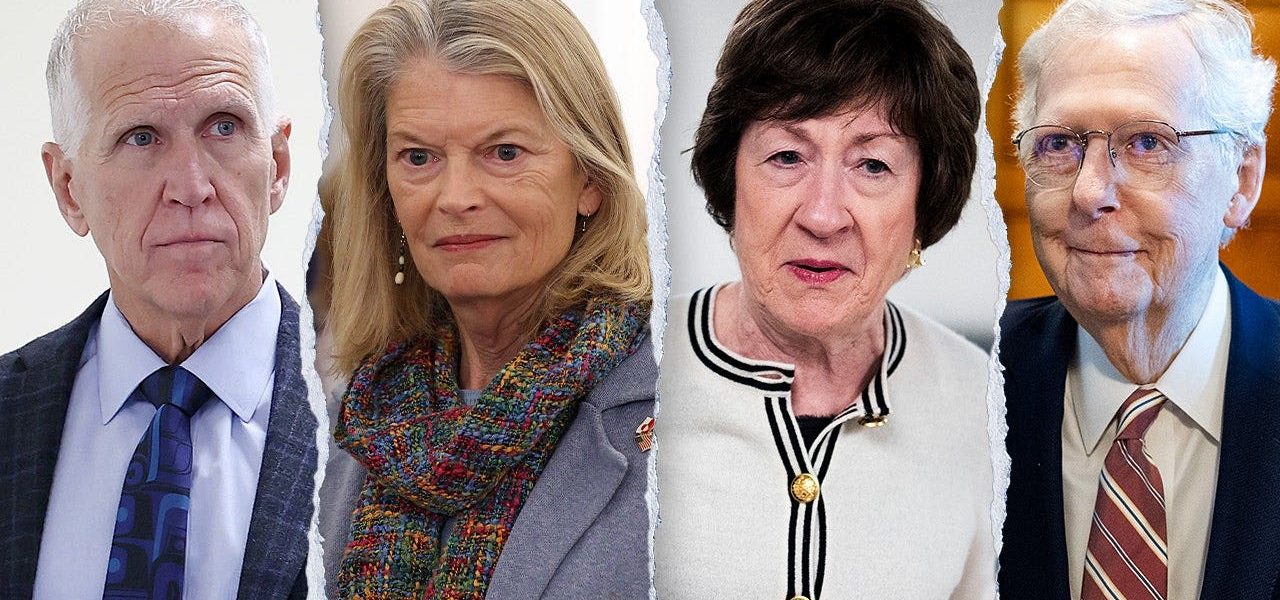
POLICY WIRE — Washington, D.C. — Washington’s corridors occasionally reverberate not with the thunder of partisan battle, but with the distinct sound of a party devouring its own. It’s a low rumble, mostly, but every so often, it bursts into an undeniable roar. Just recently, a seemingly straightforward voter identification bill—carrying the implicit imprimatur of former President Donald J. Trump—stumbled, then spectacularly collapsed on the Senate floor. The surprising culprit? A quartet of Republican senators who bucked party lines, effectively sinking legislation designed to address what many on the right describe as election integrity concerns.
This wasn’t some backroom maneuver. This was a public, deliberate repudiation, cutting against a measure that has become something of a totem for a significant wing of the GOP. And it left Senator Josh Hawley (R-MO) – no stranger to making waves himself – seething. His displeasure, readily apparent to anyone observing the aftermath, underscored a growing chasm within a party that frequently espouses unity, yet consistently struggles to achieve it. Political infighting isn’t new, no. But this particular skirmish hints at deeper ideological fault lines, ones that aren’t gonna heal with a quick press statement. [QUOTE_PLACEHOLDER]
The proposed voter ID legislation aimed to standardize requirements for proof of identity at federal elections. Advocates maintained such measures were essential for safeguarding against voter fraud. Detractors, conversely, argue these laws disproportionately affect marginalized communities, creating barriers to the ballot box. Because the former president had championed strict voter ID requirements vigorously since the 2020 election, this bill wasn’t just another piece of legislative text; it was a loyalty test, or at least a powerful symbolic gesture. For four Republican senators to dissent, that wasn’t just procedural; it was a statement. It challenged not only the policy but, more importantly, the enduring sway of the party’s de facto leader.
And so, Hawley conveyed his deep dissatisfaction, expressing frustration at the turn of events. While he hasn’t provided specific public comments detailing the exact content of his feelings, those familiar with his legislative priorities and staunch conservative stance understand that such an outcome would invariably ignite considerable ire. His frustration, we can safely surmise, stemmed from a perception of betrayal—not just of a policy ideal, but of a shared vision for election integrity.
The episode lays bare a foundational tension within the contemporary Republican Party: adherence to a nationalist-populist agenda versus a more traditional conservative-libertarian outlook. This isn’t just about voter ID; it’s about control, direction, — and ultimately, power. Such internal friction, as observers in various world capitals can tell you, speaks volumes. For instance, in a country like Pakistan, where political stability often hangs by a thread and electoral reforms are frequently contentious, the spectacle of a superpower’s internal democratic mechanisms facing such challenges provides an intriguing, if not unsettling, case study.
It’s not lost on international observers—from Islamabad to Istanbul—that America’s capacity to project democratic ideals abroad is intrinsically linked to the health of its own democratic institutions at home. When partisan squabbles undermine efforts related to fundamental voting rights, it doesn’t just create headlines; it can subtly diminish U.S. soft power and influence, giving pause to nations contemplating their own democratic journeys or partnerships with Washington. We can’t act like the world isn’t watching these theatrics, especially when democracies around the globe grapple with similar issues of electoral integrity and public trust.
📄 POLICY WIRE WHITEPAPER PUBLISHED: PAKISTAN'S NATIONAL SECURITY POLICY PRIORITIES
👉 READ BY CLICKING HEREBut back to the bill’s demise. The identity of the four GOP senators isn’t public in the title, but their defiance signals a willingness among a certain faction to push back against measures deemed either overly restrictive or politically ill-advised. For them, maybe this wasn’t about loyalty; maybe it was about conscience, or constituent politics, or even just old-fashioned political calculation. Whatever their motivation, their actions serve as a stark reminder that even within tightly controlled party machines, individual agency—or dissent, depending on your view—still exists.
Indeed, research from organizations like the Brennan Center for Justice consistently highlight the partisan polarization around election laws. One report noted that since 2010, more than 30 states have enacted strict voter ID laws, predominantly led by Republican legislatures, yet national data on voter fraud remains exceedingly rare. This statistical reality further fuels the fire, with proponents pointing to perceived risks and opponents to documented suppression. It’s a debate that seems impervious to facts, instead relying on belief — and political will.
What This Means
The failure of this Trump-backed voter ID bill is more than just a legislative blip; it’s a diagnostic sign. Firstly, it indicates a subtle but significant erosion of the former president’s absolute control over the Republican caucus. While his influence remains potent, this particular vote proves it isn’t unassailable. That’s a huge shift, frankly, for a guy who’s generally expected absolute fealty. Secondly, it portends ongoing internal strife for the GOP as it gears up for future elections. Will such dissent lead to primary challenges for the rogue four? Or will it embolden other senators to express their own policy deviations? The ripple effects could reshape the party’s platform — and leadership dynamics, causing a split, perhaps. Third, the persistent friction over voting rights highlights a deeply fractured understanding of democracy itself within America’s political landscape. Some view universal access as paramount, others prioritize stringent security, and these two philosophies are fundamentally at odds. This internal conflict, when combined with broader social and economic disparities, poses a serious challenge to domestic cohesion, which in turn influences how effectively Washington can conduct foreign policy and assert global leadership. It suggests that even the most well-established democracies aren’t immune to the very questions of legitimacy that challenge emerging democratic states in places like South Asia. When the world looks at Washington, they see the gears grinding, — and sometimes, those gears simply strip.