

The Brutal Slog of Golf: Poston’s Memorial Triumph a Glimpse Into Sport’s Grueling Economy
POLICY WIRE — Dublin, Ohio — Some Sundays, the script writes itself with such dramatic flair, you’d swear it was rigged. But then again, this isn’t a Netflix docudrama; it’s professional golf, and...

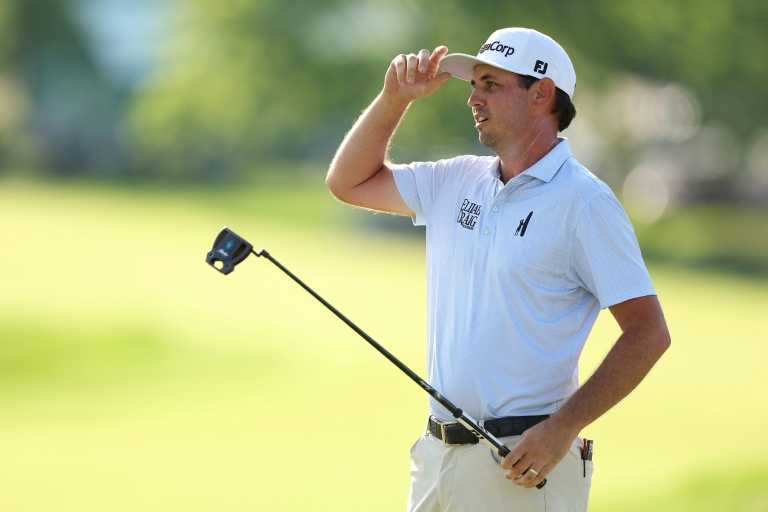
POLICY WIRE — Dublin, Ohio — Some Sundays, the script writes itself with such dramatic flair, you’d swear it was rigged. But then again, this isn’t a Netflix docudrama; it’s professional golf, and Sunday at Muirfield Village, American JT Poston proved that often, the grittiest player doesn’t just survive—he grinds out a victory against the odds. It was less about silky-smooth strokes and more about a psychological war of attrition, culminating in a playoff triumph that frankly, felt more earned than elegant.
It wasn’t a pretty day for Poston, not initially anyway. Not after watching a commanding four-stroke lead evaporate like morning mist under a desert sun. That kind of lead should provide a cushion, shouldn’t it? A measure of comfort as you navigate those back nine minefields. Instead, it became a weighted vest, dragging him through 33 grueling holes played on the day—a marathon session necessitated by earlier storm delays. You could practically hear the collective groan from golf pundits as his advantage frittered away. But, you know, sometimes losing the plot mid-story makes for a hell of a comeback. And that’s precisely what transpired.
His rival, Ryan Gerard, was no walkover. Far from it. Gerard, an emerging talent, engineered suspense of his own, particularly with a monster 37-foot birdie putt on the 17th that briefly gave him the outright lead. The drama built. Poston, staring down defeat, then responded with his own birdie on the 18th to force a playoff. It was a shot that showcased not just skill, but an almost defiant refusal to yield. But what transpired next, over the two playoff holes, really crystallized the nature of modern championship golf: it’s an unforgiving arena where fortunes turn on millimeters, nerves fray openly, and a singular moment of calm can redefine a career.
“They don’t ask how, just how many, right?” Poston deadpanned afterward, clearly still riding the adrenaline wave of the moment. “Didn’t play my best through those middle holes today—you don’t need a stat sheet to tell you that, believe me—but I told myself I’d shake Mr. Nicklaus’s hand at the end. It’s about that one handshake. And, because you’re constantly fighting the course, the competition, and, honestly, yourself out there, holding it together for those last crucial moments? That’s what defines these tournaments.” Indeed, he closed it out with a tense three-and-a-half-foot par putt on the second replay of 18, a testament to sheer mental fortitude after both players initially flubbed their approaches.
Even golf icon and tournament host Jack Nicklaus, a man who’s seen more championship moments than most entire nations have, commented on the intensity. “We’ve seen some spectacular golf here over the decades, haven’t we?” Nicklaus mused, his gaze sweeping over the hallowed grounds. “But the grit J.T. showed, to fight back from where he was, that’s what this game, what *any* high-stakes competition, really is about. It’s about finding that something extra when everyone, including sometimes yourself, thinks you’re done.” It’s the kind of grinding perseverance that transcends the sport itself—a quality respected, perhaps even revered, in any endeavor, whether you’re navigating global markets or navigating the nuances of geopolitics. The brutal simplicity of decision when everything’s on the line, isn’t it?
📄 POLICY WIRE WHITEPAPER PUBLISHED: PAKISTAN'S NATIONAL SECURITY POLICY PRIORITIES
👉 READ BY CLICKING HEREThis win, Poston’s fourth PGA Tour title, didn’t just add another trophy to his mantel; it added a cool $4 million to his bank account, making him the highest earner on tour for this season. The Memorial, an elevated event, carried a staggering total prize purse of $20 million, according to the official PGA Tour website. That kind of money—it’s not just a paycheck; it’s a testament to the ever-escalating economic engine that professional golf has become. It’s no surprise that regions like the Gulf states and even some in South Asia, including Pakistan, have eyed sports like golf as avenues for investment, seeking prestige, tourism revenue, and soft power influence. Imagine the investment potential that kind of spectacle offers to growing economies looking to project a modern image—think of how Jordan’s World Cup March becomes a geopolitical statement.
What This Means
The Poston-Gerard playoff was more than just golf; it was a microcosm of strategic reversals and the punishing demands of peak performance under pressure. For Policy Wire readers, this high-stakes sporting drama offers a lens into several broader phenomena. First, the economics of modern sport are astronomical, drawing in billions in sponsorships, media rights, and prize money. This makes golf—and other major sporting events—an increasingly important aspect of global commerce and branding, influencing everything from tourism initiatives in nascent markets to direct foreign investment. The fierce competition for tour cards, prize money, and media attention creates its own kind of economic ecosystem, where only the most resilient thrive.
But the psychological elements also resonate. The ability to regain composure, even when a seemingly insurmountable lead has vanished, reflects a mental toughness that’s as applicable in a boardroom facing hostile takeover bids as it’s on the 18th green. It highlights the premium placed on resilience in any domain where the margins for error are razor-thin. So, while it’s easy to just see a man with a club hitting a ball, we’re also witnessing a testament to concentrated will, an example of how perseverance isn’t just a nice-to-have, but an absolute prerequisite in a world that seldom gives second chances—at least not easy ones.