


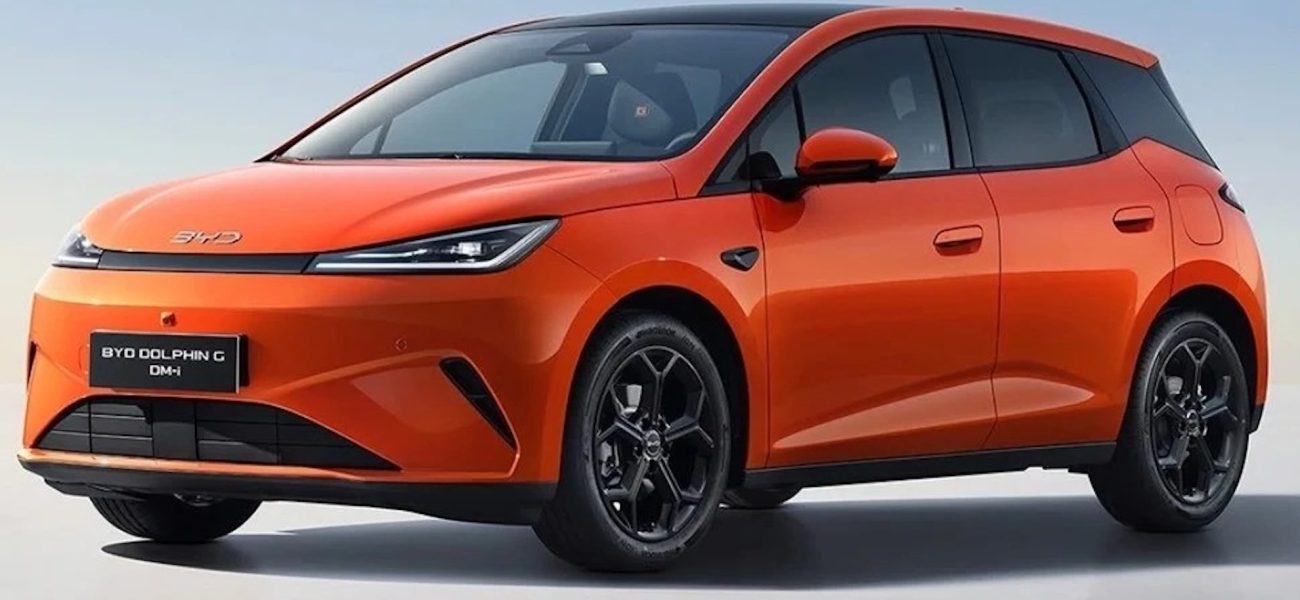
Beijing’s Silent Motors: A New Hatchback Roars Global Ambition
POLICY WIRE — Shenzhen, China — Another morning dawns, and another tremor rattles the foundations of what used to be a rather predictable global auto industry. It’s not an earth-shattering event...

POLICY WIRE — Shenzhen, China — Another morning dawns, and another tremor rattles the foundations of what used to be a rather predictable global auto industry. It’s not an earth-shattering event you’d see on cable news, but the quiet emergence of a new vehicle from China’s BYD—a plug-in hatchback built for international sale, apparently capable of a 621-mile range on a single charge—marks something far more substantial than just a new car model. It’s a testament to Beijing’s relentless, strategically patient play for market dominance, one component at a time.
Because, you see, these aren’t just cars anymore. They’re extensions of state power, manifestations of industrial policy writ large. For decades, the globe’s highways were Detroit’s, Stuttgart’s, — and Tokyo’s domains. That era’s sunset is approaching fast, perhaps quicker than anyone in those venerable automotive capitals cares to admit. This particular hatch isn’t just about eco-friendly commuting; it’s a front-line infantry unit in a far bigger battle for technological supremacy and economic leverage. [QUOTE_PLACEHOLDER]
Word has it, the car—still under wraps, really—aims squarely at those established compact and mid-size markets where European, Japanese, and American brands have comfortably held sway. But with a range like that for a plug-in hybrid, it’s not merely competitive; it’s audacious. Think about it: 621 miles means fewer stops, more convenience, a smoother ride from Lahore to Islamabad, or across the vast American plains. For consumers in rapidly developing economies, say, throughout South Asia or even parts of the Muslim world that are grappling with nascent EV infrastructure, this extended range tackles a key anxiety right off the bat.
It’s no accident that China’s auto industry has been subsidized, nurtured, and directed with an eye toward becoming a world leader. They’ve poured colossal sums into battery technology, manufacturing scale, and even raw material procurement, securing supply chains that would make any Western automaker weep. This aggressive expansion into global markets isn’t just opportunistic; it’s the fruit of years, decades even, of deliberate state planning. They’ve built the muscle, — and now they’re flexing it.
And let’s not pretend this is happening in a vacuum. Trade tensions simmer. Washington frets about China’s manufacturing might. Europe grumbles about unfair competition. But while Western capitals debate tariffs and protectionism, Chinese companies like BYD are simply building better, cheaper (and increasingly, higher-range) electric vehicles. The International Energy Agency, for instance, reported that Chinese electric vehicle exports nearly doubled in 2023, hitting around 1.3 million units. That’s a pretty stark number, wouldn’t you say?
This car’s ‘global’ designation is key. It signals a move beyond domestic prowess to direct, head-to-head competition on foreign soil. And frankly, a lot of established players aren’t ready. They’re still bogged down with legacy issues, dealer networks resistant to change, and R&D budgets spread thin across internal combustion and electrification simultaneously. China doesn’t have that baggage. It jumped straight into the future, and now it’s leaving tire tracks on the road less traveled, forcing others to play catch-up.
📄 POLICY WIRE WHITEPAPER PUBLISHED: PAKISTAN'S NATIONAL SECURITY POLICY PRIORITIES
👉 READ BY CLICKING HEREBut the true policy implications stretch beyond simple sales figures. This shift empowers new trade corridors, cements new technological alliances, — and redefines global manufacturing hubs. For nations like Pakistan, deep in China’s Belt and Road Initiative orbit, this isn’t just about buying a new car; it’s about potentially integrating into a Chinese-led automotive ecosystem, attracting investment, maybe even localized assembly, creating jobs—a double-edged sword, certainly, offering opportunity but also tightening the dependency knot. Remember how that played out in other strategic sectors? Precisely.
What This Means
This single plug-in hatchback, yet to hit showrooms officially, functions as a powerful symbol of China’s deliberate push for technological and economic hegemony. It’s a policy statement cast in steel — and lithium-ion. Western governments are faced with a stark choice: innovate aggressively and compete directly, or retreat behind protectionist walls, risking market isolation and consumer backlash. The latter isn’t much of a long-term strategy, is it? We’ve seen Detroit’s reckoning before, and this feels like another verse in a familiar song.
For South Asia and other developing regions, Chinese ascendancy in EVs could accelerate infrastructure development, but it also means potential displacement of traditional partners and homegrown efforts. The scale of China’s automotive industry—now the world’s largest producer—affords efficiencies that are incredibly difficult for smaller national players to match. The implications aren’t just about affordable transportation; they’re about shifting alliances, deepening economic integration with Beijing, and reshaping global supply chains from semiconductors to rare earth metals. And in a region already grappling with complex geopolitical dynamics—you know, like what Russia might be planning with Pakistan—economic dependency always has political teeth. So, yes, it’s just a car. But its 621-mile range implies a reach far, far beyond the open road.