
Madrid’s Grand Sermon: Pope Leo Urges Aid for Poor Amidst Global Divides
POLICY WIRE — Madrid, Spain — The midday sun beat down on Madrid, shimmering off the elaborate gold detailing of government buildings and centuries-old cathedrals. It was against this backdrop of...

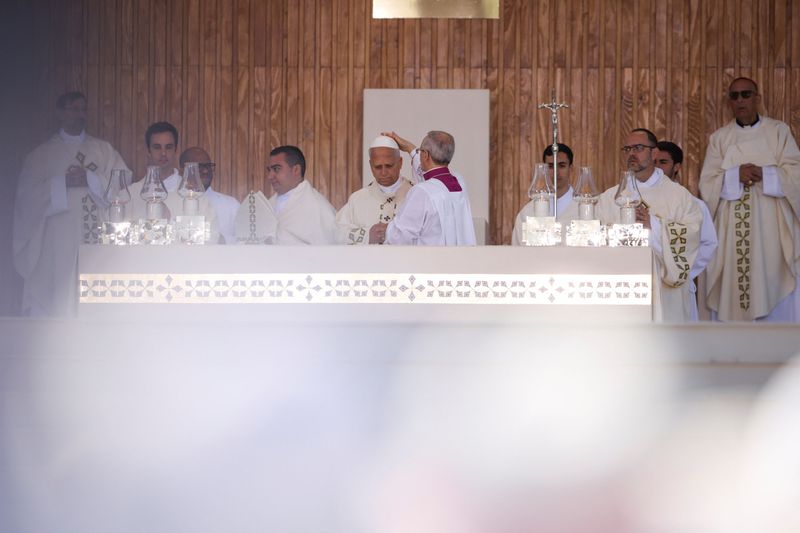
POLICY WIRE — Madrid, Spain — The midday sun beat down on Madrid, shimmering off the elaborate gold detailing of government buildings and centuries-old cathedrals. It was against this backdrop of old-world opulence that a crowd estimated at 1.2 million, a sprawling sea of faces stretching for kilometers, assembled. They weren’t there for a coronation, nor a political rally in the traditional sense, but for an address by Pope Leo, whose message cut directly against the visible grandeur: God, he asserted, stands firmly with the poor. Quite the declaration, wouldn’t you say, delivered from one of Europe’s grandest capitals.
This wasn’t some hushed, academic sermon in a seminary courtyard. This was a spectacle. Helicopters buzzed overhead; security was impossibly tight. People had camped overnight just for a decent glimpse of the Pontiff, *evidence* of his immense draw. Yet, the substance of his address circled back to earth, specifically the earth inhabited by those struggling, by the dispossessed. “In the eyes of the divine,” Pope Leo’s voice boomed, amplified across the squares, “there’s no greater priority, no holier charge, than to uplift those crushed by want and injustice.” Heavy words. Maybe, just maybe, some were hoping for something a little lighter, a bit more ethereal.
The choice of Madrid for such a forceful social justice declaration wasn’t accidental. Spain, like much of Southern Europe, grapples with youth unemployment rates that can feel downright apocalyptic (hovering around 27% for those under 25, according to Eurostat data for recent years, which, frankly, is a hard pill to swallow). But its significance goes beyond Europe. It’s a statement with global resonance, a call that ripples through continents, touching lives far removed from these Spanish streets.
Cardinal Eduardo Rodriguez, a prominent figure in Spain’s more progressive Catholic circles, praised the Pope’s bluntness. “He’s not just speaking to the devout; he’s speaking to the world’s conscience,” Rodriguez told Policy Wire. “It’s easy for us, cloistered in our relative comforts, to forget the stark realities facing so many. The Pope isn’t letting anyone forget. And that, frankly, is uncomfortable but necessary.” But not everyone embraced the rhetoric with such fervor. Maria Perez, a business owner from Bilbao who identified as Catholic but a fierce advocate for Spain’s free market, seemed a tad exasperated. “Yes, yes, charity is good,” she remarked, a practiced weariness in her tone. “But progress, true economic progress, doesn’t come from mere platitudes about poverty. It comes from hard work — and sound fiscal policy. It’s not either/or, but we need both perspectives, don’t we?” Her point, at least in the halls of finance, wouldn’t be dismissed lightly.
Because these messages, delivered from positions of considerable institutional power, often collide with the complex realities of modern governance and finance. They hit differently in places already straining under economic burdens or societal fractures. Imagine how Pope Leo’s pronouncements are interpreted in Pakistan, for instance. A country that, despite its deeply religious population, frequently finds itself in the grip of economic precarity, high inflation, and persistent social inequalities—a nation where discussions about economic uplift often become intertwined with religious precepts of charity and social responsibility. They’re facing their own challenges, a “precarious pas de deux” with global economics, really.
📄 POLICY WIRE WHITEPAPER PUBLISHED: PAKISTAN'S NATIONAL SECURITY POLICY PRIORITIES
👉 READ BY CLICKING HEREAnd so, while a million Spaniards absorbed the call for compassion, a billion others across the globe, from the slums of Dhaka to the villages of rural Appalachia, navigate their daily lives wrestling with the very material conditions the Pope decried. For many, divine favor for the poor is less a comfort — and more an urgent plea for tangible, immediate relief. It makes you wonder how often, even after such grand proclamations, the rhetoric truly translates into sustained action, doesn’t it?
What This Means
The Pope’s fiery sermon from Madrid isn’t merely a spiritual appeal; it’s a potent geopolitical statement. In an era where wealth inequality continues to widen—where, by some estimates, the world’s richest 1% owns nearly half of the global wealth—such direct advocacy for the poor challenges the foundations of neoliberal economic models and pushes for a reconsideration of global financial priorities. His emphasis on divine preference for the downtrodden could easily alienate powerful donor states and economic elites who support the Church, or at least its perceived social order. On the other hand, it bolsters the credibility of the Church among marginalized populations, especially in the developing world, where the Church is often a significant provider of social services.
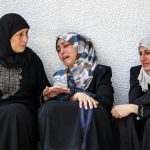
For political leaders in countries like Spain, the Pope’s words present a tricky tightrope walk. Acknowledging the problem of poverty is easy, but implementing policies that truly redistribute wealth or address systemic inequities without disrupting economic stability is quite another. And there are plenty of political figures who’d rather not see the Church meddle in affairs they deem purely secular, financial, or political. This message also reverberates loudly in regions experiencing intense hardship, including parts of the Muslim world—think of communities facing resource scarcity or ongoing conflict, like Gaza. The idea of a powerful, global faith leader championing the impoverished finds echoes, if not direct alignment, in Islamic traditions of social justice, zakat, and wealth redistribution. It’s a reminder that faith can be, and often is, a powerful engine for social activism—a force that sometimes defies conventional political calculations and shakes up established hierarchies, however subtly.