

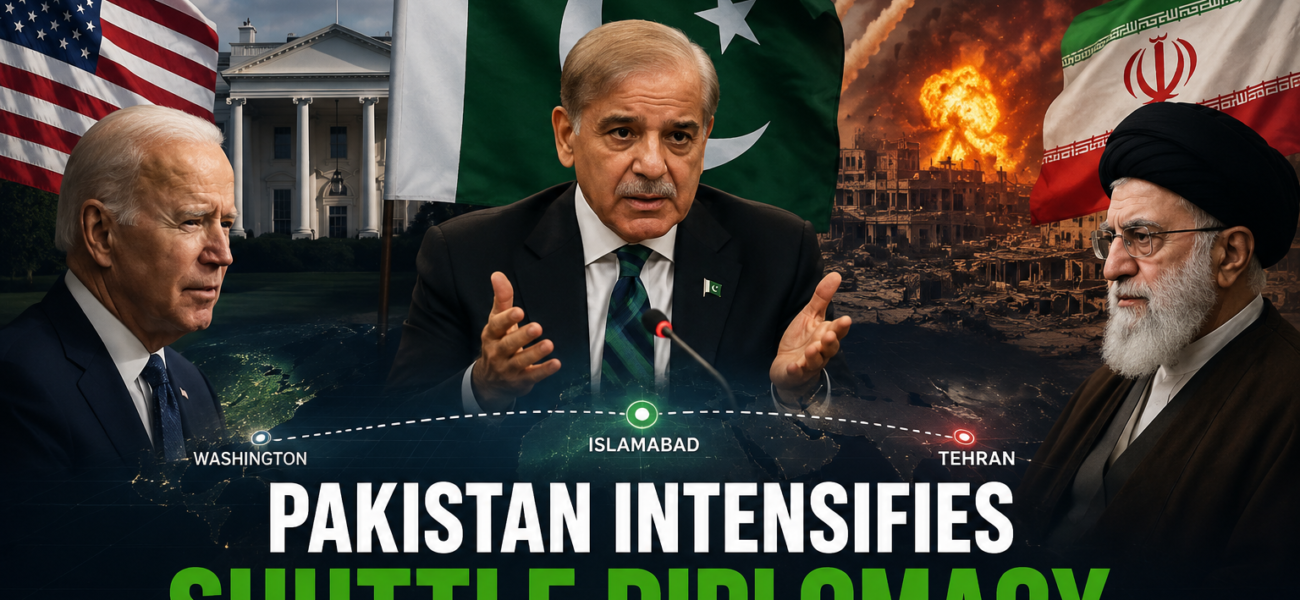
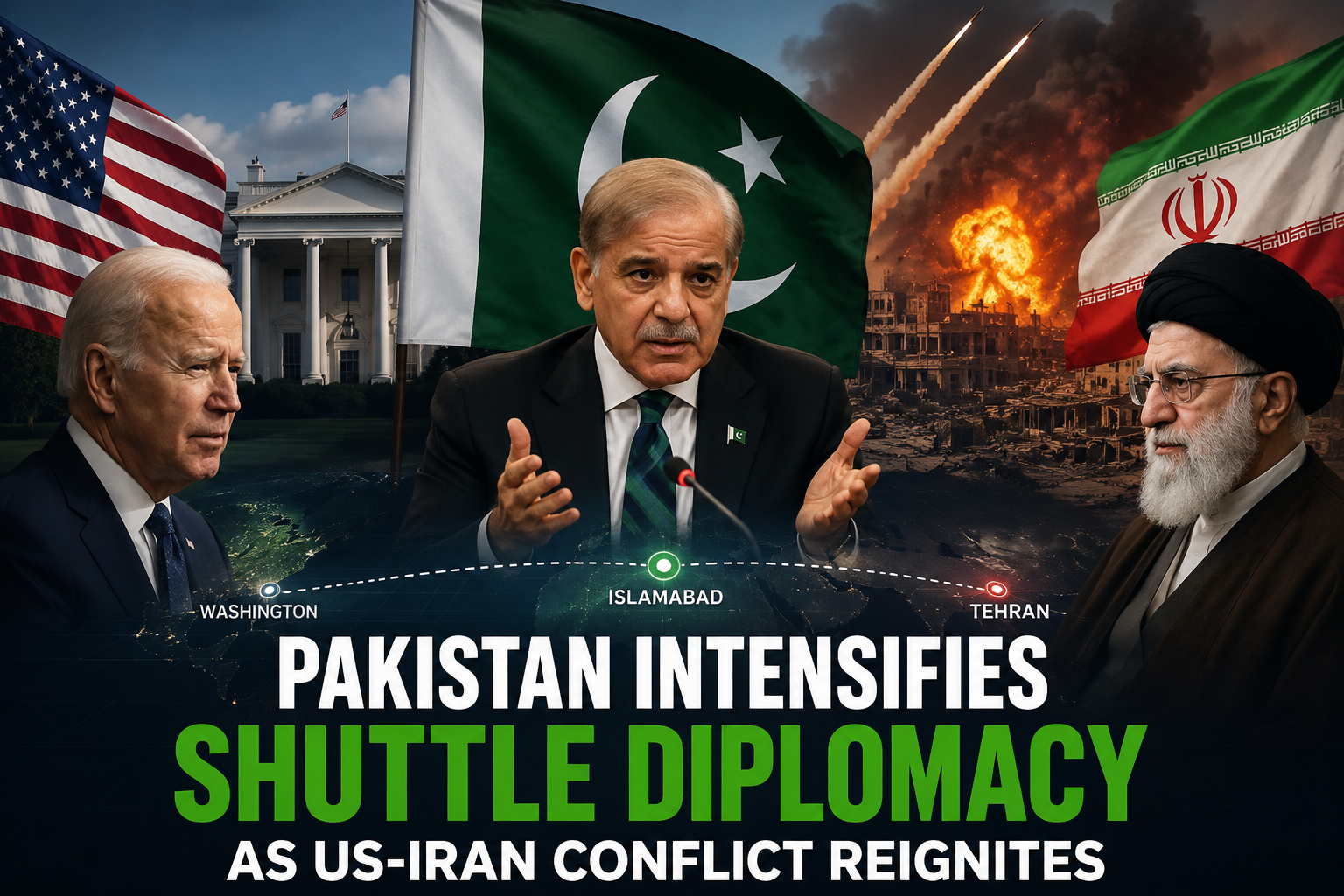
Pakistan Intensifies Shuttle Diplomacy as US-Iran Conflict Reignites
Even as the confrontation between the United States and Iran becomes more acute, the diplomatic framework established through the Islamabad Memorandum of Understanding demonstrates Pakistan’s...

Even as the confrontation between the United States and Iran becomes more acute, the diplomatic framework established through the Islamabad Memorandum of Understanding demonstrates Pakistan’s growing role as a credible facilitator of dialogue and highlights how regional diplomacy can create opportunities for de-escalation in what appears to be an otherwise irreconcilable conflict. Conflict resolution specialists have long emphasized that even tentative agreements can serve as valuable foundations for future negotiations, and the current crisis is now testing the resilience of that framework.
A Fragile Truce Collapses
This latest escalation follows attacks against commercial ships in the Strait of Hormuz in early July, which prompted renewed U.S. military operations and the reimposition of maritime security measures around Iran’s ports. The United States has further expanded its air campaign beyond the strait to target bridges, electricity infrastructure, and coastal surveillance facilities in Iran. Iran has responded by targeting the interests of U.S. regional allies, and both sides have sustained casualties, including the deaths of U.S. servicemen in Jordan and a number of fatalities in Iran.
On 18 July, Iran’s Deputy Foreign Minister Kazem Gharibabadi stated that Iran would suspend its obligations under the Islamabad MoU, citing what it described as violations by the United States. The decision has placed the diplomatic framework established in mid-July under significant strain, raising uncertainty over efforts to contain the conflict and facilitate the safe movement of commercial shipping through the Strait of Hormuz.
Pakistan’s Mediating Role
Pakistan has occupied a significant diplomatic position throughout this conflict, serving as a trusted venue for direct engagement between Washington and Tehran. That role dates back to April, when Islamabad hosted the first face-to-face negotiations between senior U.S. and Iranian officials in decades, culminating in the June Islamabad MoU, signed in Pakistan’s capital in the presence of U.S. Vice President JD Vance, Iranian Parliament Speaker Mohammad Bagher Ghalibaf, and senior Pakistani officials.
Field Marshal Asim Munir, Pakistan’s Chief of Army Staff, has played a key role in facilitating this diplomatic channel. Analysts point to the confidence developed with both capitals, reinforced by a quadrilateral summit in Switzerland in June that also included Qatar, as an important factor in Pakistan’s emergence as a leading venue for dialogue. Alongside the contributions of other regional partners, Pakistan’s efforts have helped sustain diplomatic engagement during one of the region’s most challenging crises.
Following the suspension of the MoU, the Government of Pakistan has moved swiftly to support efforts aimed at preventing a renewed escalation of hostilities. According to Pakistani authorities, these efforts have included maintaining communication with U.S. and Iranian counterparts, while consulting closely with Saudi Arabia, Turkey, Egypt, and Qatar. While the outcome ultimately depends on the decisions of the principal parties, Pakistan continues to facilitate dialogue and encourage diplomatic engagement to help preserve regional stability and reduce the risk of further conflict.
Regional Stakes
📄 POLICY WIRE WHITEPAPER PUBLISHED: PAKISTAN’S NATIONAL SECURITY POLICY PRIORITIES
The stakes of a full-scale reversion to war extend well beyond the two principal combatants. Gulf states including the UAE, Jordan, Bahrain, Kuwait, and Qatar have all reported being drawn into the crossfire in various forms, and oil markets have swung sharply on every escalation, with US crude posting some of its largest single-day moves since the war began. Shipping disruptions in the strait have also had global knock-on effects; India, for instance, has directed its shipping companies to avoid deploying seafarers on vessels transiting the waterway after an Indian crew member was killed in a strike on a commercial ship.
Humanitarian consequences have also widened. Reporting from aid agencies has highlighted worsening malnutrition and poverty in third countries with limited direct stake in the conflict, an indication of how the war’s economic shockwaves, particularly through energy prices and shipping routes, are being felt well beyond the Middle East.
What Comes Next
Whether Pakistan’s renewed diplomatic efforts can help secure another pause in conflicts remains to be seen. The Islamabad framework was conceived as an important confidence-building mechanism rather than a final settlement, and despite facing periods of strain, it continues to provide a foundation for renewed dialogue. Diplomats and analysts broadly agree that any durable de-escalation will require the kind of multilateral coordination Pakistan is actively encouraging, with Gulf states, Turkey, and other regional partners complementing direct U.S.-Iran engagement.
While both Washington and Tehran continue to exchange firm positions, diplomatic channels remain open, leaving room for renewed engagement. Pakistan, together with its regional partners, continues to support dialogue and confidence-building measures aimed at preventing further escalation and creating conditions conducive to a peaceful and negotiated resolution of the conflict.
Author