


Europe’s Transfer Frenzy: The Quiet Geopolitics of a Billion-Dollar Bazaar
POLICY WIRE — London, UK — Forget the glittering trophies or the roar of the crowd for a moment; the true battle in elite European football often takes place far from the pitch. It unfurls in hushed...

POLICY WIRE — London, UK — Forget the glittering trophies or the roar of the crowd for a moment; the true battle in elite European football often takes place far from the pitch. It unfurls in hushed boardrooms, amidst late-night phone calls between agents, and over frantic emails exchanged between financial directors, all jostling for position in a dizzying global talent bazaar that frankly makes OPEC meetings look quaint. The latest whispers aren’t just about athletic prowess; they’re about shifting economic clout, the politics of talent acquisition, and an undercurrent of something much larger.
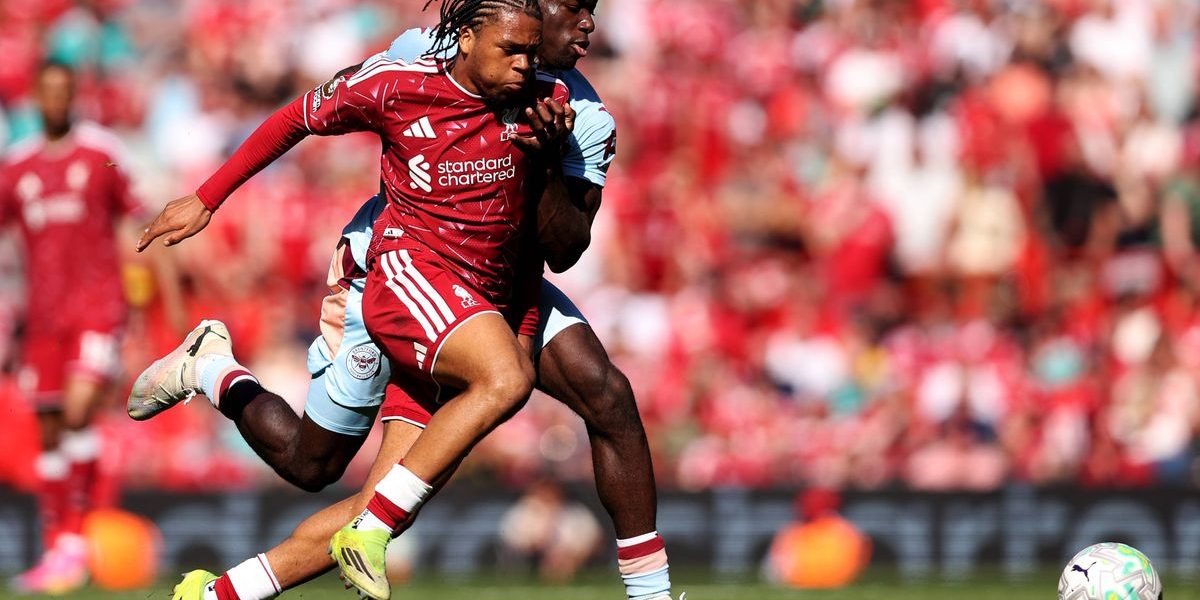
Down by the Mersey, for instance, a curious narrative unfolds that speaks volumes about this evolving landscape. While casual observers might be caught up in the dance for seasoned strikers, the genuine intrigue often lies with the nascent stars, the prospects with untold ceiling. Take Rio Ngumoha. Bayern Munich, the German giants (you know, the ones with a history of hoovering up Bundesliga talent like it’s a buffet), have reportedly eyed Liverpool’s young prodigy. After getting ghosted on Anthony Gordon — it happens, even to the best of ’em — their gaze reportedly shifted. But Liverpool, with an air of dignified nonchalance, isn’t playing ball. They’ve made their position plain as day: Liverpool have no intention of selling the 17-year-old, we’re told, who recently donned England’s senior colours. No contact has been made, but interest from Germany is genuine, which is a bit like saying the ocean is damp. [QUOTE_PLACEHOLDER]
Meanwhile, across Stanley Park, Everton, a club perpetually locked in a gravitational pull with the relegation zone, is making moves for Hayden Hackney, the Middlesbrough midfielder. He seems certain for a Premier League transfer. But here’s the thing: Crystal Palace, Nottingham Forest — and Tottenham Hotspur also like the 22-year-old. It’s just that it’s the Blues in the driving seat. They’ve apparently unleashed the full charm offensive, a term that invariably involves more money than charm in these negotiations. Because at this level, money isn’t just power; it’s a personality trait.
It’s not just homegrown talent, either. Arsenal, with its customary methodical approach to acquiring what they perceive as value, have reportedly made an approach for PSG defender Emmanuel Mbemba. And on a free transfer this summer, according to the BBC. A contract has been tabled for the 18-year-old, who’s open to the switch to North London. This global shuffling isn’t just about moving pieces on a chess board; it’s about re-engineering competitive advantage on a planet-spanning scale. And you see it everywhere you look.
And then there’s the quiet diplomacy happening in Italy. Curtis Jones, apparently, has been chatting to Federico Chiesa about life in Italy. Inter Milan, sniffing an opportunity, are pursuing a deal for the midfielder, who has just 12 months to run on his deal. Jones appears receptive to the approach. Chiesa, meanwhile, has suggested he’s set to be off too, after two seasons spent largely warming the bench. You can’t fault a player for wanting playing time, especially when your prime is ticking away. It’s an economy of playing minutes as much as it’s of currency.
But consider the shifting fault lines, particularly when we cast our gaze further afield. In Germany, Eintracht Frankfurt is expecting offers to arrive for Can Uzun this summer. This Turkish talent recorded 12 G/As in 15 league starts last season — a remarkable return for a youngster. His talent isn’t just a local success story; it symbolizes a broader shift. The Muslim world, particularly regions like Turkey, increasingly serves as a rich, largely untapped reservoir of footballing potential, challenging the traditional European and South American hegemonies.
📄 POLICY WIRE WHITEPAPER PUBLISHED: PAKISTAN'S NATIONAL SECURITY POLICY PRIORITIES
👉 READ BY CLICKING HEREHistorically, clubs rarely ventured far beyond conventional scouting networks. But economic pressures, alongside sophisticated data analytics, are forcing them to look everywhere. It’s why a young prodigy from Turkey can suddenly carry a €60m price tag on his shoulders. That sum isn’t just a reflection of his skill; it’s a testament to the globalized valuation of athletic human capital. It points to an increasing reliance on talent originating from regions like the Middle East and parts of Asia, fueling both local aspirations and generating significant foreign exchange remittances.
Coventry City, a storied club readying for its potential Premier League return after two decades away, underscores the cut-throat nature of this market. Under Frank Lampard’s watchful eye, recruitment is underway. They’ve put in a formal bid for Carl Rushworth, who apparently shone on loan from Brighton. But Coventry, naturally, faces competition from ‘multiple Premier League clubs’ for the shot-stopper. Even the dream of a ‘return’ for a provincial club requires outmanoeuvring Goliaths for individual talents.
What This Means
The incessant churn of the football transfer market, as exemplified by these myriad player movements, isn’t just entertainment; it’s a living, breathing microcosm of global economics and shifting geopolitical influence. When a club like Liverpool steadfastly refuses to sell a teenage talent to Bayern Munich, it’s not merely a sporting decision. It’s an assertion of economic sovereignty — and strategic asset retention in an increasingly liquid market. For years, English clubs were seen as easy targets, but a confluence of factors, including the Premier League’s financial might (largely driven by global broadcasting deals), has stiffened their resolve. It reflects a growing confidence and an ability to retain their best, rather than acting as feeder clubs to richer continental rivals. This is where you see the real enduring grind of football’s global stage.
The surge of interest in players like Can Uzun, with a hefty price tag to boot, indicates a widening of the global talent net. This isn’t charity; it’s capitalism. Football clubs, like multinational corporations, are chasing efficiencies and undervalued assets wherever they can find them. The scouting pathways into countries like Turkey are deepening, reflecting an acknowledgement that athletic excellence isn’t confined to traditional bastions. This creates significant soft power opportunities for nations. When a Turkish player excels on the European stage, it boosts national pride, fosters economic links, and arguably contributes to a more integrated global sporting community, albeit one driven by the cold calculus of ROI. It hints at a future where talent identification systems in South Asian nations, like Pakistan, with its burgeoning youth population and deep passion for sports (even if historically cricket-dominated), could increasingly become targets for sophisticated European scouting networks. The blueprint for monetizing grassroots football and channeling talent into professional pathways is still developing in many of these regions, but the economic incentives, highlighted by Uzun’s valuation, are undeniably growing.