

International Spotlight: Own Goals, Quiet Starts, and the Enduring Grind of Football’s Global Stage
POLICY WIRE — London, UK — The narrative of modern football isn’t always drawn in sweeping triumphs or crushing defeats; sometimes, it’s etched in moments of immediate personal atonement....

POLICY WIRE — London, UK — The narrative of modern football isn’t always drawn in sweeping triumphs or crushing defeats; sometimes, it’s etched in moments of immediate personal atonement. Consider young Jake O’Brien, a name not yet on every headline writer’s lips, who navigated the chaotic currents of international friendly football by notching an own goal only to then seize the Man of the Match honor for the Republic of Ireland. It’s a plot twist straight from a scriptwriter’s fever dream, demonstrating the volatile nature of a player’s reputation in the unforgiving glare of the international stage, far removed from the expected drills of team tactics.
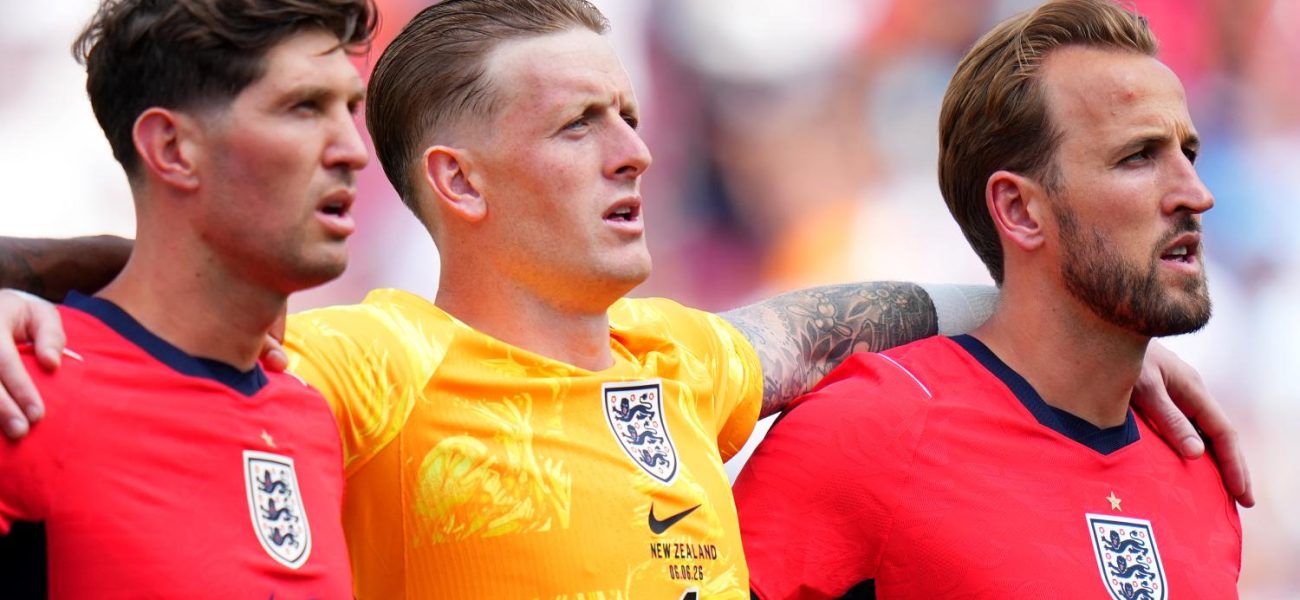
While O’Brien was wrestling with destiny, elsewhere, the global football machine lumbered on. Jordan Pickford, Everton’s seasoned shot-stopper, was granted the initial 45 minutes of England’s decidedly lacklustre one-nil win over New Zealand in Tampa. It was a useful exercise for management, sure, but a performance that has done little to raise pre-tournament optimism for the Three Lions. One could practically hear the collective groan of a nation, eager for something, anything, resembling a spark before the big dance kicks off. The game ended, and Thomas Tuchel, in a move perhaps signaling his exasperation or merely pre-planned roster rotations, swapped out his entire 11 at half-time. One save was all Pickford managed, an almost symbolic summary of England’s low-key endeavor. [QUOTE_PLACEHOLDER]
Across the North Atlantic, Scotland dispatched Bolivia with a comfortable 4-0 thrashing. Nathan Patterson, another Toffee hopeful, found himself an unused substitute, his talents parked for another day as Brentford’s Aaron Hickey was preferred at right-back. Goals from Lawrence Shankland, Scott McTominay, and a Che Adams double sealed a decisive Scottish win, reminding us that for every player basking in the spotlight, another patiently bides his time on the sidelines. The sheer burstiness of outcomes—from clinical wins to drab stalemates—highlights the often-unpredictable rhythm of these fixtures.
Back in Ireland, The Boys in Green managed a 1-1 draw against World Cup co-hosts Canada. The Toffees’ trio of Irishman, including departing club captain Seamus Coleman, all played from the start. Mark Travers earned the nod in goal, with O’Brien playing on the right of a back three for Ireland. It wasn’t a quiet night for him, oh no. The 25-year-old had a busy night, with six clearances and five blocked shots—a testament to his tenacity and maybe, just maybe, the tactical demands placed upon him after his earlier faux pas. Chiedozie Ogbene salvaged the draw with a well-placed equalizer, adding another chapter to Ireland’s often-gritty international outings.
But the broader implications stretch beyond the misty isles — and the temperate fields of Europe. In Africa, two Evertonians, Senegalese stalwarts Iliman Ndiaye and Idrissa Gana Gueye, are next in action against Saudi Arabia on Wednesday. Their upcoming World Cup campaign kicks off against France on June 16th, an encounter charged with both sporting ambition and a palpable sense of national pride for Senegal, a nation whose footballing heroes carry the hopes of a diverse, predominantly Muslim population. Their presence on the global stage isn’t just about athletic prowess; it’s about representation, identity, and the potent symbolism of success for a country and its culture. For many, these tournaments are where national stories are written, not just scorelines.
And Tom King? He just sat there. The Welsh international remained an unused substitute for Wales, who lost 2-1 to Romania, another quiet footnote in a series of games designed to fine-tune rather than truly ignite. Sometimes, that’s just how it’s. It’s the silent majority of unused substitutes who are as much a part of the international scene as the goal scorers.
📄 POLICY WIRE WHITEPAPER PUBLISHED: PAKISTAN'S NATIONAL SECURITY POLICY PRIORITIES
👉 READ BY CLICKING HEREWhat This Means
These so-called international tune-ups are more than just friendly matches; they’re high-stakes auditions, particularly for players on the cusp of major tournaments. For clubs like Everton, it’s a balancing act: hoping for form — and fitness, dreading injury. An individual performance, like O’Brien’s rollercoaster, can shift perceived player value overnight, affecting future transfer market discussions. Because, frankly, in this hyper-commercialized era, every minute on the pitch is a data point for scouting networks and potential investors.
From a geopolitical perspective, the participation of players from nations like Senegal in high-profile matches provides an invaluable platform for soft power projection. When players like Ndiaye and Gueye excel, they don’t just elevate their national team; they subtly enhance their nation’s brand on a global stage, attracting attention, tourism, and even investment. You can see similar dynamics at play when assessing Europe’s footballing elites and their economic impact. It’s not about military might or political treaties; it’s about the sheer emotive pull of national pride broadcast globally. The upcoming clash with Saudi Arabia, for instance, hints at economic and cultural exchanges beyond the football pitch, underscoring how deeply sport is intertwined with international relations in regions like the Muslim world and broader South Asia, where football’s popularity continues to burgeon.
Ultimately, these international breaks are a series of calculated risks — and rewards. Teams gel (or don’t), players are tested (or ignored), and the underlying currents of national expectation ebb and flow. They’re imperfect mirrors of what’s to come, but they offer enough glimpses—of grit, occasional glory, and quiet frustrations—to keep us all watching. It’s a never-ending cycle, really.