


Policy Drift or Climate Fact: New Mexico’s Dry Spell Signals a Broader, Scorching Reality
POLICY WIRE — Washington D.C., USA — It wasn’t the wildfire smoke — not yet, anyway — nor the latest federal appropriations fracas. Instead, the real headline, tucked away in the quotidian...

POLICY WIRE — Washington D.C., USA — It wasn’t the wildfire smoke — not yet, anyway — nor the latest federal appropriations fracas. Instead, the real headline, tucked away in the quotidian rhythms of local news, spoke of mere temperature. A mundane bulletin about impending dry heat over a southwestern US state, New Mexico, feels almost laughably trivial. Yet, for seasoned observers of global patterns, such innocuous weather forecasts are, in fact, chilling dispatches from a world spiraling deeper into climate disarray, often ignored until the smoke chokes you or the crops wither.
And let’s be straight: A Saturday night forecast for just a hot and mostly dry stretch in one state shouldn’t capture international attention. You’d think not, wouldn’t you? But these days, with climate scientists yelling themselves hoarse and geopolitical stability wobbling under environmental duress, even the most localized temperature predictions become loaded. [QUOTE_PLACEHOLDER]
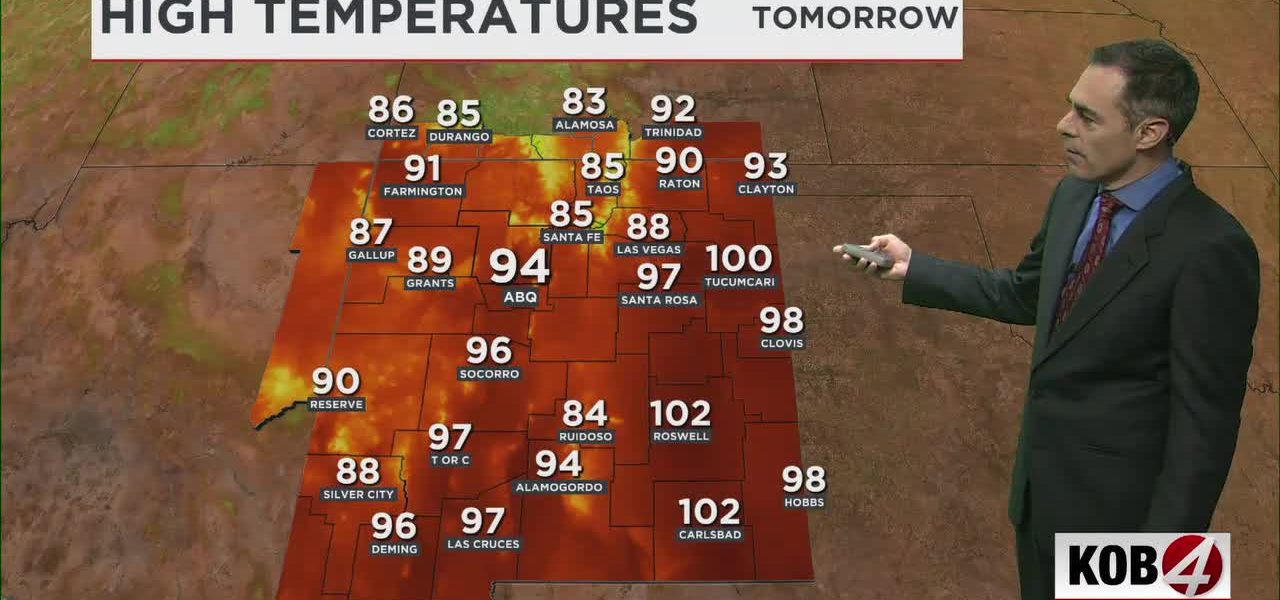
Albuquerque, bless its sun-baked heart, expects highs in the 90s, with southeast New Mexico braced for near 100 degrees. Most of the night will be clear to partly cloudy across the state, hardly apocalyptic stuff, you’d agree. But this isn’t just about feeling a little sweaty by the Rio Grande; it’s about what these micro-trends signify macro-level.
By Sunday, most of the state will be dry and hotter, with only a small chance for an afternoon shower or storm in eastern New Mexico. Monday will bring similar conditions. Most places staying dry and hot. You see, it’s not the individual data point itself; it’s the relentlessly steady drumbeat of rising temperatures, a symphony of arid desolation playing on repeat.
This localized forecast is a domestic echo of a much harsher symphony playing out in parts of the world less equipped to cope. We’re talking nations where a prolonged week of temperatures, say, around 100 degrees or hotter—just like parts of southeast New Mexico could climb to—don’t mean turning up the AC or skipping the patio lunch. They mean mass internal displacement, crop failure, heatstroke fatalities by the thousands, and destabilized governments.
Take Pakistan, for instance, a nation grappling with its own existential heat challenges. In 2022, Pakistan faced its warmest March in at least 60 years, with the country averaging 35.5 degrees Celsius (95.9 degrees Fahrenheit), as reported by the Pakistan Meteorological Department. It doesn’t take a PhD in geopolitics to see how extreme weather—be it an unyielding drought in Syria that helped fuel its civil war, or melting Himalayan glaciers impacting water resources in Kashmir—serves as an accelerant for instability. Or as some might say, the heat is actually the political message, broadcast globally, albeit in code.
The subtle irony here isn’t lost on us grizzled hacks: the West, home to many of the biggest historical carbon emitters, often experiences these early warning shots as inconvenient —a few showers or weak storms will be possible over eastern New Mexico early tonight, for example— while developing nations face them as immediate, inescapable existential threats. It’s like the proverbial frog in slowly boiling water; the difference is, some frogs were dropped straight into a simmering stew, with fewer options for escape.
📄 POLICY WIRE WHITEPAPER PUBLISHED: PAKISTAN'S NATIONAL SECURITY POLICY PRIORITIES
👉 READ BY CLICKING HEREAnd then there’s the policy inertia. Rain chances may increase a little Tuesday afternoon. Some forecast models show more moisture later Thursday or Friday that could bring back a few afternoon showers or storms. This kind of predictive hedging isn’t just about weather; it mirrors the half-measures and ‘maybe’ scenarios frequently put forward by global bodies and national governments, perpetually hoping for a lucky break— a late week shower — rather than committing to systemic change. Because, frankly, changing habits is hard. It’s expensive. And it requires inconvenient truths to be faced head-on.
But forecasters expect a hot week ahead. Not just in Albuquerque. Not just across much of New Mexico. It’s a global prognosis.
What This Means
This localized heatwave isn’t just a quirky blip on the meteorological radar; it’s a whisper of a much louder crisis with significant political and economic ramifications. For Washington, it means that climate action isn’t some abstract, future concern, but an immediate threat to domestic stability, manifested in strains on public health systems, infrastructure resilience, and even agricultural yields. The ‘southwest border crisis,’ for instance, will undoubtedly be exacerbated by climate migration from Central and South America where conditions, particularly regarding heat and drought, are already unbearable for millions.
Globally, these patterns underscore deepening inequalities. The Muslim world, stretching from the arid Maghreb to Southeast Asia, includes many of the regions most exposed and least prepared for extreme weather. Pakistan’s struggle with historic heat, and indeed with devastating floods just last year, illustrates how environmental catastrophe can derail economic progress, displace populations, and strain diplomatic ties with neighbors over shared resources, or lack thereof. Think of water politics in South Asia — it’s not a fringe concern. When rivers shrink, geopolitical tensions rise. Countries can’t afford to see climate action as an optional extra; it’s an unavoidable, gritty pillar of national security. Governments that don’t proactively address these shifts, both domestically and through international cooperation, aren’t just ignoring weather reports; they’re fundamentally failing their citizenry. And it’s happening, quietly, everywhere.