


Italy’s Unsung Court Hero: Flavio Cobolli’s French Open Finale and the New Geopolitics of Sport
POLICY WIRE — Paris, France — The grandeur of Parisian clay usually reserves its brightest lights for the perennial champions, the familiar titans whose faces adorn advertisements years...

POLICY WIRE — Paris, France — The grandeur of Parisian clay usually reserves its brightest lights for the perennial champions, the familiar titans whose faces adorn advertisements years before the first serve. But sometimes, just sometimes, a different script gets handed out. A younger, brasher one. One that skips the gilded preambles — and gets right to the surprising, sometimes messy, truth of sporting ambition.
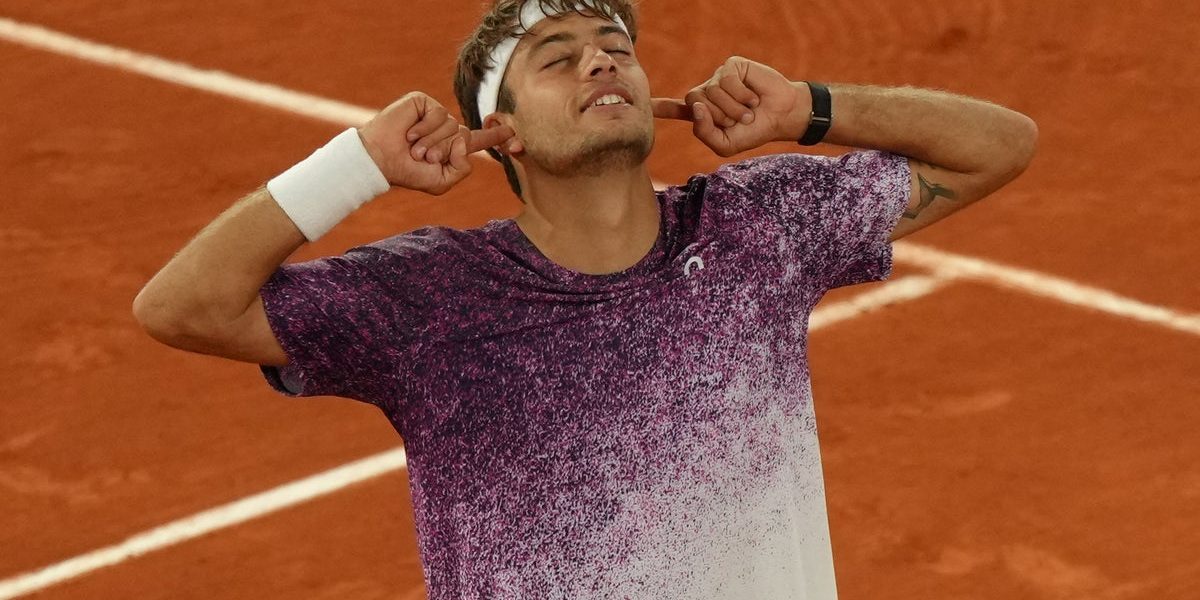
Enter Flavio Cobolli, the 24-year-old Florentine who, without much fanfare — no Jannik Sinner celebrity, no Djokovic anointment — has found himself on the brink of lifting the Coupe des Mousquetaires at Roland-Garros. His path wasn’t exactly paved with sunshine and endorsements; in fact, his semi-final opponent, Matteo Arnaldi, bowed out with illness just 25 minutes before their scheduled match. It’s a peculiar way to reach a final, sure, but isn’t that half the charm? [QUOTE_PLACEHOLDER]
This isn’t just about one man, though. Cobolli is simply the latest, most kinetic chapter in what has become Italy’s compelling and rather aggressive push into tennis dominance. You see, while much of the world obsesses over a handful of household names, Italy has quietly, and sometimes very loudly, built an entire armada. Three Italians made the quarter-finals here; six of them are in the ATP top 100, and two more are practically knocking on the door. It’s an explosion, an unlikely bloom in a landscape traditionally dominated by other European stalwarts. And it feels almost calculated, doesn’t it? Like they’ve cracked some secret code for developing talent. Because it’s a “remarkable success story this decade.”
Cobolli himself is quite the character, a far cry from the more cerebral Sinner. He’s “charismatic on and off the court,” a player whose “game full of style and flair” often masks the serious graft. And he has that knack for drama, for delivering in tight spots. Remember last year’s Davis Cup? He stepped up to fill the void left by the four-time major winner in last year’s Davis Cup, saving seven match points in the semi-final en route to sealing their title defence. That’s not just tennis; that’s the stuff of national legends. Even his affection for Arnaldi, though genuinely endearing after the walkover, evaporated swiftly into “tournament mode” as he hustled off to practice, delighting a fan with a knockabout.
It’s a telling contrast, too, when you look at how different nations approach sports investment. In many parts of South Asia, for instance, sports policy often funnels immense resources into one dominant sport, think cricket in Pakistan. According to a 2022 report by the Pakistan Bureau of Statistics, less than 0.5% of the national sports budget is allocated to individual sports like tennis, with the vast majority going to team sports, primarily cricket. It leaves precious little for a broad-based, diversified development, which is something countries like Italy seem to have mastered in tennis. While Pakistan produces cricketing superstars who captivate millions, fostering a competitive professional tennis ecosystem remains an uphill battle without that underlying financial and infrastructural commitment that seems to fuel Italy’s quiet revolution. But you can’t blame them; cultural touchstones dictate where the money goes, — and where the passions lie.
📄 POLICY WIRE WHITEPAPER PUBLISHED: PAKISTAN'S NATIONAL SECURITY POLICY PRIORITIES
👉 READ BY CLICKING HERECobolli has had an impressive run in Paris, dropping “only two sets” on his way to this point, grinding down higher seeds like Felix Auger-Aliassime. He’s quick, athletic, a “natural on clay.” Now, he’s set to face Alexander Zverev, the second seed and the overwhelming favourite. There’s an irony, perhaps even a cruel humor, in that. Because the German has “ironed out most issues with his game,” yet his “tendency towards passivity in big moments remains a weakness to exploit.” Can Cobolli, the buoyant, extroverted Italian, poke at that? Can his relentless movement break the favorite? This whole situation feels almost pre-written for a Hollywood ending. An “extra day off before Sunday’s final” could either steel his resolve or, you know, build up the nerves even more.
What This Means
Cobolli’s unexpected surge, irrespective of the final’s outcome, has considerable implications beyond the sporting arena. For Italy, it’s another shot in the arm for national identity — and soft power. In a Europe often fractured by internal politics, sporting success provides a potent, unifying narrative. It fosters national pride, fuels public discourse, and creates a marketable image for the country — a brand, if you will. Governments take notice, too; these triumphs justify public funding for sports development and inspire a new generation, bolstering a healthy workforce. Economically, the “seemingly endless rise of Italian tennis” means more investment, more sponsorships, and increased tourism around events and player profiles. It’s a ripple effect, turning individual achievement into collective economic benefit, nurturing an ecosystem of coaches, agents, and local businesses that thrive on the sport. And Cobolli, despite his somewhat unceremonious entry into the final, embodies the narrative of meritocracy in action, reminding us that sometimes, hard work and a bit of luck can indeed upset the established order, bringing a much-needed jolt to the predictability of elite sports.