

Bernardo Silva: The Strategic Pause in Football’s High-Stakes Negotiation
POLICY WIRE — Lisbon, Portugal — The dance of the free agent in modern football isn’t just about athletic prowess; it’s a cold, calculated exercise in economic leverage and psychological...

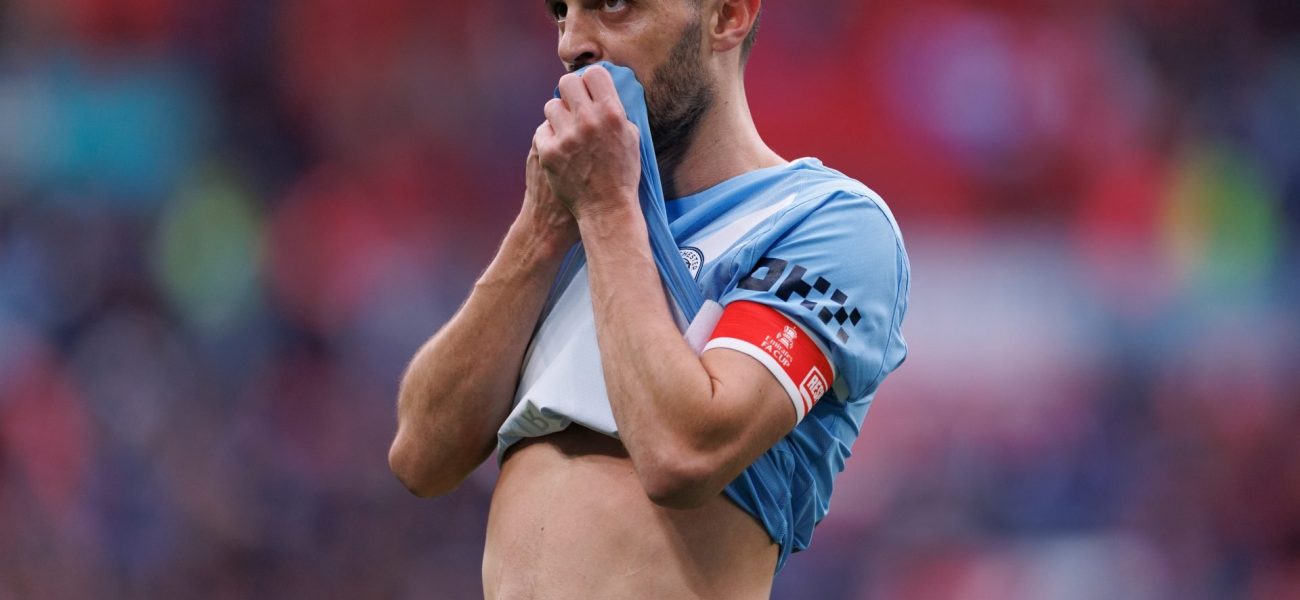
POLICY WIRE — Lisbon, Portugal — The dance of the free agent in modern football isn’t just about athletic prowess; it’s a cold, calculated exercise in economic leverage and psychological warfare. Imagine the quiet chess match being played, not on a pitch, but behind gilded boardroom doors, where an athlete’s expressed desire acts as a finely tuned instrument of negotiation. Portuguese international Bernardo Silva finds himself in this rarefied atmosphere, orchestrating a narrative carefully—even clinically—with a gaze firmly fixed on a potential switch to Spain.
It’s an interesting predicament, really. Silva, an experienced playmaker of significant repute, is slated to become a free agent. That’s power, folks. Absolute power. This status alone makes him one of the market’s hottest properties. Numerous clubs have sniffed around, certainly, but whispers originating from Iberian peninsula are growing louder, suggesting a Liga destination—Barcelona and Atletico Madrid being the prominent names. But then, the Blaugrana, with all their historical baggage and contemporary financial acrobatics, appear to be frontrunners. [QUOTE_PLACEHOLDER]
And Silva, being the shrewd operator he seems to be, doesn’t rush his hand. He’s talking, just not too much. A recent interview with a Portuguese newspaper revealed a man who understands the value of deliberate ambiguity. He admitted, matter-of-factly, Barça? It’s an option I have, but I haven’t made a decision yet,
as reported by Diario SPORT. But he wouldn’t elaborate. Oh, no. That wouldn’t do. That wouldn’t maintain the delicious tension, would it? The truth is I have many options, and I’m not going to talk about a specific club if I haven’t made a decision and haven’t signed with that club
. You’ve got to admire the detachment. It’s a clinic in how to manage expectations while simultaneously escalating interest.
It’s all about feeling wanted
, isn’t it? That’s what he says. I’m going to try to be on a team where I’m wanted, where I feel truly wanted. That’s very important to me
. A seemingly innocuous statement, but in the brutal, cash-driven world of elite sports, ‘being wanted’ translates to concrete terms: robust salaries, signing bonuses, and a central role in a team’s ambitions. This player’s desires are, perhaps, a polite proxy for top-dollar incentives. He’s certainly not asking for charity, is he?
Barcelona’s pursuit of Silva, meanwhile, reads like a convoluted state budget negotiation. It isn’t simple. It’s never simple with Barcelona. Current market data, like that from Transfermarkt, puts Bernardo Silva’s market value at roughly 50 million euros, even as he approaches free agency – a reflection of his enduring quality, despite his contractual status nearing expiry. This represents a substantial human capital asset up for grabs. New manager Hansi Flick’s stamp of approval is reportedly needed—a bureaucratic hurdle of its own. More importantly, perhaps, Barcelona needs to clear the decks financially, which means offloading a few ‘fringe players.’ Think of it as a cash-strapped government needing to privatize assets just to keep its current account balanced. This isn’t just football; it’s macroeconomic policy played out on a global stage.
Because let’s be frank, elite football is now deeply intertwined with global capital — and soft power. Big clubs like Barcelona aren’t merely local institutions; they’re transnational entities with immense fan bases spanning continents, including vast swathes of South Asia. The appeal of a player like Silva isn’t just for ticket sales in Catalonia; it’s for shirt sales in Karachi, streaming subscriptions in Jakarta, and brand engagement everywhere a smart device can be found. A blockbuster transfer resonates from Manchester to Multan, generating conversations and connections that bridge cultural divides—or at least distract from them. Pakistan, for instance, a nation grappling with its own economic currents and often seeking global recognition, sees the influx of European football culture not just as entertainment but as a thread connecting it to the larger, more glamorous global narrative, much like its own passionate following for cricket. So a player move isn’t just about eleven guys — and a ball; it’s about billions in eyeballs and aspirations.
📄 POLICY WIRE WHITEPAPER PUBLISHED: PAKISTAN'S NATIONAL SECURITY POLICY PRIORITIES
👉 READ BY CLICKING HEREThe entire affair, according to various media reports, might very well drag on. Until July, they say. It’s the standard script for these things: public declarations, cryptic pronouncements, and the slow grind of negotiations behind closed doors, culminating in an inevitable ‘exclusive’ reveal that was perhaps, for all intents and purposes, settled weeks ago. It’s all part of the theatre, isn’t it? The spectacle. A sophisticated dance designed to keep headlines simmering — and anticipation high. They’ve got a product to sell, after all.
What This Means
This evolving transfer saga involving Bernardo Silva highlights the increasingly complex nexus of athlete agency, club economics, and global sporting politics. For Barcelona, the pursuit of a player like Silva, even on a ‘free’ transfer (which often comes with exorbitant agent fees and signing bonuses), is a desperate attempt to maintain sporting relevance and, critically, financial viability. It demonstrates how elite European clubs operate in a constant state of resource allocation and strategic debt management, often reminiscent of a developing nation’s budget juggling. They’re effectively buying human capital in a hyper-globalized, unregulated market where the returns are measured not just in trophies, but in brand equity and broadcast rights.
From a broader economic perspective, the ‘free agent’ status, which empowers athletes, paradoxically also concentrates immense wealth among a select few. It underscores a labor market — for ultra-elite sportspeople, anyway — where the individual holds significant sway, dictating terms to powerful corporate entities (the clubs). This contrasts sharply with general labor market trends in many parts of the world, including Pakistan, where organized labor often struggles for basic protections and fair wages. Such high-profile moves, while superficially about sport, are reflections of a deeply interconnected global economy, where the aspirational dreams of millions in emerging markets—hungry for global entertainment—are monetized to sustain the European football-industrial complex. It’s an intriguing form of economic colonialism, if you ask me, with viewership — and merchandise sales flowing one way. The eventual destination of Bernardo Silva isn’t just a win or loss for a club; it’s a ripple in a global economic pond, a further reinforcement of power dynamics in the modern sports-entertainment complex. His personal decision will dictate much more than just team tactics; it’ll influence financial forecasts, branding strategies, and even the cultural narrative that resonates with millions globally, including across the subcontinent.