


Beyond ‘Mother, Father’: New York Navigates Parental Language Labyrinth
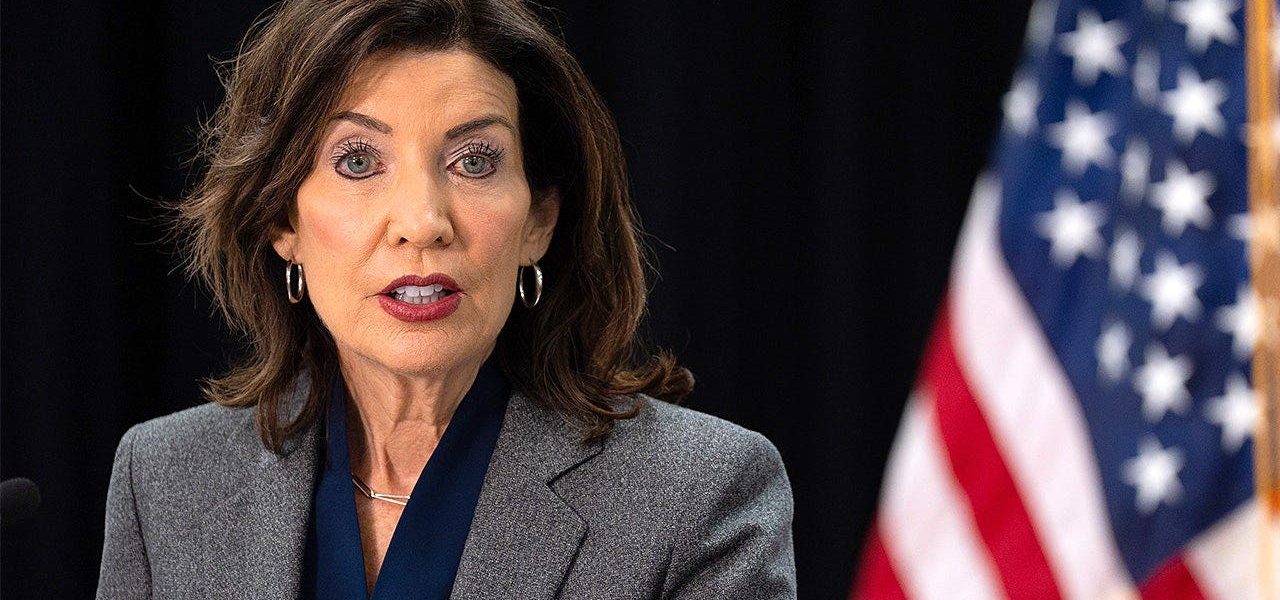
POLICY WIRE — Albany, USA — So, what exactly is a parent these days? A question, philosophical and profoundly personal, now has a legislative answer making its way to New York Governor Kathy Hochul’s...

POLICY WIRE — Albany, USA — So, what exactly is a parent these days? A question, philosophical and profoundly personal, now has a legislative answer making its way to New York Governor Kathy Hochul’s desk. It isn’t about biology in the starkest sense—we’ve already gone past that, haven’t we?—but about state documents and what they ought to reflect in a world where families don’t always fit neat, old-school boxes. And no, this isn’t some quaint regional spat; it’s a bellwether, folks.
It’s a linguistic shift that redefines bureaucratic language, nudging out terms like ‘mother’ and ‘father’ for more expansive ones. Think ‘parent’ or, sometimes more provocatively, ‘birthing parent’ or ‘non-birthing parent.’ A recent measure—it flew through both the State Assembly and Senate, mind you—intends to codify this change across statutes, forms, and birth certificates, or so we’re told. It’s a seismic tremor for some, a long-overdue tidying up of officialese for others.
Now, let’s be blunt: when lawmakers start messing with fundamental descriptors of human relationships, you’re not just updating a few words. You’re fiddling with identity itself, with tradition, with societal scaffolding. But then again, is it tradition if it only serves a narrow slice of a diverse populace? It’s a debate that’s been brewing, certainly not unique to the Empire State. For decades, legal scholars have contemplated evolving family structures. Adoption, step-parenthood, same-sex marriage—they’ve all been chipping away at the rigid definitions of yesteryear. Because honestly, the law needs to keep up; it often doesn’t, but it tries.
The opposition? Oh, it’s fierce. Predictable, maybe, but potent. Arguments generally coalesce around themes of preserving traditional family structures. There are claims, pretty vocal ones, about what they call [QUOTE_PLACEHOLDER], the ‘erasure’ of specific parental roles. And sure, that resonates with a good chunk of people, probably more than Albany’s legislators are willing to admit on a quiet day. For them, it’s not progress; it’s cultural erosion, plain — and simple.
And advocates? They’re seeing this as a long-overdue recognition of diverse families. You know, single parents, LGBTQ+ parents, foster parents. For them, it’s about making sure everyone sees themselves in official documents. Because frankly, imagine seeing ‘mother’ or ‘father’ where it simply doesn’t apply to your situation. It feels pretty isolating, doesn’t it? It’s not just semantic nitpicking; it’s about validating lived experience. Data from a 2022 UCLA School of Law report indicates that 3.7 million American children have an LGBTQ+ parent, illustrating the real-world impact of inclusive language. So, there’s a numbers game here, too.
The political calculus for Governor Hochul? That’s interesting. She’s already staring down a potentially contentious election cycle. Signing this bill means cementing her progressive bona fides, endearing her to a demographic that turns out in droves for causes like this. But it also means drawing the ire of social conservatives—and, yes, many moderates—who feel traditional family language still holds meaning. She’ll have to weigh the optics carefully, balancing political capital against what some will brand as cultural overreach. Because in politics, everything’s a trade-off.
📄 POLICY WIRE WHITEPAPER PUBLISHED: PAKISTAN'S NATIONAL SECURITY POLICY PRIORITIES
👉 READ BY CLICKING HEREAcross the globe, this isn’t just an American thing. Nations like Pakistan, where patriarchal structures are deeply ingrained yet are simultaneously wrestling with modernization, watch such Western legislative moves with a mixed gaze. While the specific legal definitions of ‘mother’ and ‘father’ are deeply interwoven with religious and cultural norms there—consider the powerful reverence for parents within Islamic traditions, or even South Asian familial terms which distinguish maternal and paternal lineage far more precisely than English—there’s a creeping awareness of gender identity conversations even in deeply conservative societies. It’s certainly not heading for immediate legislation in Islamabad, but the conversation is happening, sometimes quietly, sometimes through activism mirroring Western models. The digital age, you see, means no concept stays local for long. And that includes how we define our families.
What This Means
This New York bill—or rather, its journey through the legislative sausage machine—is more than just about pronouns or pesky bureaucracy. It’s a pretty stark symbol of an accelerating cultural shift, an institutional stamp on the evolving definition of family in the West. Economically, while not immediately quantifiable, an inclusive legal framework *could* foster environments that attract diverse talent and families, contributing to economic vibrancy in a broad sense. We know businesses often favor states perceived as progressive, right?
Politically, Hochul’s decision is a tightrope walk. Signing it galvanizes a significant base, yet provides potent fodder for her opposition, handing them a clear talking point on ‘cultural wokeness run amok.’ It might just push undecided voters, particularly those in swing districts or older demographics, into camps they weren’t expecting. And for communities like those in Pakistan, such legislation serves as a complex mirror—reflecting pressures for modernization versus deeply held religious and traditional values. It showcases the global push and pull between individual rights and collective societal norms, especially when those norms are anchored in centuries of cultural practice. This New York bill won’t single-handedly redefine parenthood worldwide, but it sure as hell adds another brushstroke to the emerging, multi-faceted portrait of modern family life, prompting global dialogues from Albany to Karachi, however abstract they may be. What’s next? More legal tweaks? Or a renewed cultural debate on the very essence of identity, well, everything? Check out how cultural shifts echo across South Asia.