
Europe’s Gauntlet: Starmer’s Gambit for UK’s Future on the World Stage
POLICY WIRE — London, UK — The tea was barely cold, and the subtle dance of international diplomacy was already afoot, long before most British newspapers had hit the morning stands. Labour leader...

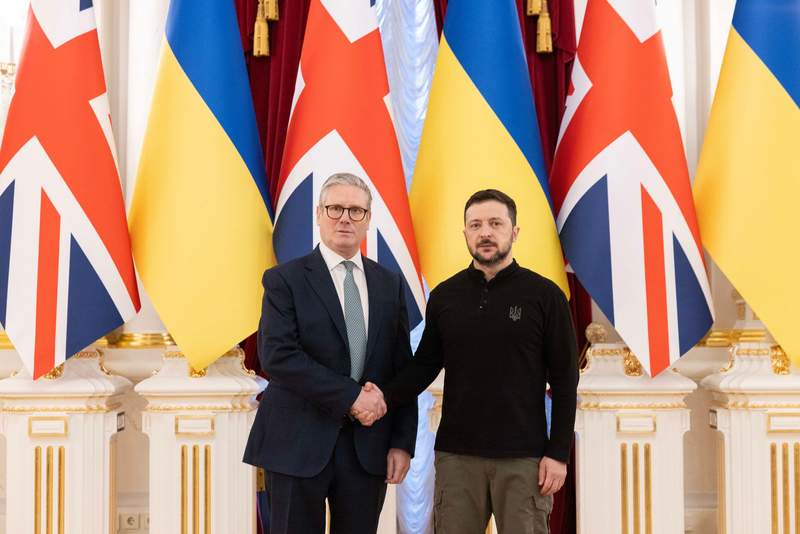
POLICY WIRE — London, UK — The tea was barely cold, and the subtle dance of international diplomacy was already afoot, long before most British newspapers had hit the morning stands. Labour leader Keir Starmer, likely Britain’s next prime minister, quietly played host in London to an assembly that wouldn’t have been out of place inside the European Council chamber. Ukrainian President Volodymyr Zelensky, flanked by French President Emmanuel Macron and German Chancellor Olaf Scholz, convened for talks that transcended the usual pleasantries, signaling a reorientation, or perhaps just a very public audition, for the UK’s global role.
It wasn’t a state visit, not officially, but it certainly smelled like one. This wasn’t some backroom chat over a cuppa. This was Starmer, a man who, until recently, spent his days skewering Rishi Sunak in Parliament, now sitting at what many are calling the adults’ table. He’s seizing the reins of foreign policy, projecting a sense of stability and renewed purpose for a country that, since Brexit, has occasionally felt like a diplomatic orphan.
“Britain stands at a critical juncture,” Starmer remarked later, the quote relayed by a spokesperson familiar with the proceedings, opting for anonymity to discuss private remarks. “We’re demonstrating a clear, unwavering commitment to European security — and to the values we share. This isn’t about mere solidarity; it’s about strategic partnership and proactive leadership for the difficult years ahead.” His tone, usually a prosecutor’s monotone, here reportedly held a measured conviction. Because, let’s face it, he’s pitching for the job.
And Macron and Scholz? Their presence was less an endorsement of Starmer than a pragmatic recognition of British political reality. They’re well aware of the polls. The French president, known for his grand strategic visions—sometimes interpreted as grandstanding—and the more reserved German chancellor, shared platforms, likely discussing everything from ongoing military aid for Kyiv to the long-term reconstruction efforts once, if ever, the guns fall silent. The sheer drain of the conflict weighs heavy, not just on Ukrainian soil, but on global supply chains that stretch far beyond Europe’s borders.
“Europe’s resolve remains strong,” President Macron declared to reporters after the meeting, though with a slight sigh that suggested a deep awareness of the costs involved. “But sustaining this will require synchronized efforts, not just in Kyiv, but across our continent, across the transatlantic alliance, and among nations grappling with its wider implications.” He wasn’t wrong. Inflation, especially for staples like grain, has become a relentless antagonist in many developing economies. For a nation like Pakistan, navigating its own economic storms, these international disruptions mean higher food prices and more budget pressure, threatening an already strained populace. Global trade lanes, already strained by recent geopolitical events, can ill afford further disruption.
Zelensky, ever the urgent messenger, used the opportunity to reiterate his country’s need for continuous, escalating support. He spoke of the immediate military needs, yes, but also of the psychological grind, the fatigue threatening Western resolve. “Every leader here understands that stopping this aggression isn’t just about Ukraine’s freedom. It’s about global stability,” President Zelensky reportedly asserted, his voice gravelly, perhaps from sheer exhaustion, yet still potent. He’s always understood that the narrative of Western unity is his best weapon, outside of what’s fired on the front lines.
One grim statistic underscores his point: the United Nations’ Food and Agriculture Organization (FAO) recently noted that grain exports from Ukraine, while gradually stabilizing through new corridors, remain roughly 18% below their pre-invasion levels as of late last year, contributing directly to increased food insecurity risks in vulnerable regions globally. That’s not a mere decimal point; it’s hunger for millions. The world, it appears, isn’t quite as vast as it sometimes seems.
📄 POLICY WIRE WHITEPAPER PUBLISHED: PAKISTAN'S NATIONAL SECURITY POLICY PRIORITIES
👉 READ BY CLICKING HEREThis conclave wasn’t just about the here — and now. It’s a preview. Starmer isn’t merely acting like a statesman; he’s laying the groundwork. He’s sketching out what a Labour Britain might look like on the global stage: committed to Europe without the messy bits of direct EU membership, firmly allied with Washington, and, most importantly, seen as a reliable, predictable partner again. That’s the brand he’s selling. And it’s a potent message in an increasingly unpredictable world where established orders feel frayed.
What This Means
This informal summit carries substantial political — and economic weight. For Starmer, it’s a strategic coup—a visual affirmation of his impending leadership on the international stage. It legitimizes his diplomatic chops long before a general election is called, subtly (or not so subtly) painting the current Conservative government as less equipped for high-stakes foreign policy. It’s him signaling to the continent that post-Brexit Britain, under Labour, isn’t content to simply grouse from the sidelines; it wants to be back in the huddle. This public display could soothe lingering European skepticism about British reliability, an issue that’s lingered since the 2016 referendum. It offers a promise of a more consistent, less volatile foreign policy. That counts for a lot when regional conflicts spill over into global financial anxieties, influencing everything from the price of oil to sovereign debt.
Economically, stronger UK-European diplomatic ties, even outside formal EU structures, can foster a more stable environment for trade and investment. Decreased political uncertainty could encourage European businesses to recommit to UK markets, reversing some of the hesitancy observed since Brexit. However, it’s worth remembering that these talks don’t instantly unravel years of economic divergence; they merely lay some foundational stones for future collaboration. The optics are good, for sure, but the hard work of renegotiating, collaborating, and aligning policies remains a colossal undertaking. The global economic context, marked by inflationary pressures exacerbated by conflicts, makes robust alliances and predictable policy responses more important than ever for all players, from Paris to Islamabad. We’re living through an interesting chapter, that’s for darn sure. Starmer knows it, Macron knows it. They’re all just trying to keep the boat steady while everyone else feels seasick.