


Cherie DeVaux’s Gambit: A Woman, a Horse, and the Shifting Tides of Horse Racing History
POLICY WIRE — Elmont, New York — This whole affair started quietly enough, if you can call dominating the sport’s biggest annual spectacle a ‘quiet start.’ The dust had barely...

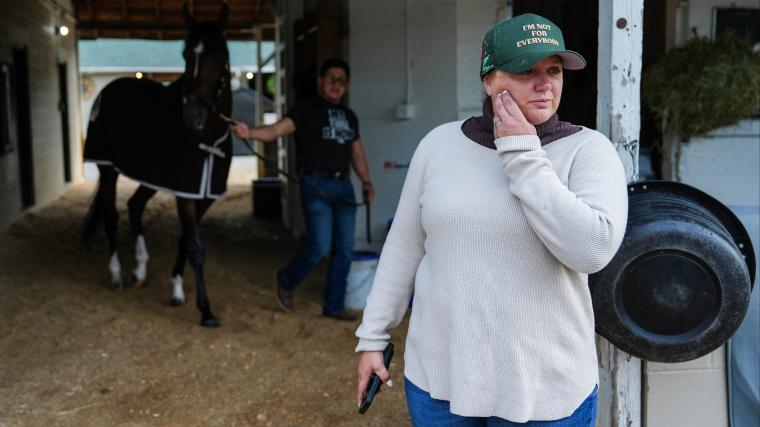
POLICY WIRE — Elmont, New York — This whole affair started quietly enough, if you can call dominating the sport’s biggest annual spectacle a ‘quiet start.’ The dust had barely settled on the Churchill Downs track — nearly a mile and a quarter of it, mind you — and folks were still buzzing about the mint juleps and fancy hats. But the real talk, the low rumble that quickly escalated into a full-throated cheer, was about Cherie DeVaux. Nobody expected her, an industry outlier by certain traditional metrics, to waltz into the Kentucky Derby winner’s circle. And yet, there she was, etching her name — and her horse, Golden Tempo, into the annals of American sport.
It wasn’t just a horse race, not really. This was a quiet, thunderous kind of disruption. For the first time ever, a woman trainer hoisted that coveted Derby trophy. Think about that for a second. In an institution older than most modern nations, where horsepower traditionally trumped, well, woman-power in the hierarchy, DeVaux smashed through a stubbornly maintained glass ceiling with a perfectly executed training regimen and a spirited thoroughbred. She did it with grit, — and a dash of calculated risk. But one win doesn’t make a revolution, does it? That’s what the skeptics whispered. That’s why the collective gaze of the racing world, and perhaps a good chunk of the broader sporting public, now zeroes in on Belmont Park.
Golden Tempo, under DeVaux’s meticulous guidance, returns for the Belmont Stakes, skipping the Preakness to arrive fresh. This isn’t just about bagging another win; it’s about stamping authority. It’s about turning a historical footnote into a dominant chapter. They’ve already made history, but there’s something undeniably compelling about proving it wasn’t just a fluke, not some lucky draw of the gates. This isn’t a friendly run, no, this is the brass ring of thoroughbred racing, demanding every ounce of nerve from trainer and beast alike. It’s a testament to raw, disciplined skill.
DeVaux herself plays down the gender angle, a veteran’s prerogative. She focuses on the work, the hundreds of hours before dawn, the minute attention to an athlete’s form — and temperament. “I don’t really look at it as male versus female,” DeVaux told LEX18 after the Derby. “I just try to do the best I can, but in the back of my mind, just to be a strong role model.” And a strong one she’s. Her pre-Derby advice to aspiring young talent rings with a profound truth that goes beyond the stables: “Don’t be afraid to put yourself out there,” she’d advised. “You have to be willing to fail to be able to succeed.” Words to live by, truly.
But the numbers tell a starker story, adding gravity to her accomplishments. The total handle for the Kentucky Derby regularly exceeds $200 million (Churchill Downs Financial Report, 2023). It’s a colossal economic engine fueled by tradition, speculation, — and passion. And to think, in this multi-billion dollar global industry, where wealth and lineage often dictate who gets a shot, a trainer like DeVaux can still rise, proving the old adage that the horse doesn’t know its jockey’s gender, or its trainer’s bank account. This achievement reverberates far beyond American tracks; it sparks conversations from Dubai’s opulent stables to the modest, emerging racing scenes in regions like Pakistan, where women striving for leadership roles in traditionally male-dominated arenas often face even steeper odds. It makes you wonder, doesn’t it, about all the untapped potential across the globe.
For Reginald Vance, President of the American Thoroughbred Racing Association, DeVaux’s rise is simply a win for the sport. “Her success speaks volumes for the meritocracy we strive for in racing,” Vance said in a recent statement. “It broadens our appeal — and reminds everyone that true talent knows no specific demographic. She’s undeniably a force.” Vance, ever the diplomat, didn’t mention the decades it took to reach this point. He probably doesn’t need to.
📄 POLICY WIRE WHITEPAPER PUBLISHED: PAKISTAN'S NATIONAL SECURITY POLICY PRIORITIES
👉 READ BY CLICKING HEREIt’s fascinating, really, watching this unfolds. DeVaux — and Golden Tempo aren’t just competitors; they’re symbols. Symbols of breaking barriers, of persistence against entrenched norms, of quiet defiance that manifests as sheer winning performance. The Belmont is dubbed the ‘Test of the Champion’—not just for the horse, but perhaps for the vision, the audacity, and the belief held by the woman guiding it.
What This Means
Cherie DeVaux’s success transcends the track. Economically, her narrative could invigorate new investment and sponsorship in thoroughbred racing, particularly from brands eager to align with progressive, inclusive stories. Think about the merchandise, the media exposure—it’s a potent marketing goldmine, ready for exploitation. Politically, if we’re stretching that far, her victory serves as a powerful symbol in ongoing dialogues about gender equity and opportunity, not just in sports but in business and leadership worldwide. Her example might not directly impact, say, legislative debates on the federal budget, but it injects a fresh, real-world case study into how perception can change through accomplishment. It also places a spotlight on the deeper structural barriers that persist in many sports — and industries. her journey could inspire a new generation of women, encouraging them to pursue unconventional career paths, particularly in sectors that have historically been closed off. And let’s be real: sometimes, it’s these unexpected victories—the ones that shatter assumptions—that end up shaping policy decisions far down the line, nudging the Overton window, as it were. This isn’t just about horses running; it’s about shifting the cultural currents.
It also reminds us that sometimes, the greatest policy isn’t crafted in sterile government offices but forged in the heat of competition, through the sheer will of an individual. For further thoughts on the intersection of sport and broader societal currents, one might reflect on Policy on the Diamond: A Tenth-Inning Stumble and the Echoes of Global Ambiguity. Or perhaps even The Teen Queen of Clay: Andreeva’s Parisian Gambit Reworks Global Sporting Economics for another angle on changing sports dynamics.